


How Silver Water Solutions Protect Against Contamination
Silver water solutions can help control microbial contamination in selected water systems. They use the antimicrobial properties of silver to reduce the growth of unwanted microorganisms. As a result, they can support cleaner water and better contamination control.
Water contamination can affect industrial processes, storage systems, equipment, and product quality. Bacteria and other microorganisms can enter water through raw water sources, pipelines, storage tanks, equipment surfaces, and poor handling practices. Therefore, businesses need reliable methods to control microbial growth.
Silver water can provide an additional layer of protection. However, it works best as part of a complete water management program. Proper filtration, cleaning, circulation, monitoring, and water testing remain important.
What Is Silver Water?
Silver water is water that contains a controlled amount of dissolved silver, usually in the form of silver ions. These ions provide antimicrobial properties that can help control microorganisms in suitable water systems.
Silver has been used for antimicrobial purposes because it can interact with microbial cells. The ions can affect cell membranes, proteins, enzymes, and other cellular processes.
Therefore, silver water can create conditions that are less favorable for microbial growth.
However, silver water does not remove every type of contaminant. It mainly targets microbial contamination. Dissolved salts, suspended particles, heavy metals, organic matter, and other impurities may require different treatment methods.
For this reason, businesses should first understand their water quality. Then, they can select a suitable treatment process.
How Silver Water Protects Against Contamination
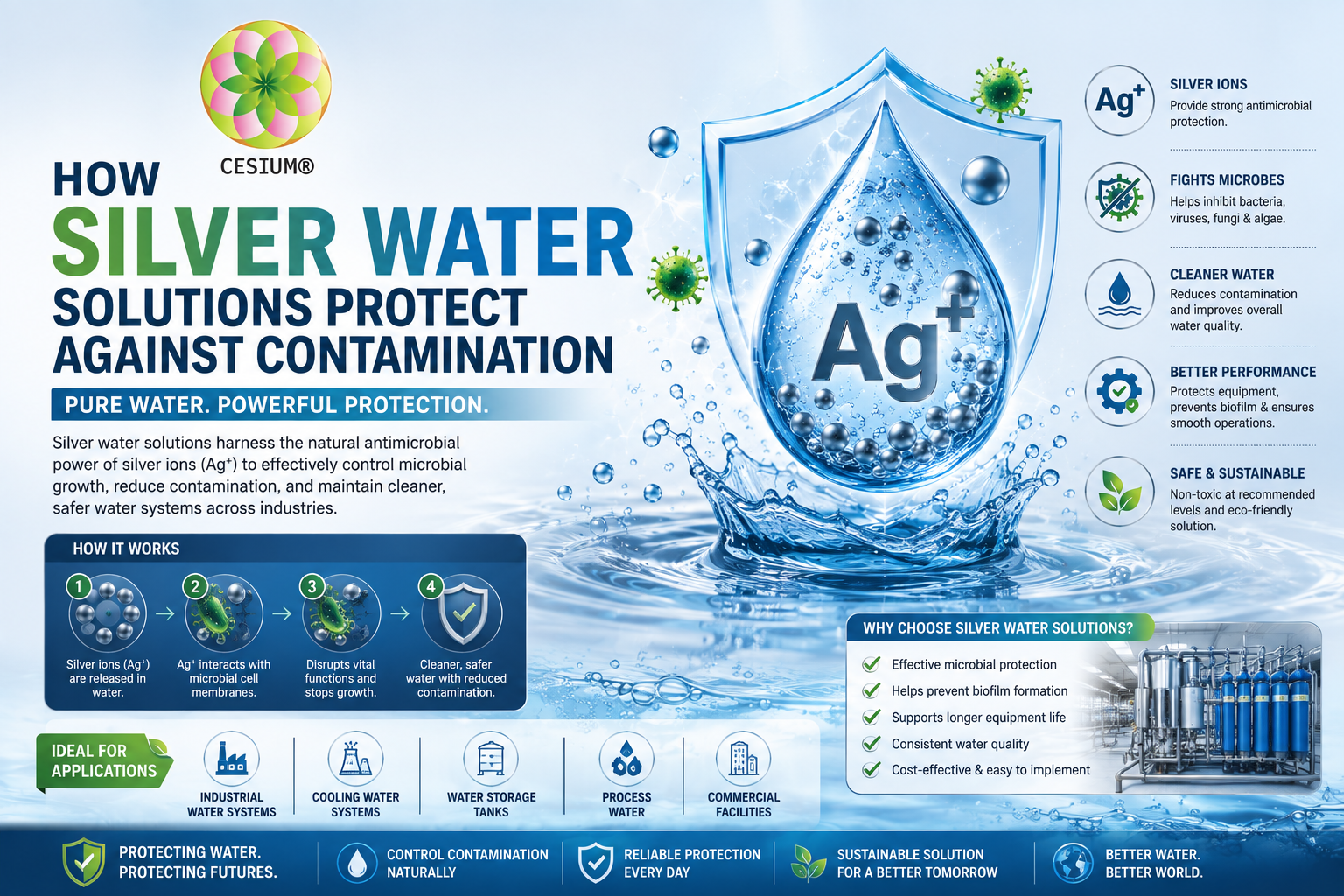
Silver water works mainly through the antimicrobial action of silver ions. When microorganisms come into contact with available silver ions, the ions can interact with important parts of the microbial cell.
First, silver ions can interact with the cell membrane. This interaction can affect the membrane’s normal function.
Next, silver ions can interact with proteins and enzymes. Microorganisms need these proteins to maintain metabolism, energy production, and cell growth.
As these functions become disrupted, microorganisms may lose their ability to grow normally.
In addition, silver can interfere with other cellular processes. Therefore, controlled silver treatment can help reduce microbial activity in suitable water systems.
The effectiveness depends on several factors. These include silver concentration, contact time, water chemistry, temperature, microbial load, and system design.
Silver Water and Microbial Contamination
Microbial contamination can occur in many water systems. Bacteria, fungi, algae, and other microorganisms can multiply when the environment provides suitable conditions.
Stagnant water creates one common risk. When water remains still for long periods, microorganisms may find suitable conditions for growth.
Similarly, dirty storage tanks and pipelines can support microbial activity. Deposits and organic material can provide surfaces where microorganisms attach.
Silver water can help control this microbial activity. Silver ions can interact with microorganisms and reduce their ability to function and multiply.
However, existing contamination still requires proper cleaning. Therefore, operators should not rely on silver treatment alone.
Regular inspection and sanitation can reduce contamination sources. At the same time, proper circulation can help prevent stagnant zones.
How Silver Ions Affect Microorganisms
Silver ions can affect microorganisms through several mechanisms.
Silver Can Affect Cell Membranes
Microbial cells depend on their membranes to control the movement of substances. The membrane also helps maintain the internal environment of the cell.
Silver ions can interact with components of the membrane. Consequently, this interaction can disturb normal cell functions.
When the membrane cannot maintain its normal function, the microorganism may struggle to survive and reproduce.
Silver Can Interact With Proteins
Proteins perform many essential functions inside microbial cells. They support metabolism, transport, energy production, and other cellular activities.
Silver ions can interact with certain chemical groups in proteins. Therefore, they can affect the activity of some microbial proteins and enzymes.
This action can interfere with normal microbial processes.
Silver Can Disrupt Cellular Activity
Microorganisms need several coordinated processes to grow. Silver ions can interfere with some of these processes.
As a result, microbial growth can slow down or stop under suitable treatment conditions.
The exact performance depends on the microorganism and the water chemistry. Therefore, businesses should validate treatment performance for their specific application.
Silver Water and Biofilm Control
Biofilms can create a major problem in water systems. A biofilm develops when microorganisms attach to a surface and create a protective layer.
These layers can develop inside pipes, tanks, filters, valves, pumps, and other equipment.
Once a biofilm becomes established, it can become difficult to remove. It can also create a continuing source of microbial contamination.
Silver water may help reduce microbial growth and support biofilm control. However, it should not replace physical cleaning.
For example, a heavily contaminated tank may require cleaning and sanitation before operators introduce a silver-based treatment program.
Therefore, businesses should combine silver water with regular cleaning and inspection.
pH Impact on Silver Water
The quality of incoming water can strongly affect treatment performance.
Raw water may contain suspended particles, organic matter, dissolved minerals, salts, and other substances. These materials can interact with silver or affect microbial growth.
Therefore, businesses should test the source water before selecting a silver water solution.
Depending on the results, pretreatment may improve the overall process. Suitable pretreatment can include filtration, softening, demineralization, or other water treatment methods.
Clean and controlled source water allows the treatment system to work under more predictable conditions.
Benefits of Silver Water Solutions
Silver water solutions can provide several benefits when businesses use them correctly.
Helps Control Microbial Growth
Silver water can provide antimicrobial support in suitable water systems. Therefore, it can help reduce conditions that support unwanted microbial growth.
Supports Water Hygiene
A controlled silver treatment can add another layer of protection against microbial contamination.
However, businesses should combine it with good water hygiene practices.
Can Support Continuous Microbial Control
Some silver-based treatment systems can provide ongoing antimicrobial activity when operating conditions remain within the required range.
This can help businesses maintain more consistent water quality.
Works With Other Treatment Methods
Silver treatment can complement other water treatment processes.
For example, filtration can remove physical particles, while silver treatment can provide antimicrobial support.
Therefore, combining treatment methods can provide broader water-quality control.
Helps Manage Water Systems
Silver water can support contamination management in selected storage, process, and industrial water systems.
The exact benefit depends on the application and system design.
Applications of Silver Water Solutions
Silver water can support different applications where microbial control matters.
Industrial Water Systems
Manufacturing facilities often use process water in different production activities. Microbial growth can affect water quality and equipment conditions.
Therefore, silver-based treatment may provide additional microbial control in suitable industrial systems.
Operators should first evaluate water chemistry and process requirements.
Water Storage Systems
Stored water can develop microbial growth when it remains stagnant.
Silver water may help control microbial activity during storage when the system uses appropriate treatment conditions.
However, tank cleaning remains essential. Operators should also inspect tanks regularly.
Process Water
Some manufacturing processes require controlled water quality.
Silver water can provide additional microbial protection where silver treatment suits the process.
Before implementation, businesses should confirm that the treated water meets their process requirements.
Cooling Water Systems
Cooling systems can experience microbial growth and biofilm formation.
Silver-based treatment may help manage microbial activity in some cooling-water applications.
Nevertheless, cooling systems often need a broader treatment program. Filtration, cleaning, corrosion control, and other measures may also play important roles.
Commercial Water Systems
Commercial facilities may use treated water for various processes. Where applicable, silver water can support microbial control.
The treatment must match the intended use and applicable requirements.
Factors That Affect Silver Water Performance
Several factors can influence how well a silver water solution performs.
Silver concentration is important because the system needs a controlled level of available silver.
Contact time also matters because microorganisms need sufficient exposure to the treatment.
Water chemistry can affect silver behavior. Therefore, businesses should monitor important water-quality parameters.
Temperature can affect microbial growth and treatment performance.
Water flow influences contact time and treatment consistency.
Microbial load can affect the level of treatment required.
System cleanliness also matters because deposits and biofilms can protect microorganisms.
Therefore, operators should evaluate all these factors rather than focusing on silver concentration alone.
Monitoring Silver Water Quality
Regular monitoring helps confirm that the treatment system operates correctly.
Depending on the application, operators may monitor:
- Silver concentration
- pH
- Conductivity
- Total dissolved solids
- Turbidity
- Temperature
- Microbial levels
- Flow rate
- Water appearance
- Other process-specific parameters
Monitoring results can help identify changes before they become larger problems.
For example, an unexpected increase in microbial levels may indicate poor circulation, insufficient treatment, contamination from another source, or inadequate cleaning.
Therefore, regular testing can support faster corrective action.
Why Cleaning Still Matters
Silver water can help control microorganisms, but it cannot replace cleaning.
Water systems can collect deposits, dirt, organic material, and mineral scale. These materials can provide suitable surfaces for microbial growth.
Therefore, businesses should maintain a regular cleaning schedule.
Storage tanks should receive appropriate cleaning. Pipelines and equipment should also receive inspection and cleaning based on the system requirements.
In addition, stagnant areas should receive special attention.
A clean system gives the silver treatment a better environment in which to work.
Common Mistakes When Using Silver Water
Businesses can reduce treatment performance through several common mistakes.
One mistake involves using silver treatment without testing the source water.
Another mistake involves ignoring water circulation. Stagnant areas can continue to support microbial growth.
Some operators also focus only on silver concentration. However, pH, contact time, temperature, microbial load, and water chemistry also matter.
Poor tank hygiene creates another risk. Even treated water can become contaminated when it enters a dirty storage tank.
Finally, businesses should avoid assuming that silver water removes every contaminant. Different contaminants require different treatment methods.
How to Select a Silver Water Solution
Businesses should follow a systematic approach when selecting a silver water solution.
Understand the Application
First, identify how the water will be used. Industrial process water, storage water, cooling water, and other applications can have different requirements.
Test the Source Water
Next, test the incoming water. This step helps identify the major water-quality issues.
Review Treatment Requirements
After testing, determine the required silver treatment conditions. Consider concentration, contact time, flow, water chemistry, and system design.
Plan Regular Monitoring
A suitable monitoring plan helps maintain consistent treatment performance.
Check Equipment Compatibility
The treatment system should work with the existing pipes, tanks, pumps, filters, and other components.
Follow Applicable Requirements
Finally, check the standards and regulations that apply to the intended application.
Silver Water as Part of a Complete Water Treatment Program
Silver water works best as one part of a broader water management strategy.
A complete program may include:
- Source-water testing
- Pretreatment
- Filtration
- Controlled silver treatment
- Proper water circulation
- Tank cleaning
- Pipeline cleaning
- Microbial testing
- pH monitoring
- Silver concentration monitoring
- Regular equipment inspection
- Treatment records
These measures work together to reduce contamination risks.
For example, filtration can reduce suspended particles. Cleaning can remove deposits. Proper circulation can reduce stagnant zones. Meanwhile, silver treatment can provide additional antimicrobial support.
Therefore, businesses should consider the entire water system rather than relying on a single treatment method.
Quality Control and Safe Use
Silver-based water treatment requires controlled operation.
Operators should use a suitable treatment system and maintain the required silver concentration. They should also monitor relevant water-quality parameters.
Furthermore, the treated water should match its intended application.
Water used for industrial purposes may have different requirements from water used for drinking, pharmaceutical manufacturing, laboratory work, or other sensitive applications.
Therefore, businesses should review applicable standards before selecting or using a silver water solution.
Frequently Asked Questions
1. What is silver water?
Silver water is water containing a controlled amount of dissolved silver, commonly in the form of silver ions. It can provide antimicrobial support in suitable water systems.
2. How does silver water protect against contamination?
Silver ions can interact with microbial cell membranes, proteins, enzymes, and other cellular components. These interactions can disrupt normal microbial activity and help control microbial growth.
3. Does silver water remove all contaminants?
No. Silver water mainly provides antimicrobial action. It does not automatically remove dissolved salts, suspended solids, heavy metals, or all other water impurities.
4. Does pH affect silver water?
Yes. pH can affect water chemistry and silver behavior. Therefore, operators should monitor pH as part of their overall water-quality program.
5. Can silver water replace filtration?
No. Filtration and silver treatment perform different functions. Filtration can remove physical particles, while silver treatment can provide antimicrobial support.
6. Can silver water help control biofilms?
Silver treatment may help control microbial growth and support biofilm management. However, established biofilms usually require proper cleaning and sanitation.
7. Where can silver water be used?
Depending on the system design and applicable requirements, silver water may support selected industrial, process, storage, commercial, and cooling-water applications.
8. How should silver water be monitored?
Monitoring may include silver concentration, pH, conductivity, turbidity, temperature, microbial levels, and other parameters relevant to the application.
Conclusion
Silver water solutions can provide useful antimicrobial support for selected water systems. Silver ions can interact with microorganisms and disrupt important cellular functions. Therefore, controlled silver treatment can help manage microbial contamination.
However, silver water should not act as the only contamination-control method. Source-water quality, filtration, cleaning, circulation, pH, monitoring, and proper system maintenance all remain important.
By combining these practices, businesses can create a stronger water-quality management program. With the right treatment design and regular monitoring, silver water can become a useful part of contamination-control strategies.