


How Distilled Water Increases the Quality of Food Products
Food manufacturers focus strongly on quality, hygiene, and consistency. Water plays a major role in food production because it affects taste, texture, safety, and shelf life. Many industries now use distilled water to improve food quality and maintain production standards.
Distilled water contains very low levels of minerals, salts, and impurities. Therefore, it helps manufacturers produce cleaner and safer food products. In addition, it improves consistency in beverages, dairy products, processed foods, and packaged items.
Today, many food processing companies choose distilled water because it supports better hygiene and reduces contamination risks. Understanding how distilled water increases the quality of food products can help businesses improve production efficiency and customer satisfaction.
What Is Distilled Water?
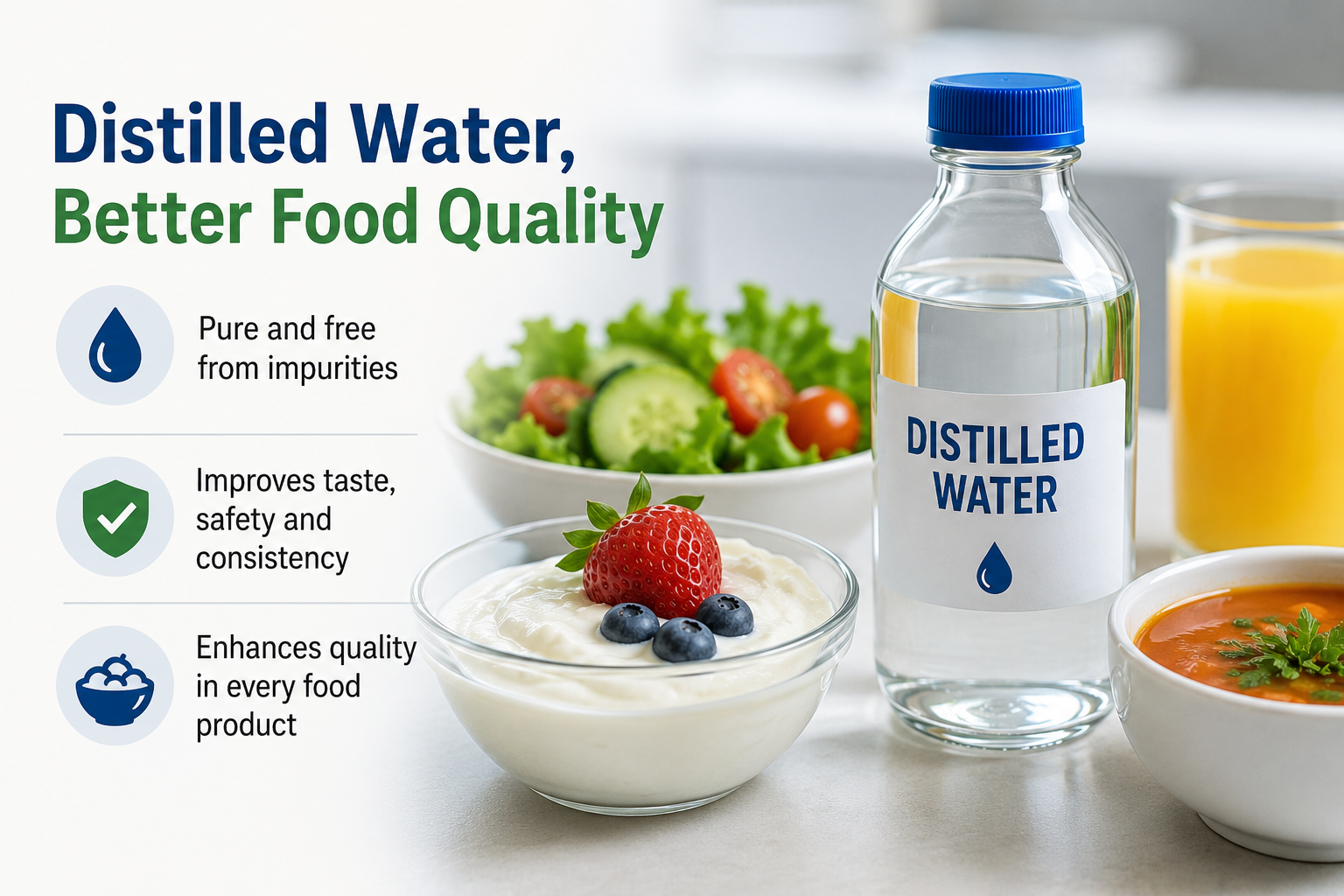
Distilled water is highly purified water. Manufacturers produce it through a distillation process. In this process, water boils and changes into steam. The steam then cools and turns back into water.
This process removes minerals, salts, heavy metals, bacteria, and impurities from the water. As a result, distilled water becomes highly pure and suitable for food production applications.
Many food industries prefer distilled water because it offers better consistency and supports safer manufacturing processes.
How Distilled Water Is Produced
Manufacturers produce distilled water through a controlled purification process. First, the system heats water until it reaches the boiling point. Next, steam rises and separates from impurities and dissolved minerals. After that, the steam cools and condenses into purified water.
Because of this process, distilled water contains very few contaminants. Therefore, it works effectively in industries that require high-purity water.
Modern water treatment systems often combine advanced purification methods to improve water quality further. As a result, food manufacturers can maintain better production standards and hygiene levels.
Why Water Quality Matters in Food Production
Water directly affects food quality. Poor-quality water can change taste, color, texture, and product stability. In addition, contaminated water may increase the risk of bacterial growth and unwanted chemical reactions.
Food manufacturers use purified water to maintain hygiene and improve production quality. Clean water also helps companies maintain consistency across different batches of products.
According to food industry reports from 2024, many manufacturers continue to invest in advanced water purification systems because clean water improves food safety and production efficiency.
How Distilled Water Improves Food Quality
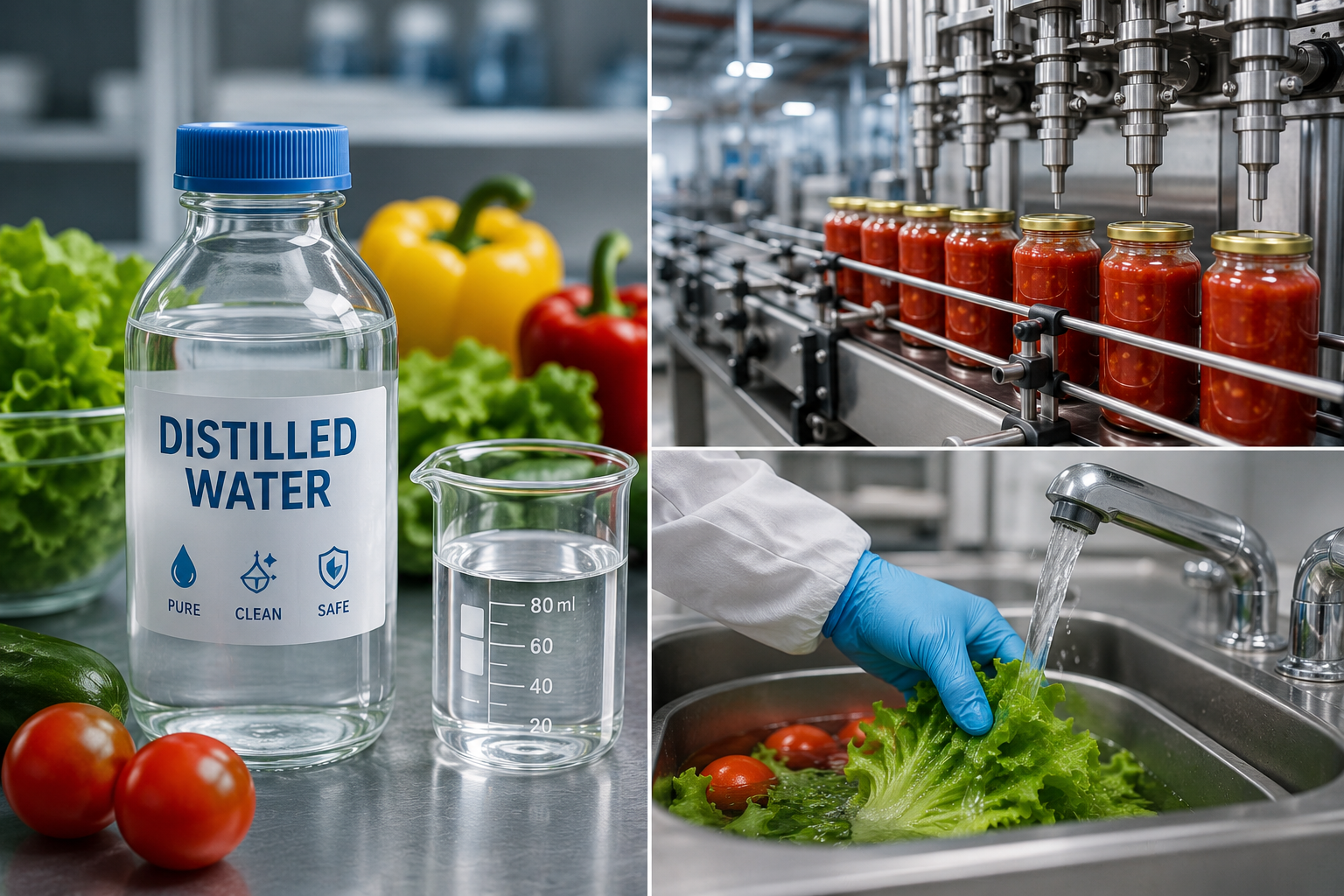
Distilled water improves food quality in many ways.
First, it improves product purity. Since distilled water contains very few impurities, it supports cleaner food production.
Second, it improves taste consistency. Minerals in regular water may change flavor. However, distilled water helps maintain a stable taste.
Third, it helps increase shelf life. Clean water reduces contamination risks. As a result, products stay fresh for a longer time.
In addition, distilled water supports better hygiene in food factories. Companies use it to clean equipment and production systems
Benefits of Distilled Water in Food Processing
Food industries gain many benefits from using distilled water. It helps improve hygiene, supports food safety, and maintains production quality. In addition, it protects industrial equipment from mineral buildup and scaling.
Distilled water also improves the performance of processing systems and reduces maintenance costs. Since it contains very low mineral content, it prevents deposits inside machinery and pipelines.
Furthermore, many beverage companies use distilled water to maintain the same taste across different product batches. This consistency helps companies maintain customer satisfaction and product quality.
According to water treatment experts, industries that use purified water systems often experience better operational efficiency and lower contamination risks.
“High-quality purified water plays a major role in food safety and product consistency.” — Food Processing Expert, 2024
“Purified water systems help manufacturers improve hygiene and maintain better production standards.” — Water Treatment Consultant, 2025
Common Uses of Distilled Water in the Food Industry
Many food and beverage companies use distilled water during production. Beverage manufacturers use it to produce juices, soft drinks, and packaged beverages with consistent flavor.
Dairy industries also use distilled water during milk processing and equipment cleaning. Similarly, bakeries use purified water to improve dough quality and product consistency.
Manufacturers of soups, sauces, and ready-to-eat foods often depend on distilled water because it supports cleaner production processes.
Food processing plants also use distilled water for sanitization and equipment cleaning. Clean water helps maintain hygiene and reduces contamination risks inside production facilities.
In addition, many companies use distilled water to produce clean and clear ice cubes for food service and beverage applications.
Distilled Water vs Regular Water
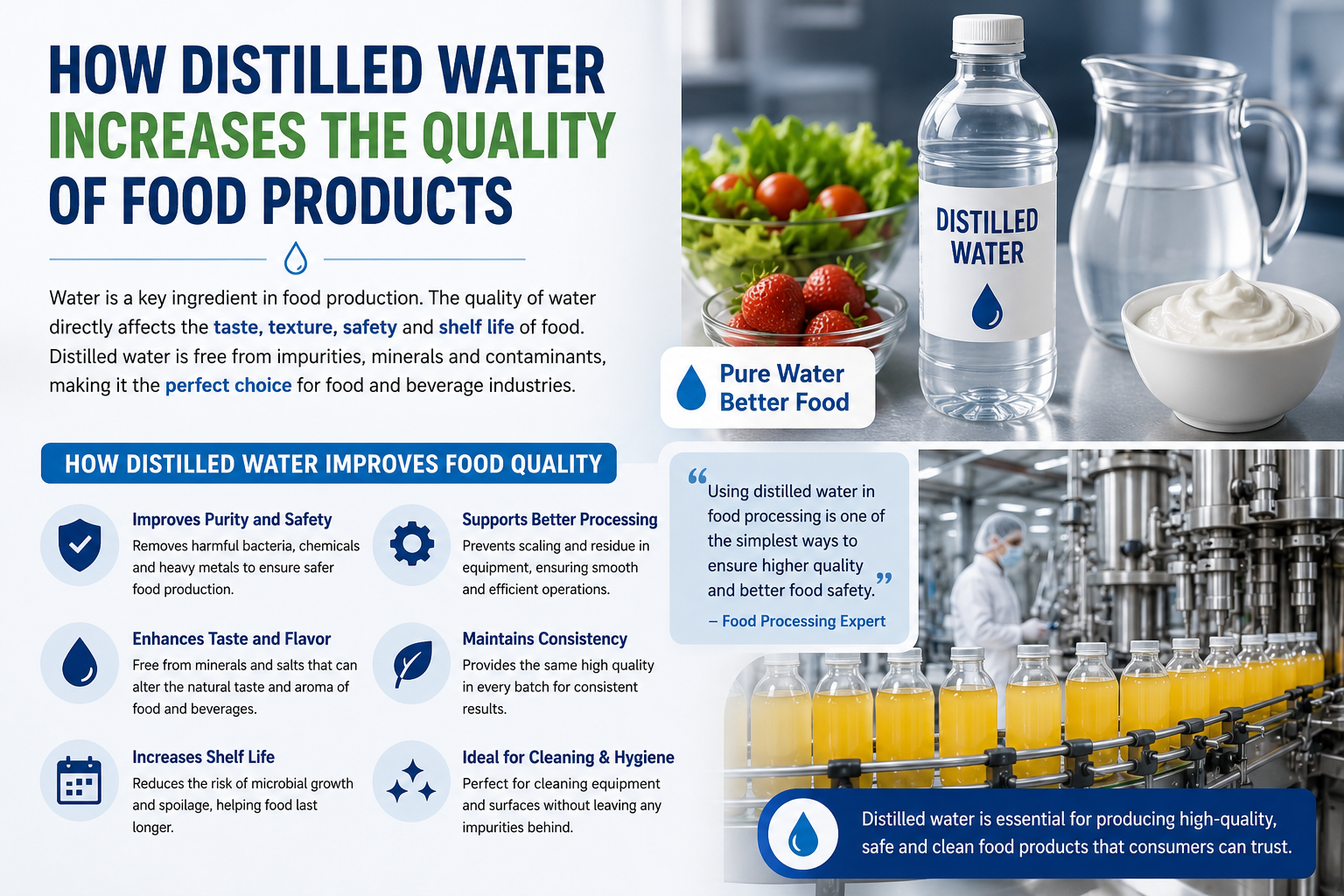
Distilled water differs significantly from regular water. Regular water contains minerals, dissolved salts, and impurities that may affect food quality and production systems.
In contrast, distilled water contains very low levels of contaminants. Therefore, it supports better hygiene, taste consistency, and product stability.
Because of these advantages, many food manufacturers prefer distilled water over ordinary water for sensitive production processes.
Frequently Asked Questions
What is distilled water?
Distilled water is purified water produced through a distillation process that removes impurities and minerals.
Why do food industries use distilled water?
Food industries use distilled water to improve food quality, hygiene, taste consistency, and production safety.
Does distilled water improve food taste?
Yes. Distilled water helps maintain a cleaner and more consistent flavor in food and beverages.
Is distilled water safe for food production?
Yes. Food manufacturers widely use distilled water because it contains very few impurities and contaminants.
How does distilled water increase shelf life?
Distilled water reduces contamination risks and helps maintain product stability for longer periods.
Can distilled water protect industrial equipment?
Yes. Distilled water reduces scaling and mineral buildup inside machinery and pipelines.
Conclusion
Distilled water plays an important role in modern food production. It helps manufacturers improve food quality, hygiene, taste, and shelf life. In addition, it reduces contamination risks and protects industrial equipment from scaling and mineral deposits.
Today, many food processing companies rely on distilled water because it supports safer and more consistent production processes. Understanding how distilled water increases the quality of food products can help businesses improve efficiency, maintain hygiene standards, and deliver high-quality products to customers.