


Introduction
Water is essential for healthy plant growth. Every plant needs water to absorb nutrients, support photosynthesis, and maintain overall health. However, the quality of water can affect how well plants grow.
Many water sources contain minerals, salts, chlorine, and other impurities. Over time, these substances can build up in the soil and affect plant development. Therefore, gardeners and growers often look for cleaner water options.
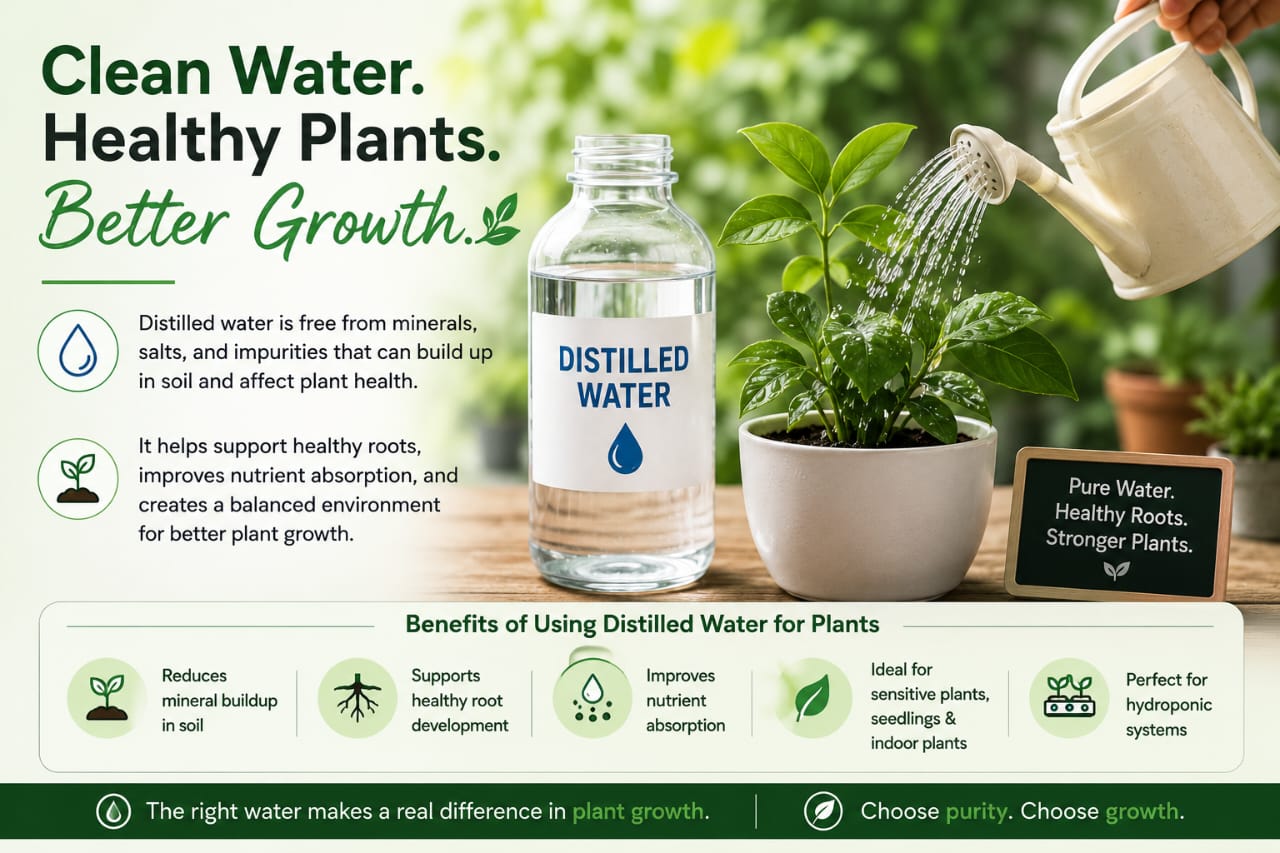
One option is distilled water. Because it contains very few impurities, distilled water can help create a controlled growing environment. As a result, many people use it for indoor plants, seedlings, and sensitive plant species.
What Is Distilled Water?
Distilled water is purified water produced through a distillation process. During this process, water turns into steam and then condenses back into liquid form.
This process removes:
- Minerals
- Salts
- Chlorine
- Heavy metals
- Dissolved impurities
As a result, distilled water becomes one of the purest forms of water available.
Why Water Quality Matters for Plants
Plants absorb water through their roots. Along with water, they also absorb nutrients from the soil.
However, poor-quality water may contain substances that affect soil conditions. For example, excessive salts can accumulate around roots and reduce nutrient uptake.
Over time, these deposits may slow plant growth. Therefore, maintaining good water quality helps plants grow more effectively.
Distilled water eliminates many of these concerns because it contains almost no dissolved contaminants.
How Distilled Water Supports Plant Growth
Distilled water provides a clean source of hydration for plants. Because it contains very few impurities, plants receive water without additional minerals or unwanted substances.
Furthermore, growers can control nutrient levels more accurately when using distilled water. This is especially useful in hydroponic systems and controlled growing environments.
As a result, plants often experience more predictable growth conditions.
Improved Nutrient Absorption
Nutrients play a major role in plant development. Plants need nitrogen, phosphorus, potassium, and several micronutrients to thrive.
When excess minerals exist in water, they can interfere with nutrient uptake. Consequently, plants may struggle to absorb essential nutrients.
Distilled water helps reduce this problem. Because it starts with a neutral composition, growers can add nutrients according to the specific needs of each plant.
Therefore, plants often benefit from better nutrient management.
Reduced Salt Buildup
Salt accumulation is a common problem in gardening and agriculture. Water containing dissolved salts can leave deposits in soil over time.
These deposits may damage roots and reduce plant health.
Distilled water contains almost no salts. Therefore, it helps reduce the risk of salt buildup.
In addition, healthier root systems often lead to stronger plant growth and improved development.
Benefits for Indoor Plants
Indoor plants frequently grow in containers where soil conditions remain limited. Unlike outdoor gardens, natural rainfall cannot flush excess minerals from the soil.
As a result, mineral accumulation may occur more quickly.
Many plant owners use distilled water for:
- Peace lilies
- Orchids
- Spider plants
- Carnivorous plants
- Tropical houseplants
These plants often respond well to cleaner water sources.
Distilled Water in Hydroponics
Hydroponic systems rely on water as the primary growing medium. Therefore, water quality becomes extremely important.
Growers often prefer distilled water because it provides a clean starting point. They can then add nutrients in precise amounts.
This level of control helps maintain stable growing conditions. Furthermore, it supports healthy root development and consistent plant growth.
Seed Germination and Young Plants
Young plants require special care during their early stages.
Seeds and seedlings can be sensitive to contaminants and excessive minerals. Therefore, many growers choose distilled water during germination.
The clean water environment helps young plants establish healthy roots and begin growth under controlled conditions.
As a result, seedlings often receive a strong start.
Can Distilled Water Be Used for All Plants?
Distilled water works well for many plants. However, it may not always be necessary for every garden.
Outdoor plants often benefit from natural minerals found in rainwater and soil. Therefore, many gardeners combine distilled water with balanced fertilizers when needed.
The best approach depends on plant type, soil conditions, and growing goals.
Advantages of Distilled Water for Plants
Distilled water offers several benefits for plant care.
Key advantages include:
- Reduced mineral buildup
- Better control over nutrients
- Cleaner soil conditions
- Improved root health
- Support for sensitive plants
- Consistent water quality
- Reduced contamination risks
Because of these benefits, many growers include distilled water in their plant care routines.
Best Practices for Using Distilled Water
Using distilled water effectively requires proper plant care.
Consider these simple practices:
- Monitor soil moisture regularly.
- Use appropriate fertilizers when needed.
- Match watering schedules to plant requirements.
- Check for signs of nutrient deficiencies.
- Adjust care based on plant species.
These steps help maximize the benefits of distilled water.
Frequently Asked Questions
Is distilled water good for plant growth?
Yes. Distilled water helps reduce mineral buildup and provides a clean water source for many plants.
Can I use distilled water for indoor plants?
Yes. Many indoor plants grow well with distilled water because it contains very few impurities.
Does distilled water contain nutrients for plants?
No. Distilled water is highly purified and contains very few minerals. Therefore, plants may still need nutrients from soil or fertilizers.
Is distilled water better than tap water for plants?
It depends on water quality. Distilled water contains fewer contaminants and minerals than most tap water sources.
Which plants benefit most from distilled water?
Orchids, carnivorous plants, tropical plants, and many indoor plants often benefit from distilled water.
Can distilled water prevent salt buildup in soil?
Yes. Because it contains almost no dissolved salts, distilled water helps reduce salt accumulation over time.
Conclusion
Distilled water can play an important role in plant growth. Its high purity helps reduce mineral buildup, improve nutrient management, and support healthy root development.
Many indoor gardeners, hydroponic growers, and plant enthusiasts use distilled water to create better growing conditions. Furthermore, it provides a reliable source of clean water for sensitive plants.
Although every plant has different requirements, distilled water remains a valuable option for maintaining healthy and thriving plants.