


A car battery water is one of the most important components of any vehicle. It provides the power needed to start the engine and supports various electrical systems. However, many vehicle owners overlook one simple maintenance practice that can significantly improve battery performance and lifespan—using the correct water.
Choosing the right Car Battery Water is essential because the wrong type of water can introduce minerals and contaminants that damage the battery’s internal components. For most lead-acid batteries, distilled water is the safest and most recommended option. It helps maintain the correct electrolyte level while protecting the battery from corrosion and mineral buildup.
In this guide, you will learn why distilled water is the best choice, how to maintain your battery correctly, which water types to avoid, and useful tips to extend your battery’s service life.
What Is Car Battery Water?
Car Battery Water refers to the purified water used to maintain the electrolyte level inside lead-acid batteries. The electrolyte consists of sulfuric acid mixed with water. During normal charging and use, some of the water evaporates. As a result, the water level gradually drops.
Therefore, replacing only the lost water is essential for keeping the battery in good condition. Since minerals interfere with the battery’s chemical reactions, manufacturers recommend using distilled water instead of ordinary water.
Why Car Battery Water Is Important
Proper battery maintenance starts with using the correct water. Although this step seems simple, it has a major impact on battery performance.
Using the right Car Battery Water helps:
- Maintain the correct electrolyte level
- Improve battery efficiency
- Reduce internal corrosion
- Protect battery plates
- Prevent overheating
- Increase battery lifespan
- Improve charging performance
- Reduce maintenance costs
- Minimize the risk of unexpected battery failure
- Support reliable engine starting
Consequently, regular battery maintenance helps keep your vehicle dependable throughout the year.
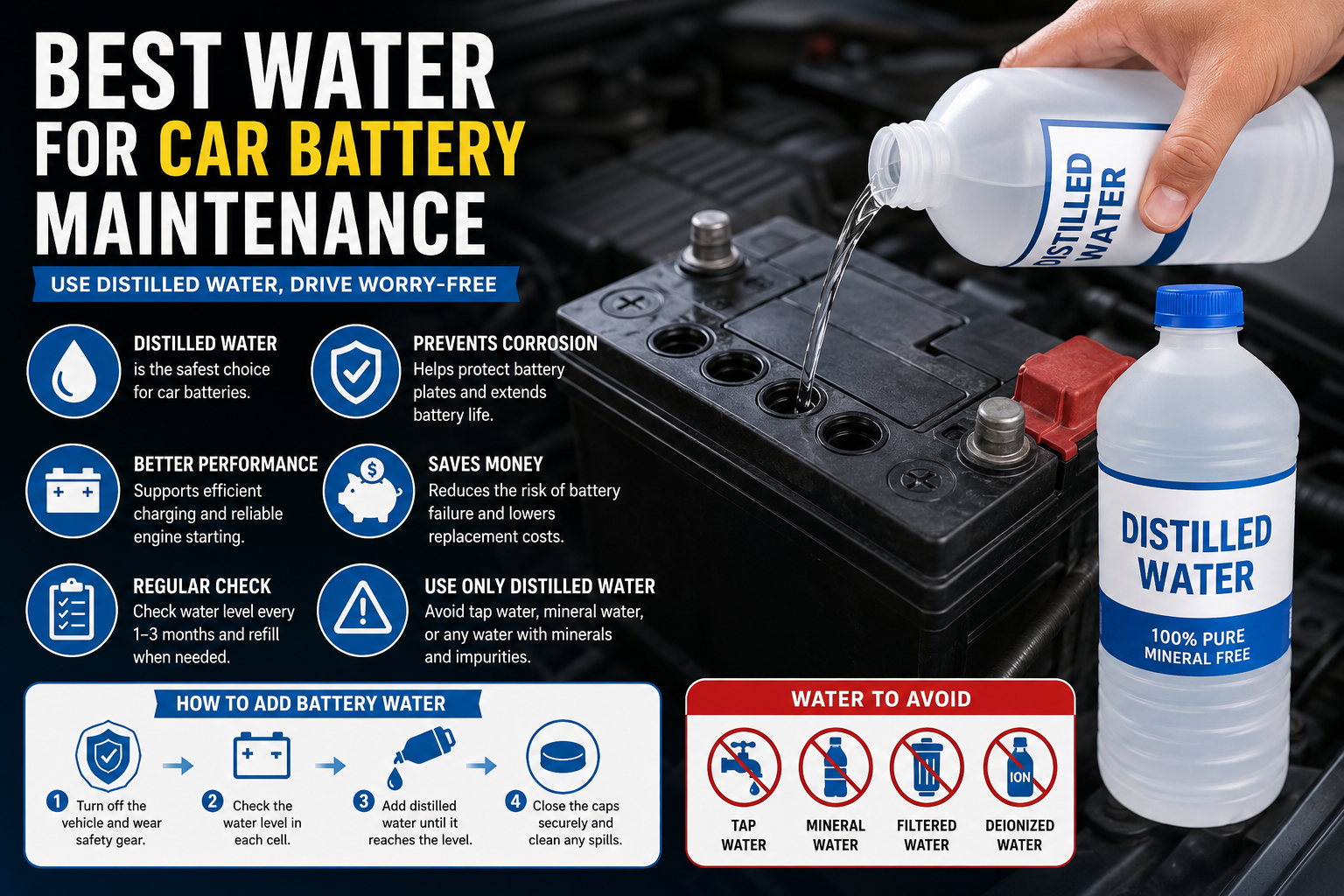
Best Water for Car Battery Maintenance
The best water for car battery maintenance is distilled water.
Distilled water is produced through a purification process that removes minerals, salts, metals, and other impurities. Because of its high purity, it does not interfere with the battery’s internal chemical reactions.
Unlike ordinary water, distilled water protects the battery from mineral deposits that can reduce efficiency and shorten battery life. Therefore, automotive experts and battery manufacturers consistently recommend distilled water for maintaining lead-acid batteries.
Why Distilled Water Is the Best Choice
Distilled water offers several advantages over other water types.
Free From Minerals
Distilled water contains almost no dissolved minerals. Therefore, it prevents unwanted deposits inside the battery.
Prevents Internal Corrosion
Mineral buildup often causes corrosion on battery plates. However, distilled water minimizes this risk and keeps internal components cleaner.
Improves Battery Performance
Pure water allows the electrolyte solution to function properly. As a result, the battery charges and discharges more efficiently.
Extends Battery Life
Using distilled water reduces internal damage over time. Consequently, the battery lasts longer and performs more consistently.
Recommended by Manufacturers
Most lead-acid battery manufacturers recommend distilled water because it provides the highest level of purity for battery maintenance.
Comparison of Different Water Types
Not every type of water is suitable for a car battery. Understanding the differences helps you make the right decision.
Distilled Water
Distilled water is the safest option. It is highly purified and contains almost no impurities. Therefore, it supports optimal battery performance.
Tap Water
Tap water contains calcium, magnesium, iron, chlorine, and other dissolved minerals. These substances create deposits inside the battery and reduce efficiency.
For this reason, you should never use tap water.
Mineral Water
Mineral water is healthy for drinking but harmful to batteries. Its high mineral content can damage battery plates and reduce battery life.
Filtered Water
Filtered water removes some contaminants. However, it still contains dissolved minerals. Therefore, it is not recommended for battery maintenance.
Deionized Water
Deionized water removes charged ions and offers high purity. While it can be used in many industrial batteries, distilled water remains the preferred option for most automotive lead-acid batteries.
Benefits of Using Distilled Water for Car Battery Maintenance
Using distilled water provides several long-term advantages.
Longer Battery Lifespan
Since distilled water prevents mineral buildup, it reduces wear inside the battery. Consequently, the battery lasts much longer.
Better Charging Efficiency
A clean electrolyte solution allows the battery to charge more effectively and store energy efficiently.
Reduced Corrosion
Without minerals, corrosion develops more slowly. Therefore, battery components remain in better condition.
Lower Maintenance Costs
A healthy battery requires fewer repairs and replacements. As a result, vehicle owners save money over time.
Reliable Vehicle Performance
A properly maintained battery delivers dependable starting power and supports electrical systems more effectively.
How to Add Water to a Car Battery
Adding water correctly is just as important as choosing the right water.
Follow these steps carefully.
Turn Off the Vehicle
Always switch off the engine before opening the battery.
Wear Safety Equipment
Use protective gloves and safety glasses because battery electrolyte contains sulfuric acid.
Clean the Battery Surface
Remove dust and dirt before opening the battery caps. This prevents contamination from entering the battery.
Check the Water Level
Inspect each battery cell carefully. If the electrolyte level is below the recommended mark, add distilled water.
Add Distilled Water Slowly
Pour distilled water carefully until the electrolyte reaches the proper level. Avoid overfilling because excess liquid may overflow during charging.
Secure the Battery Caps
Close all caps tightly after refilling the battery.
Clean Any Spills
Finally, wipe away any spilled water or electrolyte to keep the battery clean.
How Often Should You Check Car Battery Water?
Battery inspection frequency depends on driving conditions and climate.
Generally, you should inspect the water level:
- Every month in hot weather
- Every two to three months under normal conditions
- Before long road trips
- After frequent charging
- During regular vehicle servicing
Routine inspections help prevent battery damage before serious problems develop.
Signs Your Car Battery Needs Water
A low electrolyte level usually shows several warning signs.
Watch for these symptoms:
- Slow engine cranking
- Weak battery performance
- Difficulty starting the vehicle
- Battery overheating
- Frequent jump-starts
- Reduced charging efficiency
- Exposed battery plates
- Dashboard battery warning light
If you notice any of these signs, inspect the battery as soon as possible.
Common Mistakes to Avoid
Many battery failures occur because of simple maintenance mistakes.
Avoid the following errors:
- Using tap water
- Using mineral water
- Using filtered water
- Overfilling the battery
- Ignoring low electrolyte levels
- Mixing different water types
- Refilling a hot battery immediately after driving
- Skipping routine inspections
- Allowing battery terminals to corrode
- Opening maintenance-free sealed batteries
Avoiding these mistakes helps improve battery reliability and safety.
Can You Use Deionized Water Instead of Distilled Water?
Many people wonder whether deionized water can replace distilled water.
Deionized water removes dissolved ions such as calcium and magnesium. Therefore, it offers a high level of purity. However, distilled water also removes many non-ionic impurities during the distillation process.
For most automotive lead-acid batteries, distilled water remains the preferred recommendation. Nevertheless, if your battery manufacturer specifically recommends deionized water, always follow those instructions.
Safety Tips for Car Battery Maintenance
Battery maintenance should always be performed carefully.
Follow these important safety practices:
- Wear gloves and eye protection.
- Work in a well-ventilated area.
- Keep sparks and flames away from the battery.
- Use only clean tools.
- Store distilled water in a sealed container.
- Wash your hands after maintenance.
- Clean battery terminals regularly.
- Dispose of damaged batteries according to local regulations.
These precautions improve both personal safety and battery performance.
Where to Buy Distilled Water
Distilled water is widely available and affordable.
You can purchase it from:
- Automotive stores
- Battery service centers
- Supermarkets
- Industrial water suppliers
- Hardware stores
- Online retailers
Always purchase sealed containers from trusted suppliers to ensure maximum purity.
Tips to Extend Car Battery Life
Proper maintenance goes beyond simply adding water.
Follow these tips to maximize battery life:
- Check the electrolyte level regularly.
- Use only distilled water.
- Keep battery terminals clean.
- Tighten battery connections.
- Avoid deep battery discharge.
- Drive the vehicle regularly.
- Test the battery periodically.
- Protect the battery from extreme temperatures.
- Recharge a weak battery promptly.
- Follow the manufacturer’s maintenance schedule.
Consistent maintenance helps your battery perform reliably throughout its service life.
Frequently Asked Questions
1. What is the best water for car battery maintenance?
Distilled water is the best option because it contains almost no minerals or contaminants that could damage battery cells.
2. Can I use tap water in my car battery?
No. Tap water contains minerals that cause corrosion, reduce battery efficiency, and shorten battery life.
3. Is deionized water safe for a car battery?
Yes. Deionized water is highly purified and suitable for many batteries. However, distilled water remains the most commonly recommended option for automotive lead-acid batteries.
4. How often should I check my car battery water?
Most experts recommend checking the electrolyte level every one to three months, depending on weather conditions and vehicle usage.
5. What happens if I overfill a car battery?
Overfilling can cause electrolyte overflow during charging, leading to corrosion, acid leakage, and reduced battery performance.
Conclusion
Using the correct Car Battery Water is one of the simplest ways to improve battery performance and extend its lifespan. Distilled water remains the best choice because it is free from harmful minerals and impurities that can damage battery components. Moreover, regular inspections, proper refilling techniques, and routine maintenance help prevent corrosion, improve charging efficiency, and reduce the risk of unexpected battery failure. By following these best practices, you can keep your car battery operating efficiently, reduce maintenance costs, and enjoy reliable vehicle performance for years to come.