


Benefits of Deionised Water for Labs
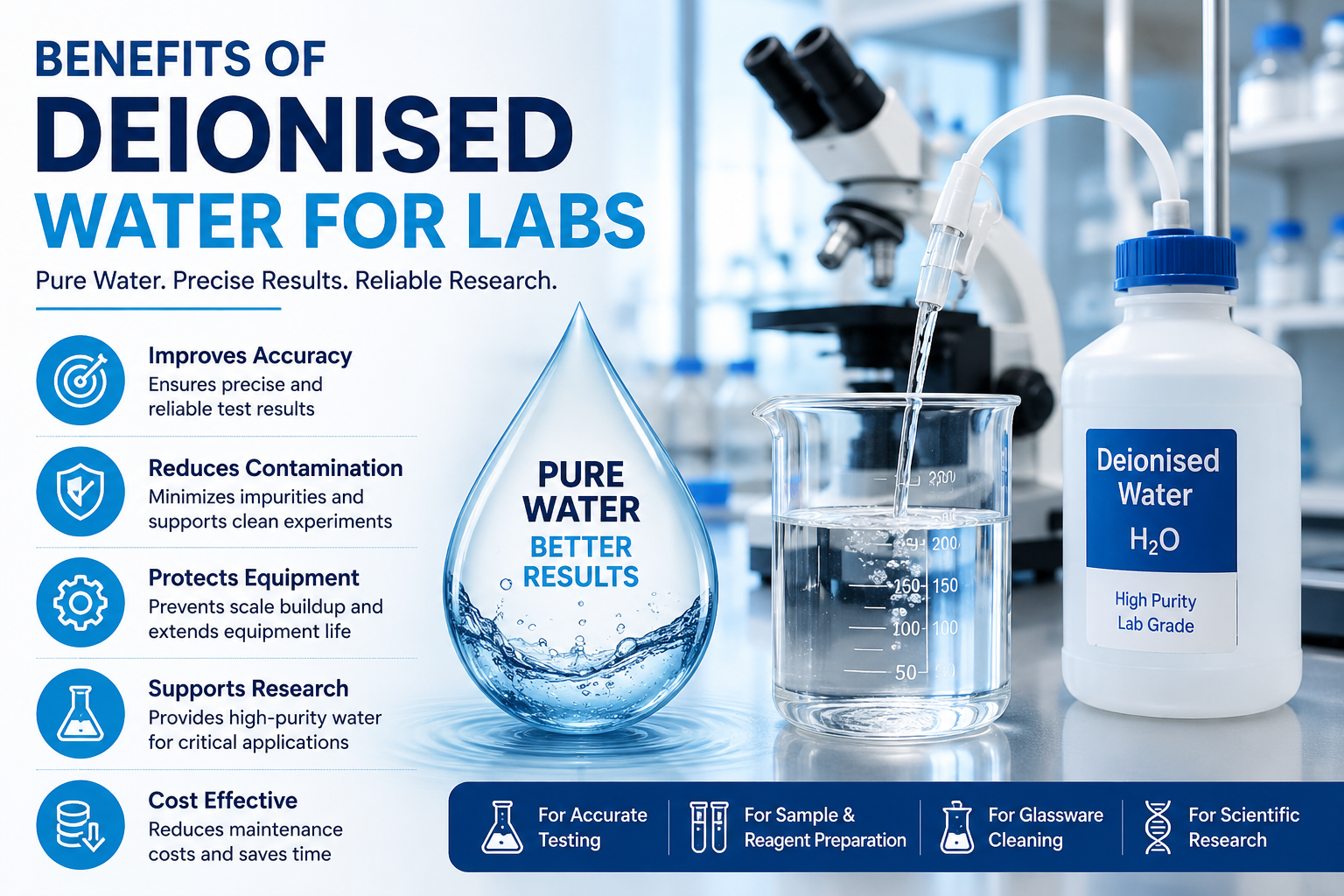
Laboratories depend on high-quality water to achieve accurate and reliable results. Even small amounts of impurities can affect experiments, damage equipment, and reduce the quality of research. Therefore, many laboratories use deionised water as a trusted source of purified water.
The benefits of deionised water for labs go beyond simple purification. It helps improve testing accuracy, protects laboratory instruments, and supports consistent outcomes. Moreover, it reduces contamination risks and enhances overall laboratory efficiency.
In this article, we will explore the major benefits of deionised water for labs, its applications, and why it remains an essential resource in modern laboratories.
What Is Deionised Water?
Deionised water, often called DI water, is water that has had most of its dissolved mineral ions removed. These ions typically include calcium, magnesium, sodium, chloride, sulfate, and iron.
Manufacturers produce deionised water through an ion-exchange process. During this process, special resins remove positively and negatively charged ions from the water. As a result, the water becomes highly purified and suitable for laboratory applications.
How Deionised Water Is Produced
The production of deionised water involves several purification stages.
Pre-Filtration
First, water passes through filters that remove suspended particles, sediment, and debris.
Ion Exchange Process
Next, cation and anion exchange resins remove dissolved minerals and salts. Consequently, the water becomes free from most ionic contaminants.
Final Polishing
Some systems include additional purification stages to achieve higher water quality. Therefore, laboratories can obtain water that meets strict standards.
Why Water Quality Matters in Laboratories
Water plays an important role in many laboratory activities. Researchers use it for sample preparation, reagent dilution, equipment cleaning, and testing procedures.
However, impurities in water can interfere with experiments. They may alter chemical reactions, affect measurements, and produce unreliable data. Therefore, laboratories require purified water to maintain accuracy and consistency.
Moreover, high-quality water helps protect expensive laboratory instruments from scaling and corrosion.
Key Benefits of Deionised Water for Labs
Improved Accuracy in Laboratory Testing
One of the most important benefits of deionised water for labs is improved testing accuracy.
Minerals and dissolved salts can interfere with analytical procedures. However, deionised water contains very low levels of these contaminants. As a result, researchers can obtain more precise and dependable measurements.
Furthermore, accurate data helps laboratories maintain high standards of quality and compliance.
Reduces Contamination Risks
Contamination can affect laboratory results and lead to costly errors.
Deionised water helps reduce contamination by removing many dissolved impurities. Therefore, scientists can perform experiments with greater confidence.
In addition, lower contamination levels improve the reliability of research findings and test results.
Protects Laboratory Equipment
Laboratory equipment often comes into contact with water during daily operations.
Regular water may leave mineral deposits inside instruments. Over time, these deposits can reduce performance and increase maintenance needs.
Deionised water helps prevent scale buildup. Consequently, laboratory equipment remains cleaner and operates more efficiently.
Supports Reliable Research Results
Consistency is essential in scientific research.
Researchers need repeatable conditions to verify experimental outcomes. Since deionised water contains fewer contaminants, it helps create a controlled environment for testing.
As a result, laboratories can achieve more reliable and reproducible results.
Enhances Chemical Preparation
Many laboratories prepare chemical solutions and reagents on a regular basis.
Impurities in water may react with chemicals and alter the intended formulation. However, deionised water minimizes these risks.
Therefore, laboratories can prepare solutions with greater precision and consistency.
Improves Cleaning Efficiency
Clean laboratory equipment is necessary for accurate testing.
Deionised water helps remove residues from glassware, containers, and instruments. Additionally, it dries with fewer mineral spots compared to regular water.
Consequently, laboratories can maintain higher cleanliness standards.
Reduces Maintenance Costs
Equipment maintenance can be expensive and time-consuming.
By reducing scale formation and contamination, deionised water helps extend equipment life. Therefore, laboratories may spend less on repairs and replacement parts.
Moreover, improved equipment performance supports long-term operational efficiency.
Suitable for Various Laboratory Applications
Another major advantage is versatility.
Laboratories across different industries use deionised water for numerous tasks. These include testing, cleaning, sample preparation, and research activities.
As a result, deionised water remains a valuable resource in many scientific environments.
Common Applications of Deionised Water in Laboratories
Analytical Testing
Laboratories use deionised water to prepare samples and maintain testing accuracy.
Sample Preparation
Researchers often use deionised water when preparing samples for analysis.
Glassware Cleaning
Technicians clean laboratory glassware with deionised water to reduce residue and contamination.
Reagent Preparation
Many reagents require purified water to ensure accurate formulations.
Microbiology Laboratories
Microbiology labs use deionised water in various preparation and cleaning procedures.
Pharmaceutical Laboratories
Pharmaceutical facilities rely on purified water to support quality control and research activities.
Deionised Water vs Regular Water for Laboratory Use
Regular water contains dissolved minerals, salts, and other impurities. These contaminants may interfere with laboratory processes.
In contrast, deionised water undergoes purification to remove many of these unwanted substances. Therefore, it offers greater consistency and reliability for scientific work.
Moreover, deionised water helps reduce contamination risks and equipment damage compared to untreated water.
Best Practices for Using Deionised Water in Labs
Laboratories can maximize the benefits of deionised water by following proper practices.
– Use clean storage containers.
– Monitor water quality regularly.
– Replace filters and resins when required.
– Store water in contamination-free environments.
– Follow laboratory water quality standards.
– Train staff on proper handling procedures.
– Use fresh deionised water whenever possible.
These practices help maintain water purity and support accurate laboratory operations.
How to Maintain Deionised Water Quality
Maintaining water quality is essential for achieving reliable results.
Laboratories should inspect purification systems regularly. Additionally, they should monitor conductivity and other quality indicators.
Furthermore, routine maintenance helps identify potential issues before they affect laboratory work.
By maintaining purification systems properly, laboratories can ensure a consistent supply of high-quality deionised water.
Frequent
What is deionised water used for in laboratories?
Laboratories use deionised water for testing, sample preparation, reagent preparation, equipment cleaning, and research activities.
Why do laboratories prefer deionised water?
Laboratories prefer deionised water because it contains fewer dissolved ions and impurities, which helps improve accuracy and consistency.
Is deionised water better than distilled water for labs?
The answer depends on the application. However, many laboratories use deionised water because it effectively removes dissolved ions and supports various testing procedures.
Can deionised water prevent equipment damage?
Yes. Deionised water helps reduce scale formation and mineral deposits, which can extend equipment life and improve performance.
How often should laboratory water systems be maintained?
Maintenance schedules vary by system and usage. However, regular inspections and timely replacement of filters and resins are essential.
Conclusion
The benefits of deionised water for labs make it an essential component of modern laboratory operations. It improves testing accuracy, reduces contamination risks, protects equipment, and supports reliable research results. Moreover, it helps laboratories maintain high standards of quality and efficiency.
As scientific and industrial laboratories continue to demand precise outcomes, deionised water remains a trusted solution for achieving consistent and dependable performance.