


SMART POOL CARE: USING OZONE TO MINIMIZE SODIUM HYPOCHLORITE
Can You Remove Sodium Hypochlorite from Swimming Pools Using an Ozone System?
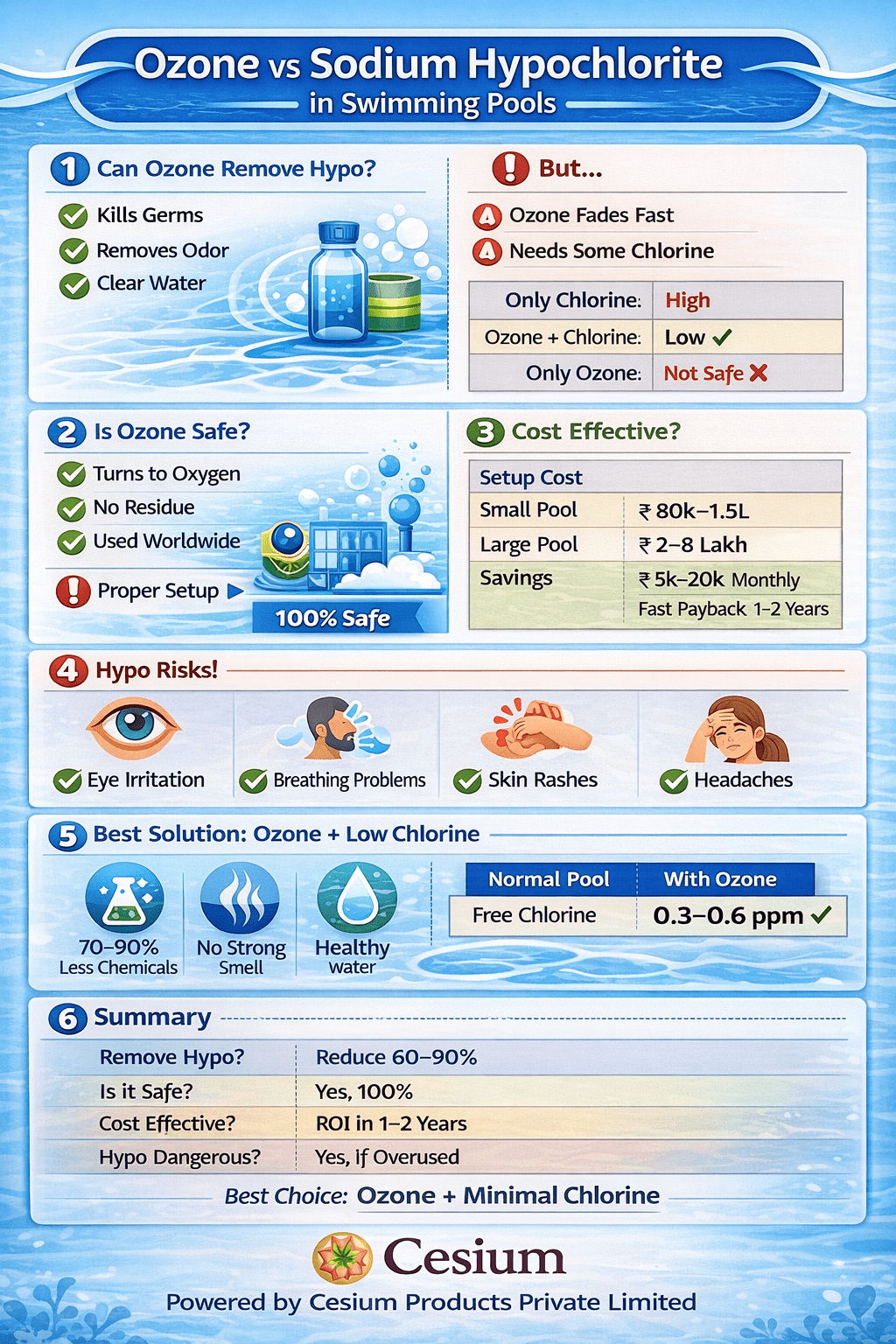
Swimming pools are usually kept clean and safe for swimmers by using chlorine-based chemicals, such as sodium hypochlorite (often called liquid chlorine/bleach). These chemicals kill germs, algae, and bacteria in the water. But chlorine can sometimes cause eye irritation, dry skin, and a strong smell, and many people wonder if there is a better way.
One popular alternative or supplemental method is using an ozone system to treat pool water.
What is an Ozone System?
Ozone (O3) is a gas made of three oxygen atoms. It is a strong oxidizer, meaning it reacts quickly with contaminants in water and destroys them. Ozone systems are installed in the pool’s circulation line and treat water as it passes through.
How Ozone Works
- Ozone breaks down germs, algae, and organic waste (like sweat, oils, and body stuff) very quickly.
- It oxidizes these impurities and makes the water much cleaner.
- Ozone then quickly converts back to oxygen, leaving no harmful chemical residue in the water.
Can Ozone Remove Sodium Hypochlorite?
Not completely on its own. Ozone can break down some chlorine and chemical by-products, but it does not remove all residual sodium hypochlorite from the water by itself.
Most ozone pool systems are designed to reduce chlorine usage, not replace chlorine entirely.
In real pool practice, ozone is used together with a small amount of chlorine to ensure constant safety. The ozone helps clean the water and lets you use much less chlorine-often about 60-90% less than traditional chlorine-only systems.
Is Ozone Safe for Health?
Benefits
- Ozone doesn’t leave long-lasting chemical residue in the water, unlike chlorine.
- It reduces the formation of harmful by-products like chloramines (which cause stinging eyes and smell).
Safety Notes
- Ozone gas itself is harmful to breathe.
It must be properly contained in the water treatment system and destroyed before it can reach the pool area. High ozone levels in the air can irritate lungs and eyes.
- Because ozone doesn’t provide a lasting disinfectant effect, a small amount of chlorine is usually still kept in the pool for safety.
So, while ozone makes the water safer and cleaner, it doesn’t replace the need for chlorine completely in most situations.
So, while ozone makes the water safer and cleaner, it doesn’t replace the need for chlorine completely in most situations.
How dangerous is Sodium Hypochlorite (Chlorine)?
Sodium hypochlorite is a strong disinfectant and kills germs effectively.
However:
Health Concerns
- Eye and skin irritation: Chlorine can make eyes red and water stingy.
- Respiratory irritation: Chlorine fumes can irritate lungs, especially in indoor pools.
- Chemical by-products: Chlorine reacts with organic matter to form substances like chloramines and other by-products that may cause discomfort or respiratory issues.
These effects are why many pool owners look for ways to reduce chlorine use, and ozone helps with that.
Is Ozone System Safe and Cost-Effective?
Cost
- Ozone system installation usually costs more upfront than simple chlorine dosing- 80,000 to 8lakh (may vary with pool size and region).
- But after that, you may spend much less on chemicals each month because ozone reduces the amount of chlorine you need.
Operating costs are usually moderate (electricity and maintenance), and ozone systems often save money overtime due to reduced chemical use.
Effectiveness
Ozone systems make water cleaner, clearer, and gentler on skin and eyes.
They can significantly lower chlorine requirements.
But they should not be used alone without any sanitizer – you still need some chlorine or another sanitizer for constant protection because ozone doesn’t stay in the pool long enough to protect the entire system by itself.
Conclusion
Ozone systems are a great way to improve water quality and reduce chlorine use.
They are safe if installed correctly, with proper ventilation and controls.
They help minimize health issues linked to chlorine by-products.
But they cannot fully remove all sodium hypochlorite from a pool on their own and usually do not replace chlorine completely.
So for most pool owners, the best solution is a combined system-a small amount of chlorine plus ozone treatment – giving you clean, safe, and comfortable water without harsh chemical effects.
Frequently Asked Questions (FAQs):
Q1. Can ozone completely replace sodium hypochlorite in swimming pools?
No. Ozone cannot fully replace sodium hypochlorite on its own. Ozone works very fast but does not stay in the pool water for long. A small amount of chlorine is still needed to maintain continuous disinfection.
Q2. Does an ozone system remove chlorine smell from swimming pools?
Yes, mostly. Ozone helps reduce chloramines, which are responsible for the strong chlorine smell, eye irritation, and skin discomfort. This makes the pool water fresher and more comfortable.
Q3. Can ozone improve water clarity in swimming pools?
Yes. Ozone removes organic contaminants like sweat, oils, and bacteria, resulting in clearer, cleaner, and better-looking water.
Q4. What is the best solution for safe and healthy pool water?
The best solution is a combined system: ozone for powerful oxidation and cleanliness, along with a small amount of chlorine for residual disinfection. This provides maximum safety with minimal chemical exposure.
Q5. Is an ozone system cost-effective in the long run?
Yes. Although the initial installation cost is higher, ozone systems reduce ongoing expenses for chlorine, improve water clarity, and reduce maintenance issues, making them economical overtime.