


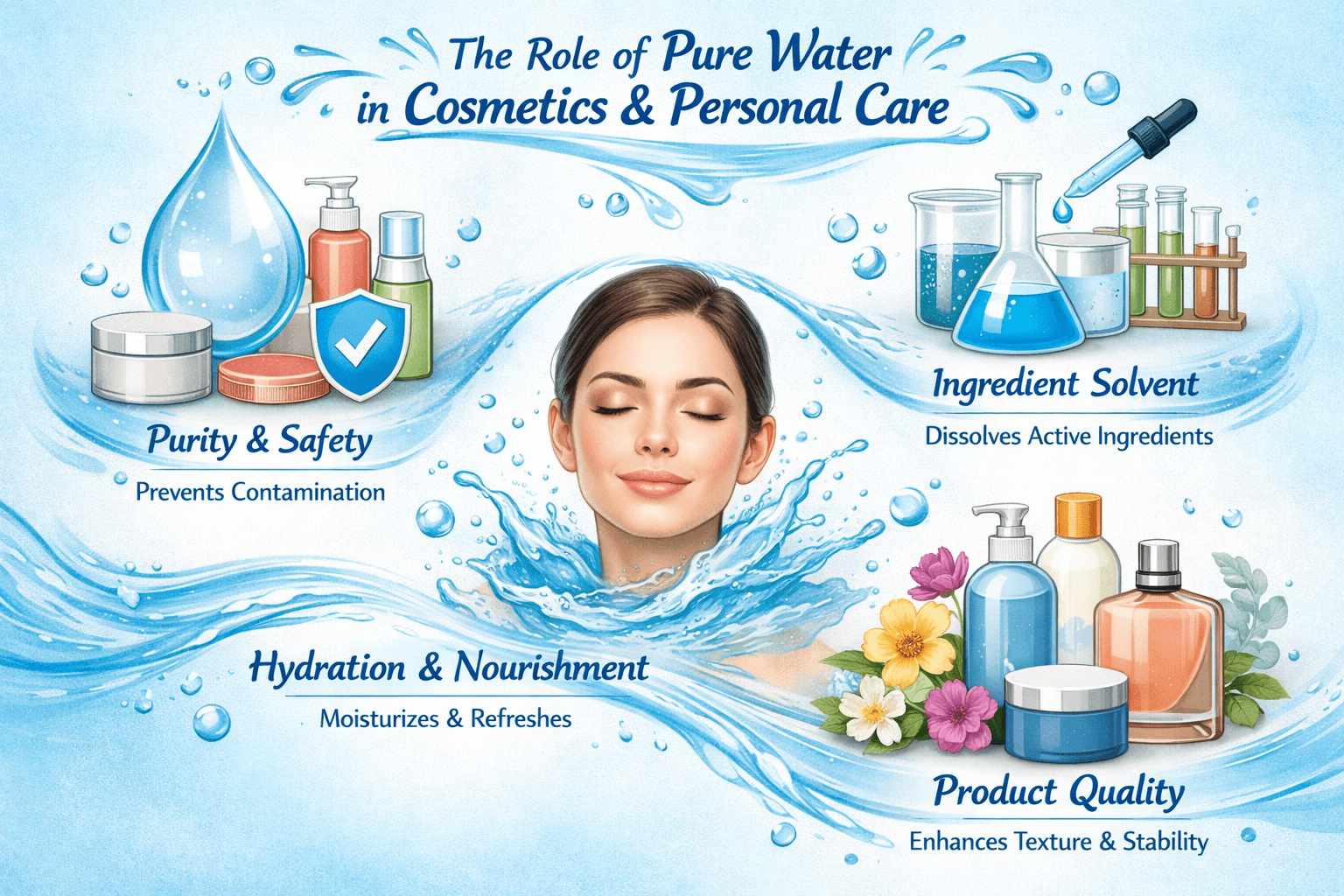
Water is the most essential and widely used ingredient in cosmetics and personal care products. From shampoos and face creams to lotions and toothpaste, pure water forms the foundation of most formulations. The quality of water directly influences product safety, stability, effectiveness, and shelf life.
Why Water Quality Matters in Cosmetics?
In many cosmetic formulations, water makes up 60-90% of the total composition. Because it comes into direct contact with skin, hair, and sometimes sensitive areas, water must be exceptionally clean and free from contaminants.
Impure water can:
- Cause skin irritation or allergic reactions
- Promote microbial growth
- Reduce product effectiveness
- Shorten shelf life
Therefore, using purified water is not optional- it is essential.
What is Distilled Water in Cosmetic Manufacturing?
Pure water used in cosmetics is treated to remove:
- Dissolved salts and minerals
- Microorganisms (bacteria, fungi, algae)
- Organic impurities
- Heavy metals
Common types of purified water used include:
- RO (Reverse Osmosis) Water
- Deionized (DI) Water
- Distilled Water
- Ultrapure Water (for premium or sensitive formulations)
Key Roles of Distilled Water in Cosmetics and Personal Care
- Acts as a Safe Base Ingredient
Distilled water acts as a carrier or solvent, helping dissolve active ingredients evenly. It ensures uniform texture, smooth application, and consistent performance.
- Prevents Microbial Contamination
Contaminated water can introduce harmful microorganisms into products, leading to spoilage or skin infections. Pure water significantly reduces microbial risk and supports product hygiene.
- Enhances Product Stability and Shelf Life
Minerals and impurities can react with cosmetic ingredients, causing:
- Color changes
- Separation
- Unpleasant odor
Purified water helps maintain chemical stability and longer shelf life.
- Ensures Skin and Hair Safety
Sensitive skin is especially vulnerable to contaminants such as chlorine, heavy metals, or bacteria. Using pure water minimizes irritation, redness, and adverse reactions.
- Improves Effectiveness of Active Ingredients
Distilled water allows active ingredients-such as vitamins, botanical extracts, and acids to perform effectively without interference from unwanted ions or impurities.
- Meets Regulatory and Quality Standards
Cosmetic manufacturers must comply with global regulations (such as ISO, GMP, and BIS standards). Using purified water helps meet these strict safety and quality requirements.
Applications of Distilled Water in Personal Care Products
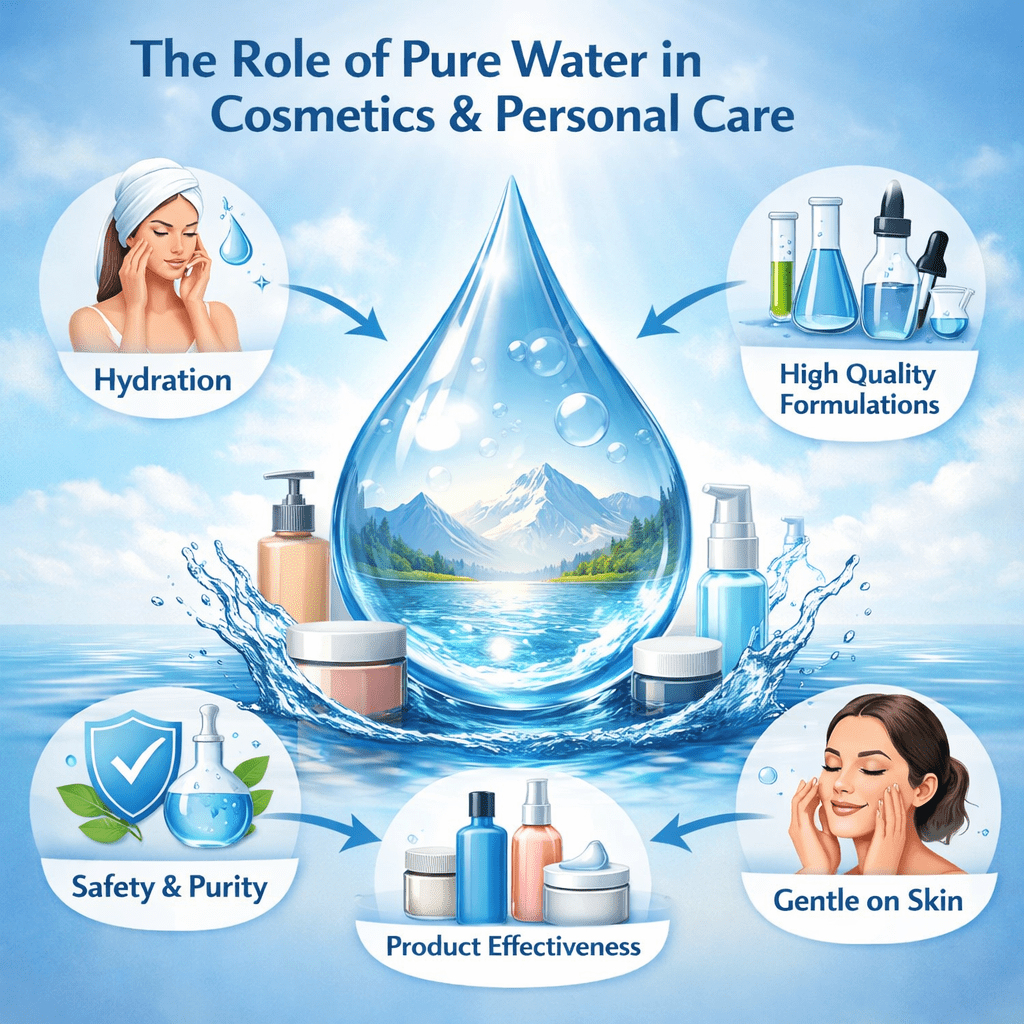
Distilled water is used in:
- Face creams and serums
- Shampoos and conditioners
- Body lotions and gels
- Toothpaste and mouthwash
- Liquid soaps and hand washes
- Baby care and sensitive-skin products
Consequences of Using Impure Water
Using untreated or poorly treated water can lead to:
- Product recalls
- Brand reputation damage
- Consumer health risks
- Regulatory non-compliance
This makes water purification systems a critical investment for cosmetic manufacturers.
Frequently Asked Questions (FAQs)
Q1 Why is distilled water important in cosmetics and personal care products?
Distilled water prevents contamination, ensures product stability, and protects skin and hair from irritation. Since water makes up a major portion of cosmetic formulations, its purity directly impacts product safety and effectiveness.