


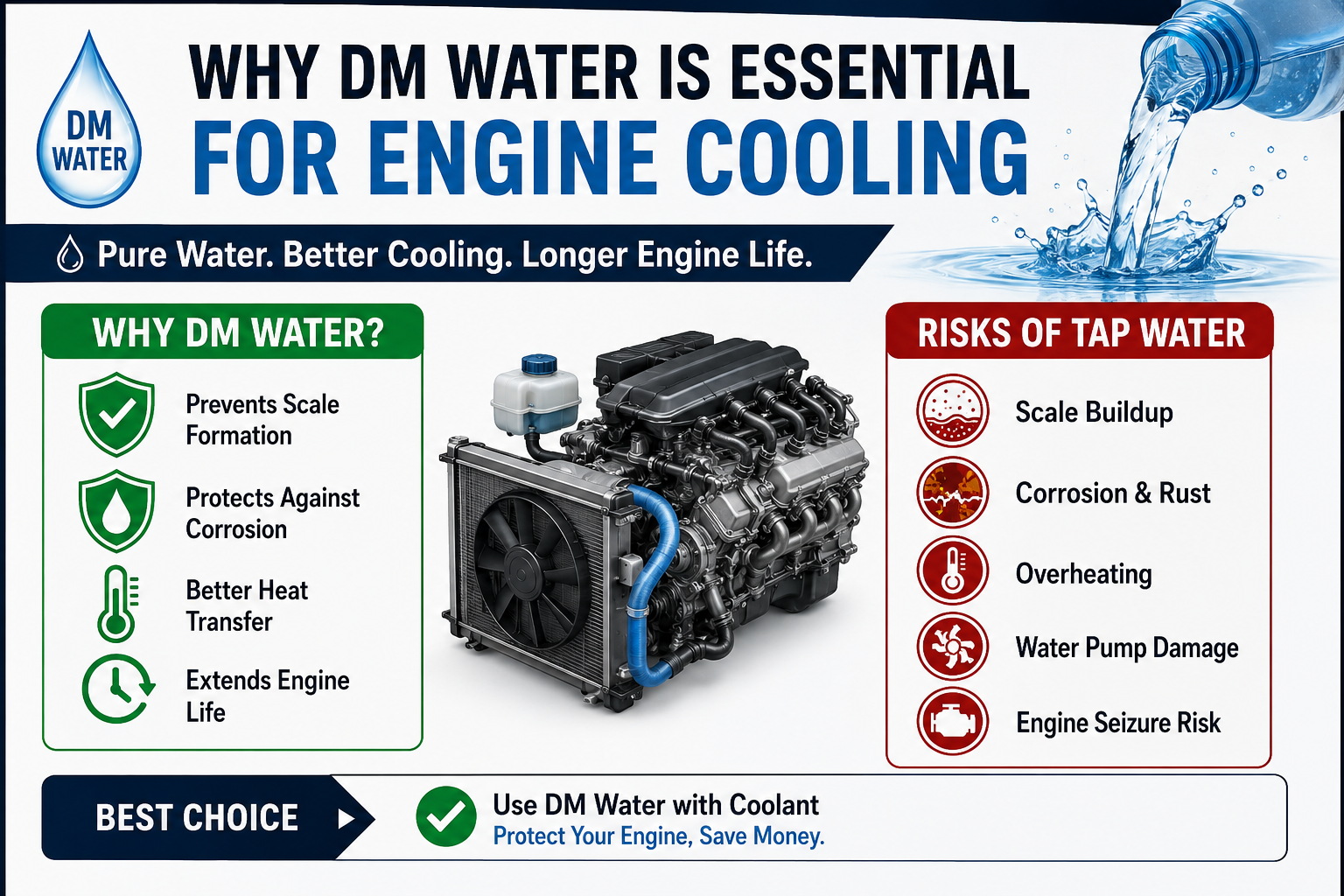
DM Water Engine Cooling is essential for maintaining vehicle performance and reliability. During operation, an engine generates a large amount of heat that must be removed efficiently to prevent damage. If this heat is not managed properly, the engine can overheat, leading to reduced performance, costly repairs, and even complete engine failure. This is why DM water is widely used in cooling systems, as it helps prevent scale formation, reduce corrosion, and improve heat transfer efficiency.
While most vehicle owners pay attention to coolant quality, many overlook the importance of the water mixed with the coolant. The type of water used directly affects the efficiency and lifespan of the cooling system. This is why automotive manufacturers and coolant suppliers recommend using Demineralized (DM) Water instead of ordinary tap water.
DM water contains almost no dissolved minerals or salts. As a result, it helps maintain efficient heat transfer, prevents scaling, and protects critical engine components from corrosion.
What Is DM Water?
Demineralized water, commonly known as DM water, is highly purified water from which dissolved minerals and salts have been removed through processes such as ion exchange and reverse osmosis.
Unlike tap water, DM water contains extremely low levels of:
- Calcium
- Magnesium
- Sodium
- Chlorides
- Sulfates
- Silica
Because of its high purity, DM water is widely used in industries where water quality directly affects equipment performance and longevity.
How an Engine Cooling System Works
An engine produces heat whenever fuel burns inside the combustion chamber. The cooling system removes this excess heat and keeps the engine operating within a safe temperature range.
The cooling system mainly consists of:
- Radiator
- Water pump
- Thermostat
- Coolant
- Cooling passages
- Cooling fan
Coolant circulates through the engine, absorbs heat, and carries it to the radiator, where the heat is released into the atmosphere.
However, the cooling system can only perform efficiently when coolant remains free from mineral deposits and contaminants.
Why DM Water Is Recommended for Engine Cooling
DM water is recommended because it contains virtually no minerals that can form deposits inside the cooling system.
When ordinary water is exposed to high engine temperatures, dissolved minerals start accumulating on metal surfaces. Over time, these deposits reduce coolant flow and heat transfer efficiency.
DM water prevents these problems by keeping the cooling system clean and allowing coolant to perform as intended.
Key benefits of using DM water include:
- Better heat transfer
- Reduced scale formation
- Lower corrosion risk
- Improved coolant performance
- Longer cooling system life
- Reduced maintenance costs
The Hidden Problems of Using Tap Water
Many vehicle owners use tap water because it is easily available. However, this convenience can lead to serious long-term issues.
Tap water contains dissolved minerals such as calcium and magnesium. When heated repeatedly, these minerals form hard deposits inside radiators, engine blocks, and cooling passages.
As these deposits build up, cooling efficiency decreases and engine temperatures begin to rise.
Common problems caused by tap water include:
- Scale formation
- Corrosion
- Radiator blockage
- Water pump damage
- Reduced coolant circulation
- Frequent overheating
Therefore, using tap water may save money initially, but it can result in expensive repairs later.
Scale Formation and Its Impact
Scale formation is one of the biggest threats to engine cooling systems.
When hard water minerals are exposed to heat, they settle on internal metal surfaces and form a hard layer known as scale.
Even a thin scale layer can significantly reduce heat transfer efficiency. As a result, the engine must work harder to maintain normal operating temperatures.
Scale buildup can:
- Restrict coolant flow
- Increase engine temperature
- Reduce radiator efficiency
- Cause hot spots inside the engine
- Increase fuel consumption
DM water eliminates this risk because it contains almost no scale-forming minerals.
Corrosion: Another Major Concern
Corrosion is another serious issue associated with poor-quality water.
Tap water often contains dissolved salts and oxygen that accelerate metal deterioration. Over time, corrosion attacks critical cooling system components such as radiators, water pumps, heater cores, and engine blocks.
Corrosion can cause:
- Rust formation
- Coolant contamination
- Metal weakening
- Leakage problems
- Reduced component lifespan
By using DM water, vehicle owners can significantly reduce corrosion and improve system reliability.
How DM Water Improves Coolant Performance
Modern engine coolants contain additives designed to protect the cooling system from corrosion, oxidation, and wear.
However, minerals present in tap water can react with these additives and reduce their effectiveness.
DM water helps maintain the chemical balance of coolant and allows additives to work properly.
As a result:
- Coolant lasts longer
- Corrosion protection improves
- Heat transfer remains efficient
- Cooling system components stay cleaner
This makes DM water the preferred choice for coolant preparation in both passenger and commercial vehicles.
Can the Wrong Water Choice Cause Engine Seizure?
Yes, in severe cases, the wrong water choice can contribute to engine seizure.
The process usually occurs gradually. Mineral deposits restrict coolant flow and reduce heat transfer efficiency. Consequently, the engine begins operating at higher temperatures.
Repeated overheating creates excessive stress on pistons, cylinders, bearings, and other moving parts.
If overheating becomes severe, components may expand beyond their normal operating limits. This can increase friction and eventually cause engine seizure.
The sequence often follows this pattern:
- Tap water introduces minerals.
- Scale forms inside cooling passages.
- Coolant circulation decreases.
- Engine temperature rises.
- Overheating becomes frequent.
- Internal components suffer damage.
- Engine seizure becomes possible.
Therefore, water quality should never be ignored when maintaining a cooling system.
Long-Term Benefits of Using DM Water
Using DM water provides several long-term advantages for vehicle owners and fleet operators.
These benefits include:
- Improved engine protection
- Better cooling efficiency
- Longer radiator life
- Reduced maintenance costs
- Extended coolant lifespan
- Lower risk of overheating
- Improved system reliability
- Longer component life
By preventing scale and corrosion, DM water helps maintain optimal cooling system performance throughout the vehicle’s lifespan.
Best Practices for Engine Cooling Systems
To maximize cooling system efficiency:
- Always use DM water with coolant.
- Follow the manufacturer’s coolant recommendations.
- Replace coolant at recommended intervals.
- Inspect radiators and hoses regularly.
- Monitor engine temperature frequently.
- Flush the cooling system when necessary.
- Avoid topping up with untreated tap water.
These simple practices can significantly improve engine reliability and reduce maintenance expenses.
Frequently Asked Questions (FAQs)
1. Why is DM water used in engine cooling systems?
DM water prevents scale formation, reduces corrosion, and improves heat transfer efficiency, helping the cooling system perform effectively.
2. Can I use tap water instead of DM water?
Tap water can be used temporarily in emergencies, but prolonged use may cause scaling, corrosion, and cooling system damage.
3. Does DM water improve coolant life?
Yes. DM water prevents unwanted mineral reactions and helps coolant additives remain effective for a longer period.
4. How does scale affect engine performance?
Scale reduces heat transfer and restricts coolant flow, causing higher engine temperatures and increasing the risk of overheating.
5. Is DM water suitable for all vehicles?
Yes. DM water is recommended for most modern vehicles when mixing coolant because it protects the cooling system from mineral-related damage.
Conclusion
DM water plays a crucial role in maintaining engine cooling system efficiency and reliability. Unlike ordinary tap water, it contains virtually no dissolved minerals that can cause scale formation, corrosion, and coolant contamination. As a result, it helps maintain effective heat transfer, protects critical engine components, and extends cooling system life.
Although tap water may appear to be a convenient option, its long-term effects can be costly. Mineral deposits, corrosion, overheating, and reduced cooling efficiency can eventually lead to serious engine damage. In extreme cases, persistent overheating may even contribute to engine seizure.
For optimal cooling performance, longer equipment life, and lower maintenance costs, DM water remains the safest and most effective choice for engine cooling systems.