


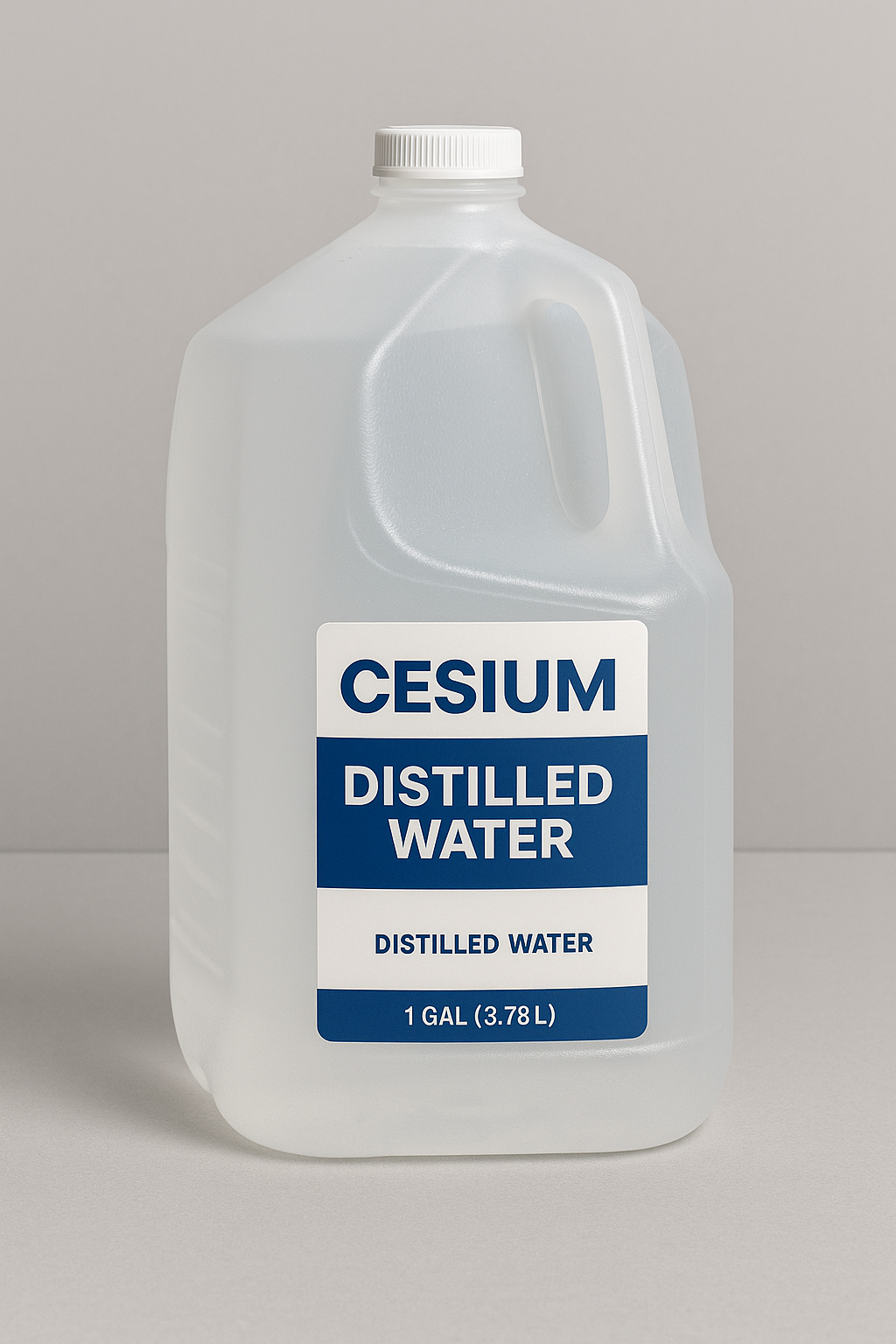
Let us analyze what distinguishes distilled water from sterile water, a topic that is high on the internet. Although distilled water is not sterile and differs, it is regarded as the highest standard for purity. Distillation eliminates impurities, including chemicals and minerals, but it does not ensure that all microbes are eliminated. Sterile water can help with it.
Despite their apparent similarities, distilled water and sterile water have different uses, and understanding the distinction is crucial, particularly in industrial, medical, or laboratory settings.
Distilled Water
Steam from boiling water that has been cooled and transformed back into liquid is called distilled water. Distilled water is the purest water available on Earth.
All water contains harmless levels of minerals, bacteria, pesticides, and other pollutants, regardless of whether it originates from an artesian well, natural spring, or ordinary tap. All those impurities are removed from water using distillation. Additionally, it eliminates almost 99.9% of the minerals dissolved in water.
Typical Applications of Distilled Water
Some of the uses of Distilled water are:
Distilled water is flawless for machinery and procedures that need water free of minerals.
Used in CPAP devices, Humidifiers prevent the airway from becoming polluted with minerals that can harm parts of automobiles and engine cooling systems.
It is used in Steam irons to prolong the life of appliances and avoid mineral accumulation.
Used in Aquariums to effectively regulate the interaction of water. Work in a laboratory where sterility is not vital but purity is.
Making baby foods to prevent undesirable minerals from entering the baby’s diet.
Sterile Water
Let’s examine sterile water now. Sterile water is characterized by its total absence of living microbes. Sterile water is cleansed, contaminant-free water that is regularly used in laboratory, pharmaceutical, and medical environments.
Sterility is more than just impurities; it is the lack of life. Water that has already been purified (often by distillation or reverse osmosis) needs to go through a second, serious stage called sterilization to become sterile. Furthermore, any leftover bacteria, viruses, spores, and fungi are removed by this process.
Typical Applications of Sterile Water
Some of the uses of Distilled water are
Free of germs and impurities.
Extremely pure and non-pyrogenic.
Safe to use when preparing injections.
Reduces the chance of infection.
Good for numerous medical and clinical procedures.
Ideal for equipment cleaning as it lacks Germs, Endotoxins, and Chemical contaminants.
Key Differences between Distilled and Sterile Water
It’s vital to comprehend the subtle differences between distilled and sterile water, particularly when safety is an issue.
Production Process
Minerals and impurities are left behind when water is boiled into steam and then condensed back into liquid to create distilled water. But this is not a sterilization procedure; rather, it is a purifying technique.
In contrast, sterile water is usually initially filtered before undergoing a further sterilization process to eliminate any living germs, such as autoclaving (steam under pressure), microfiltration, or irradiation. This makes it ideal for settings where there is a significant risk of microbial contamination.
Relevance for Medical Use
Internal medical applications such as IV solutions, Wound washing, and Injections are not permitted for distilled water. Despite being pure in terms of dissolved materials, if it is carried into the body, its lack of sterility is dangerous.
Sterile water, on the other hand, satisfies strict safety standards for use in medical applications. Applications where even minute microbial presence might have disastrous consequences include injections, intravenous therapies, surgical cleaning, and neonatal care.
Microbial Safety
Even though boiling and steam condensation are used to purify distilled water, sterility is not guaranteed. The bacteria are eliminated during the distillation process, but after the water is collected, it can get contaminated from the air or container surfaces.
Sterile water is wrapped to avoid contamination and is specifically treated to remove all living things. Only when the seal is unbroken does it stay microbe-free.
Frequently Asked Questions
Is water in bottles distilled?
Water in bottles isn’t distilled. Instead, it goes through reverse osmosis. The minerals added to the water after filtering are the reason why different bottled water brands have different tastes. The brand’s water source also has an impact. Other treatment methods are more useful than distillation due to the expense and duration of water distillation.
How does sterile water function?
There is no pharmacological activity in sterile water itself. It works as a medium for dissolving or diluting medications that are administered. Because of its sterility, no pollutants are introduced during the process.
How to store distilled water?
The shelf life of distilled water is impacted by way of storage. Make sure the seal stays fastened and undisturbed if your water is not opened. Distilled water’s shelf life can be increased by keeping it in the refrigerator, whether it has been opened or not. The risk of chemical contamination through plastic packaging is reduced if you store opened distilled water in a glass bottle in the refrigerator.
Is using sterile water at home safe?
Only when directed and prescribed by a medical professional. Avoid administering yourself.
Does sterile water have an expiration date?
Yes, make sure the seal is unbroken and always check the expiration date before using.
CONCLUSION
Is distilled water the same as sterile water, then? The short answer is no. The long answer is that each alternative has unique benefits and applications that set it apart from the others. When making your decision, bear these differences in mind!