


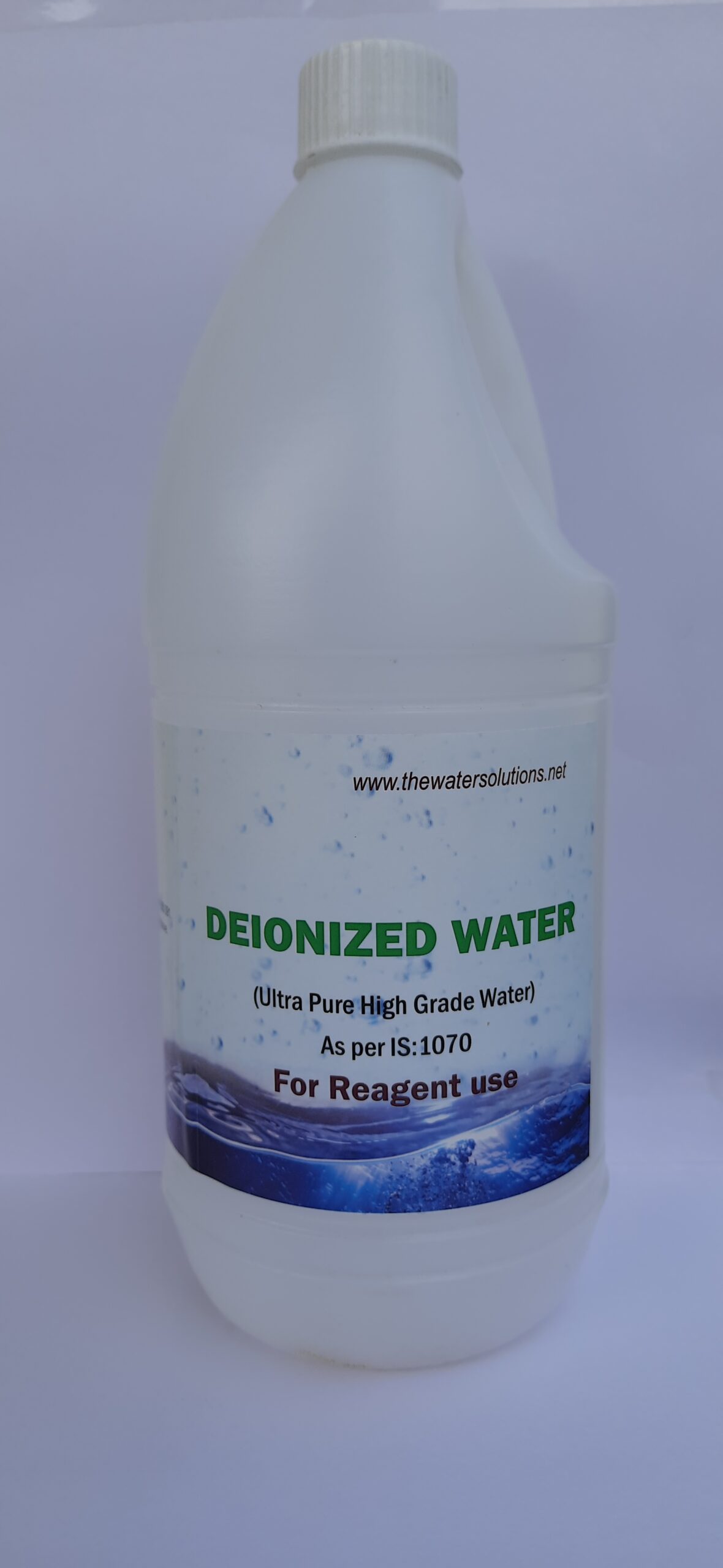
Water purity is vital for many industries around the world. Advanced water treatment systems are needed as companies expand and the demand for clean water increases. Deionized water is one of the most important of the water products.
What is Deionized Water?
Deionized water is described as water that has undergone a purification process, involving filtration and reverse osmosis, to eliminate all ions, including minerals and salts, followed by a Deionization system to remove mineral ions.
Ways to produce the Deionized water
Usually, there are two primary steps in the Deionization process:
Pre-treatment
The water goes through pre-treatment before it reaches the ion exchange resins. To eliminate larger particles, contaminants, and organic compounds that can clog the resin beds or obstruct the Deionization process, this pre-treatment step may include procedures like filtration and reverse osmosis.
Post Treatment
After being pre-treated, the water is run through ion exchange resin tanks. Oppositely charged ions from the water are drawn to and captured by the positively and negatively charged beads found in these specialty resins. Demineralized water is left behind after the ions are eliminated as the water passes through the resin beds.
Benefits of Deionized Water
High purity
Perfect for applications requiring high-purity water because it is free of the majority of mineral ions.
Low electrical conductivity
It is suitable for a variety of electrical applications since it is an excellent insulator.
Prolongs the product’s shelf life
The Deionized water extends the shelf life of some products by preventing bacterial growth due to the lack of minerals.
Pharmaceutical Industry
The pharmaceutical and medical industries extensively use Deionized water. It is employed in the manufacturing of pharmaceuticals, medical equipment, and lab chemicals. Deionized water’s lack of minerals and contaminants guarantees precise and reliable findings in testing, studies, and medication compositions. Deionized water is also used in hemodialysis and other medical treatments where water purity is crucial.
Manufacturing Industry
In manufacturing processes, Deionized water is vital. It is frequently used in the automotive, aerospace, and metallurgy industries for cleaning, rinsing, and cooling purposes. Deionized water’s lack of contaminants helps shield equipment and products from corrosion, scale accumulation, and pollution.
Electronics and Semiconductor Industry
Deionized water is vital to the semiconductor and electronics industries. It is widely employed in the manufacturing of circuit boards, microchips, and other electronic parts. The ultra-purity of Deionized water ensures that no contaminants or impurities are present throughout the manufacturing process, which is crucial for maintaining the working and caliber of electronic devices.
The Automobile and Aerospace Sectors
Using Deionized water has significant advantages for the automotive and aerospace sectors. It is employed in metal surface treatment procedures, battery manufacture, and cooling systems.
Because Deionized water is free of pollutants, corrosion may be avoided, and component longevity is guaranteed. For best results and clarity, it is also used in coolant blends and windscreen washer fluids.
Cosmetics and Personal Care
Cosmetics and personal hygiene items are regularly made with Deionized water. It promises formulation stability and purity, improving product performance and shelf life. In order to preserve the integrity of the contents and raise the general caliber of the finished product, Deionized water is regularly used in Skincare Products, Ointments, Shampoos, and Perfumes.
Drawbacks of Deionized Water
Unfit for consumption
Lack of minerals can cause Deionized water to taste bland and may cause the body to lose minerals over time.
Corrosive to some metals
Deionized water may be slightly corrosive to some metals because it lacks minerals that can create a protective layer.
Requires particular treatment and storage
The pH and conductivity of Deionized water are affected by the easy absorption of carbon dioxide from the atmosphere.
Conclusion
Due to its unmatched cleanliness and dependability, Deionized water is vital to industries. Deionized water promises excellent outcomes and operational efficiency in labs, industrial operations, or other businesses. Furthermore, knowing the distinctions between distilled and deionized water enables enterprises to choose the water purification system that best meets their needs.
Frequently Asked Questions
Is it safe to drink Deionized water?
Because Deionized water lacks vital minerals that the body needs, it is not meant for human consumption. Industrial and specialized applications are its main uses.
What distinguishes distilled water from deionized water?
Distilled and Deionized water undergo separate purification procedures. Distilled water is made by boiling water and collecting the condensed vapor, which leaves contaminants behind. In contrast, deionized water eliminates ions and pollutants.
How long does Deionized water last on the shelf?
There is no set shelf life for Deionized water. To preserve its purity and avoid contamination, it is advised to store it in hygienic, airtight containers.
What is the lifespan of Deionized water?
If carefully stored in airtight containers, Deionized water can last for a long time. It can, however, absorb carbon dioxide from the air, which may cause a tiny change in its conductivity and pH. Freshly Deionized water should be used for crucial applications.
Is it possible to make Deionized water at home?
Specialized tools and procedures are needed to produce Deionized water at home. For the majority of uses, it is more practical to purchase Deionized water from reliable providers.