


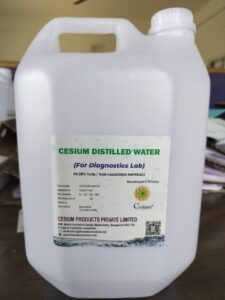
 Distilled water plays a crucial and irreplaceable role in the cleaning and sterilization of medical equipment. Its unique purity, free from dissolved salts, minerals, organic compounds, and microorganisms, makes it ideal for ensuring that medical tools are not only visibly clean but also microbiologically safe for patient use.
1. Chemical and Microbial Purity
-
No minerals or ions: Tap water or even regular filtered water contains calcium, magnesium, chlorine, and other ions that can leave residues on instruments, which may interfere with sterilization or damage the equipment.
-
Free from pathogens: Distilled water is boiled and re-condensed, removing bacteria, viruses, and spores, making it suitable for use where high-level disinfection is critical.
2. Prevention of Equipment Damage
-
No scaling or corrosion: When autoclaves, washers, or surgical instruments are cleaned or sterilized using hard water, scale formation occurs due to calcium and magnesium salts. This scaling can:
-
Damage heating elements.
-
Reduce sterilization efficiency.
-
Cause pitting and corrosion of expensive stainless-steel surgical tools.
-
-
Distilled water extends equipment life by avoiding such mineral deposits.
3. Effective Cleaning Process
-
Ensures detergent performance: In washer-disinfectors and ultrasonic cleaners, detergents work optimally in soft or distilled water. Minerals in regular water can bind to cleaning agents, reducing their effectiveness.
-
Spot-free drying: After cleaning or rinsing with distilled water, there are no water spots or mineral residues, which is essential for instruments used in sterile surgical environments.
4. Autoclave and Sterilizer Efficiency
-
Steam quality: Steam used in autoclaves must be clean and dry for effective sterilization. Steam generated from tap water may carry impurities that deposit inside the chamber or on the instruments.
-
Maintains sterilizer function: Continuous use of impure water in autoclaves results in clogging of steam jets, sensors, and piping, leading to breakdowns and poor sterilization cycles.
-
Using distilled water ensures:
-
Consistent high-temperature steam.
-
No contaminant buildup.
-
Accurate and reproducible sterilization outcomes.
-
5. Compliance with Medical Standards
-
Many healthcare regulations (e.g., CDC, AAMI, ISO 17665) recommend or mandate the use of distilled or deionized water for:
-
Final rinse of surgical instruments.
-
Steam generation in sterilizers.
-
Cleaning of endoscopes and other critical devices.
-
-
This ensures patient safety by preventing microbial transmission and endotoxin exposure.
6. Usage in Sensitive Equipment
-
Endoscopy and laparoscopic tools: These complex, narrow-channel instruments are highly sensitive to contaminants. Even tiny residues can promote biofilm formation, which resists disinfection. Rinsing with distilled water is essential.
-
Dialysis machines and surgical robots: These devices require ultra-clean water to prevent infection and maintain mechanical integrity.
7. Environmental and Cost Efficiency
-
Though distilled water may have an upfront cost, it prevents:
-
Frequent repair and maintenance of sterilizers and washers.
-
Shortened life of instruments.
-
Infection-related liabilities.
-
-
In the long run, distilled water is cost-effective for hospitals and clinics.
Conclusion
Distilled water is not just a cleaning agent—it’s a critical component of medical sterilization protocols. Its purity guarantees:
-
Instrument longevity,
-
Reliable sterilization,
-
Regulatory compliance,
-
And above all, patient safety.
Hospitals, diagnostic centers, dental clinics, and surgical theaters must prioritize distilled water, especially from a trusted source like Cesium Products Pvt Ltd, to maintain the highest hygiene standards.