


Battery Distilled Water vs Battery Electrolyte: Major Differences and When to Use Each
Many people believe that battery distilled water and battery electrolyte are the same. However, they perform different functions inside a lead-acid battery. Understanding this difference helps you maintain your battery correctly, improve its efficiency, and increase its service life.
A lead-acid battery works because of a chemical reaction between the battery plates and the electrolyte solution. During regular charging, some water inside the electrolyte evaporates. Therefore, you need to refill only the lost water with high-purity distilled water. Adding the wrong liquid at the wrong time can damage the battery and reduce its performance.
In this guide, you will learn the major differences between battery distilled water and battery electrolyte, when each one should be used, and why proper maintenance matters for every automotive, industrial, inverter, UPS, and solar battery.
Choose Cesium Battery Distilled Water for dependable purity, longer battery life, and consistent performance across every application.
What Is Battery Distilled Water?
Battery distilled water is purified water that passes through a distillation process. This process removes dissolved minerals, salts, bacteria, heavy metals, and other contaminants. As a result, the water becomes suitable for sensitive lead-acid batteries.
Unlike ordinary tap water, distilled water contains almost no impurities. Therefore, it prevents unwanted deposits from forming on battery plates. Clean battery plates allow chemical reactions to occur efficiently, which improves battery performance and extends service life.
Battery distilled water does not contain sulfuric acid. Instead, its only purpose is to replace the water that naturally evaporates during battery charging.
Many industries rely on distilled water because it protects expensive batteries from premature failure. Whether the battery powers a vehicle, solar system, forklift, telecom tower, or UPS system, pure water helps maintain stable performance.
Cesium Battery Distilled Water is manufactured under strict quality standards to deliver high purity and reliable battery protection.
Why High-Purity Water Matters
Battery performance depends on the purity of the refill water. Even small amounts of minerals can create deposits inside battery cells.
For example, tap water often contains calcium, magnesium, sodium, iron, chlorides, and silica. Over time, these minerals settle on battery plates. Consequently, the battery loses efficiency and requires more charging time.
Furthermore, mineral contamination increases internal resistance. As a result, the battery produces less power while consuming more energy during charging.
Using purified water eliminates these problems. Therefore, most battery manufacturers recommend only distilled water for routine maintenance.
Cesium Battery Distilled Water provides exceptional purity that supports reliable battery operation in demanding environments.
What Is Battery Electrolyte?
Battery electrolyte is the liquid solution that allows a lead-acid battery to produce electricity. It consists of distilled water mixed with sulfuric acid in a carefully controlled concentration.
Unlike refill water, electrolyte directly participates in the battery’s chemical reaction. Without electrolyte, the battery cannot store or deliver electrical energy.
Battery manufacturers prepare this solution during production. Therefore, users normally do not replace electrolyte during regular maintenance.
Only trained professionals should handle electrolyte because sulfuric acid is highly corrosive. Proper protective equipment is essential whenever electrolyte is added or replaced.
For everyday maintenance, Cesium Battery Distilled Water helps maintain the correct electrolyte level without changing the acid concentration.
Battery Distilled Water vs Battery Electrolyte
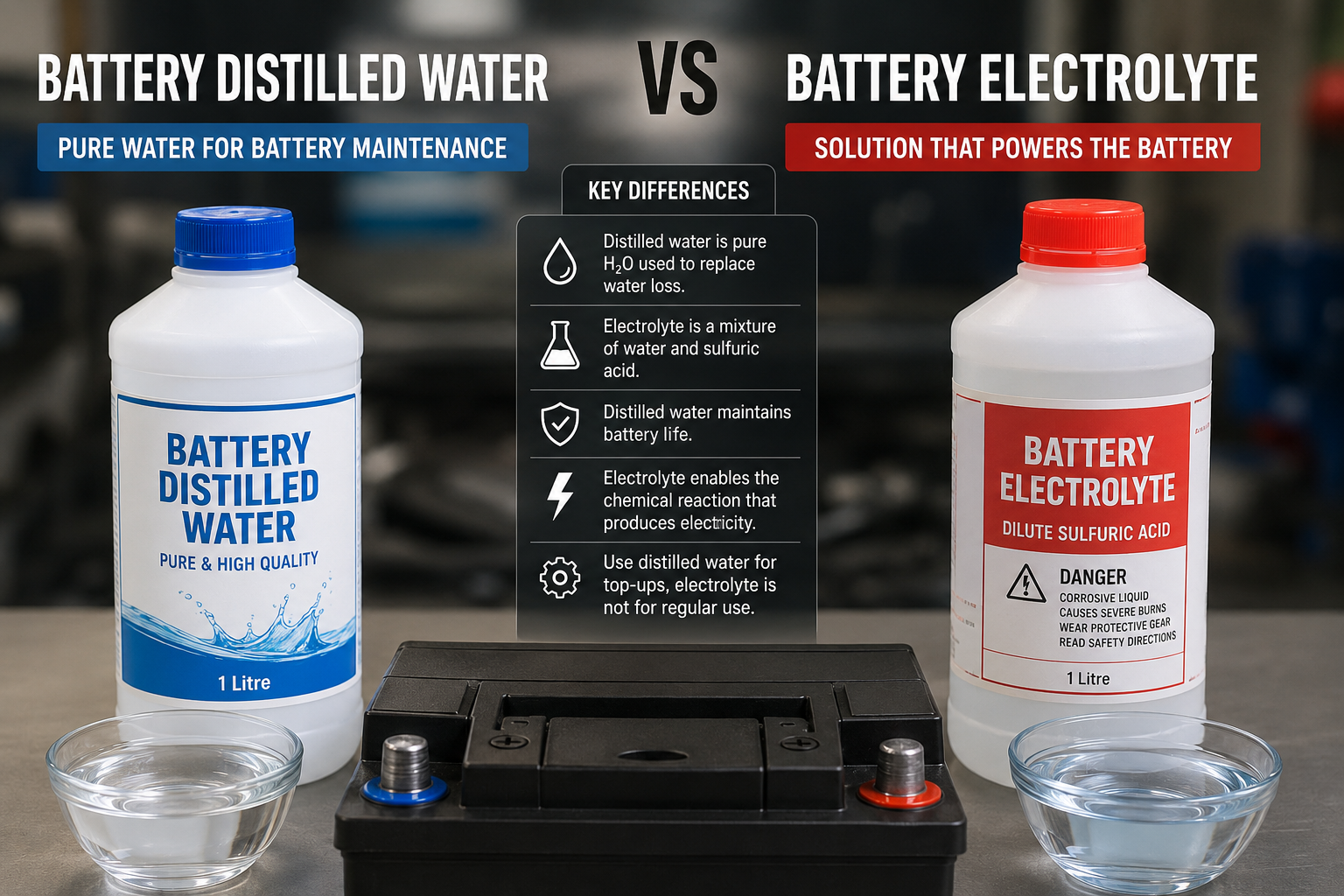
Although both liquids exist inside a lead-acid battery, they serve different purposes.
Battery distilled water replaces water lost during charging. On the other hand, battery electrolyte creates the chemical environment that allows electricity to flow.
Distilled water contains only purified water. In contrast, electrolyte contains distilled water combined with sulfuric acid.
Another important difference involves maintenance. Battery owners should add distilled water whenever the electrolyte level drops because of evaporation. However, they should never add extra acid unless the battery manufacturer specifically recommends it.
Adding sulfuric acid unnecessarily increases acid concentration. Consequently, battery plates corrode faster and battery life decreases.
Using only distilled water during routine maintenance helps maintain the proper chemical balance inside the battery.
Cesium Battery Distilled Water supports safe battery maintenance while protecting valuable batteries from unnecessary damage.
When Should You Use Battery Distilled Water?
Routine maintenance requires distilled water whenever the liquid level inside the battery falls below the recommended mark.
Common situations include:
- Regular battery inspection
- Water loss after charging
- Preventive maintenance
- Industrial battery servicing
- UPS battery maintenance
- Inverter battery servicing
- Solar battery maintenance
- Automotive battery inspection
- Forklift battery maintenance
- Telecom backup battery servicing
Always check the battery level before refilling. Moreover, fill only up to the recommended level because overfilling may cause overflow during charging.
It is also important to use a clean container while refilling. Dirty containers can introduce contaminants that reduce battery performance.
Cesium Battery Distilled Water delivers consistent purity for safe and effective battery maintenance across every industry.
Benefits of Using Distilled Water for Batteries
Using purified water offers several advantages for flooded lead-acid batteries.
First, it prevents mineral buildup on battery plates. Clean plates support efficient chemical reactions and improve battery performance.
Second, pure water helps batteries charge more efficiently. Consequently, charging time decreases while energy output improves.
Third, distilled water reduces corrosion inside battery cells. Therefore, the battery lasts longer and requires fewer repairs.
In addition, regular maintenance with purified water lowers operating costs. Healthy batteries need fewer replacements, which saves money over time.
Finally, batteries deliver more reliable power when maintained correctly. This benefit is especially important for hospitals, telecom towers, manufacturing plants, data centers, and solar power systems where uninterrupted power is essential.
Cesium Battery Distilled Water helps maximize battery efficiency, improve reliability, and extend battery service life.
When Should You Use Battery Electrolyte?
Battery electrolyte should only be used in specific situations. Unlike distilled water, it is not meant for routine battery maintenance. Instead, manufacturers or trained technicians use electrolyte during battery assembly or approved repair procedures.
You should use battery electrolyte in the following situations:
- Filling a new dry-charged battery
- Battery manufacturing
- Professional battery rebuilding
- Major battery repairs
- Manufacturer-approved servicing
However, avoid adding sulfuric acid to a battery that simply has a low liquid level. During normal operation, only water evaporates, while the acid remains inside the battery. Therefore, adding extra electrolyte can increase the acid concentration and damage the battery plates.
Always follow the battery manufacturer’s maintenance instructions. If you are unsure, consult a qualified technician before adding electrolyte.
For regular maintenance and water top-ups, choose Cesium Battery Distilled Water to maintain battery health and ensure reliable performance
Common Mistakes to Avoid During Battery Maintenance
Many battery failures happen because of incorrect maintenance practices. Fortunately, these mistakes are easy to avoid.
Do not use tap water because it contains minerals that create deposits inside the battery.
Never use drinking water, borewell water, or RO water as substitutes. Although they look clean, they still contain dissolved impurities that affect battery performance.
Avoid adding sulfuric acid unless the manufacturer specifically recommends it. Excess acid increases corrosion and shortens battery life.
Do not overfill the battery. Excess liquid may overflow during charging and damage nearby components.
Likewise, never ignore low water levels. Operating a battery with exposed plates can cause permanent damage.
Finally, clean the battery terminals regularly. Dirty terminals increase resistance and reduce charging efficiency.
Cesium Battery Distilled Water protects your battery from contamination and supports safe, long-lasting operation.
How to Maintain a Lead-Acid Battery Properly
Proper maintenance improves battery performance and extends service life. Following a simple maintenance routine also reduces unexpected failures.
Begin by switching off the battery system before inspection. Next, open the vent caps carefully and check the electrolyte level.
If the level is below the recommended mark, add only distilled water until it reaches the correct level. Do not overfill the cells.
After refilling, close the vent caps securely and wipe away any spilled liquid. Then inspect the battery terminals for corrosion and clean them if necessary.
In addition, keep the battery surface clean and dry. Dirt and moisture can create unwanted electrical leakage.
Finally, inspect the battery every one to three months, depending on its application and usage.
Regular maintenance with Cesium Battery Distilled Water helps improve charging efficiency and extends battery life.
Industries That Depend on High-Quality Battery Water
Many industries rely on lead-acid batteries for continuous power. Therefore, they also depend on high-quality distilled water for proper maintenance.
Common industries include:
- Automotive workshops
- Battery manufacturers
- Solar power plants
- Telecom companies
- Hospitals
- Data centers
- Manufacturing industries
- Warehouses
- Railway systems
- Mining operations
- UPS service providers
- Inverter manufacturers
- Forklift operators
- Power backup facilities
- Educational laboratories
Each of these industries requires dependable battery performance. Consequently, using high-purity water becomes an essential part of preventive maintenance.
Cesium Battery Distilled Water is trusted for industrial, commercial, automotive, and backup power applications because of its consistent purity and quality.
How to Choose the Best Battery Water
Selecting the right battery water is just as important as maintaining the battery itself.
Look for water that has very low conductivity and contains no dissolved minerals. High purity prevents scale formation and improves battery performance.
Choose a manufacturer that follows strict quality control procedures and provides consistent product quality.
Good packaging also matters because clean containers help prevent contamination during storage and transportation.
In addition, buy from a trusted supplier with experience in industrial water purificati
on.
Choosing premium-quality battery water protects your investment and reduces maintenance costs over time.
Cesium Battery Distilled Water is manufactured with strict quality standards to deliver exceptional purity and dependable battery protection.
Frequently Asked Questions
Can I use tap water in a lead-acid battery?
No. Tap water contains minerals that can damage battery plates and reduce battery efficiency. Always use distilled water for refilling.
Is battery distilled water the same as battery electrolyte?
No. Distilled water is pure water used to replace evaporated water, while battery electrolyte is a mixture of distilled water and sulfuric acid.
How often should I check my battery water level?
Inspect the battery every one to three months or follow the manufacturer’s maintenance schedule.
Can I add electrolyte instead of distilled water?
No. During normal battery operation, only water evaporates. Therefore, you should replace only the lost water with distilled water.
Which batteries require distilled water?
Flooded lead-acid batteries require regular water top-ups. However, sealed maintenance-free batteries do not require refilling.
Conclusion
Understanding the difference between battery distilled water and battery electrolyte is essential for proper battery maintenance. Although both are important, they serve different purposes. Distilled water replaces water lost during charging, while battery electrolyte enables the chemical reaction that produces electricity.
Using the correct liquid at the right time helps improve battery efficiency, extends service life, and reduces maintenance costs. Moreover, avoiding tap water and following proper maintenance practices prevents unnecessary battery damage.
Whether you maintain automotive batteries, inverter batteries, UPS systems, solar batteries, or industrial power backup systems, using high-quality distilled water ensures dependable performance.
Choose Cesium Battery Distilled Water for Superior Battery Care
When battery performance matters, quality should never be compromised. Cesium Battery Distilled Water is manufactured using advanced purification technology to deliver high purity, low conductivity, and consistent quality. It is an ideal solution for automotive, industrial, inverter, UPS, telecom, and solar battery applications.
Protect your batteries with Cesium Battery Distilled Water and experience longer battery life, improved efficiency, and reliable performance every day.