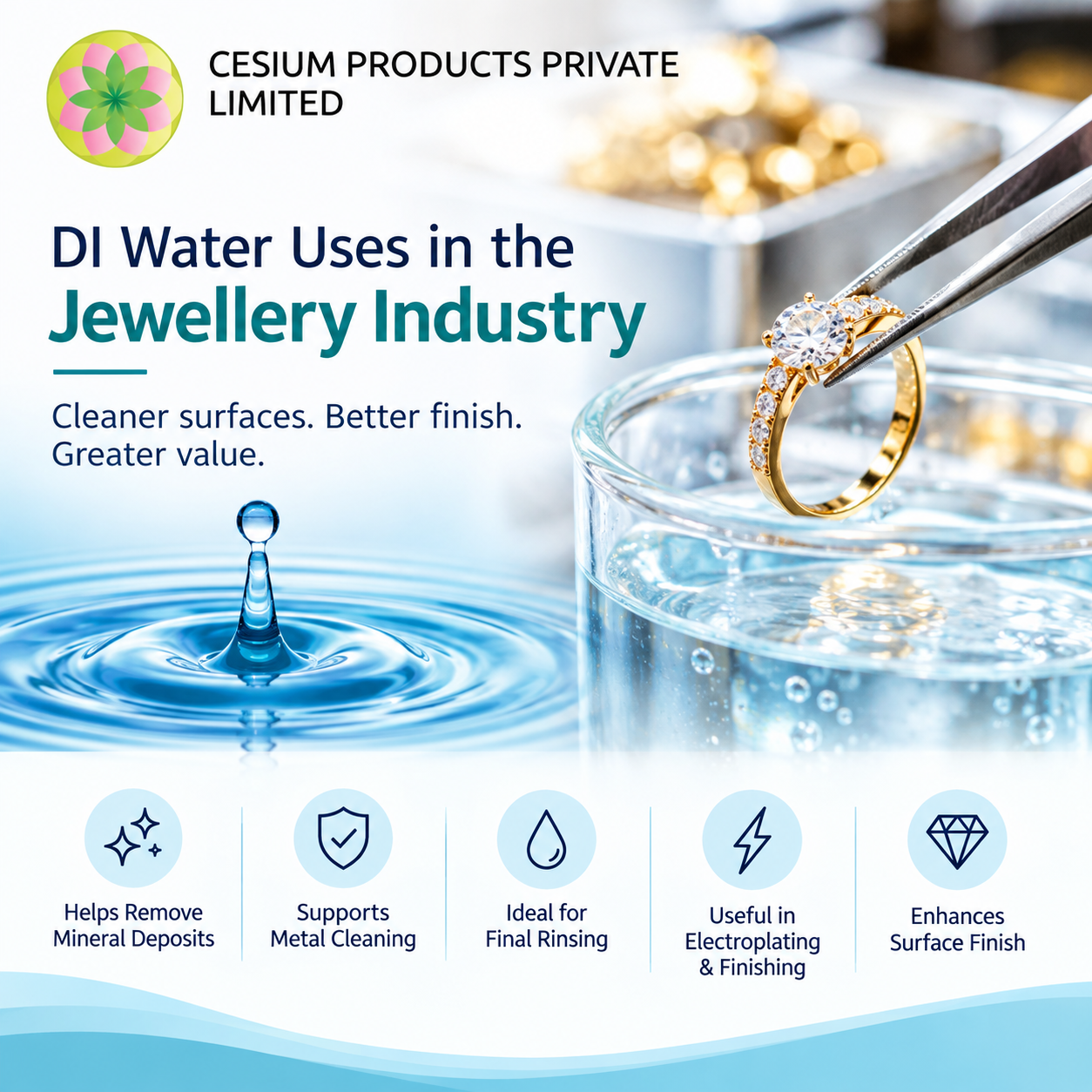
DI water plays an important role in the jewellery industry. Jewellery manufacturers use deionized water to clean metals, rinse jewellery pieces, support electroplating, and improve surface finishing. It contains very few dissolved mineral ions. Therefore, it helps reduce mineral stains and unwanted deposits during production.
Jewellery makers work with gold, silver, platinum, and other metals. These materials need careful cleaning at different stages. Ordinary tap water can leave mineral spots on polished surfaces. However, DI water helps reduce this problem and supports a cleaner manufacturing process.
Moreover, manufacturers can use DI water in ultrasonic cleaning, final rinsing, and other water-based processes. Its suitability depends on the jewellery material, chemicals, and quality standards of the production unit.
In this article, we will explain the key uses of DI water in jewellery manufacturing, its benefits, and how manufacturers can choose the right water quality.
What Is DI Water?
DI water stands for deionized water. Manufacturers produce it by removing dissolved mineral ions from ordinary water. These ions may include calcium, magnesium, sodium, chloride, and other charged particles.
Water treatment systems use ion-exchange resins or other suitable technologies to remove these ions. The process reduces the mineral content of the water and makes it suitable for applications that need fewer dissolved ions.
DI water differs from ordinary tap water because tap water often contains dissolved minerals. These minerals can leave marks on jewellery during washing and drying.
However, DI water does not automatically remove every type of impurity. For example, it may still contain some organic compounds, microorganisms, or dissolved gases. Therefore, manufacturers should select a suitable purification system based on their production needs.
Why Is DI Water Important in the Jewellery Industry?
Jewellery manufacturing involves several steps, including cutting, shaping, soldering, polishing, cleaning, and finishing. Each step can leave behind dust, oils, polishing compounds, or chemical residues.
DI water helps manufacturers control mineral contamination during water-based cleaning and rinsing. As a result, it can support better surface cleanliness and reduce unwanted water spots.
Here are the main reasons jewellery manufacturers use DI water:
- It helps reduce mineral deposits on metal surfaces.
- It supports the final rinsing of jewellery.
- It helps remove water-soluble residues after cleaning.
- It can improve the consistency of electroplating preparation.
- It helps reduce visible water spots after drying.
- It supports quality control during finishing.
- It can reduce mineral buildup in suitable cleaning equipment.
Moreover, consistent water quality helps manufacturers achieve more repeatable results across production batches.
Key Uses of DI Water in the Jewellery Industry
- DI Water for Jewellery Cleaning
Jewellery cleaning is one of the main applications of DI water. During manufacturing, jewellery pieces can collect oils, dust, polishing compounds, and other residues.
Manufacturers use suitable cleaning solutions to remove these materials. After cleaning, they may rinse the pieces with DI water to remove remaining water-soluble chemicals.
This step helps reduce mineral spots that ordinary water may leave behind. It is especially useful when manufacturers prepare jewellery for polishing, inspection, or final finishing.
However, DI water alone may not remove heavy grease or stubborn polishing compounds. In such cases, manufacturers need a suitable cleaning agent or cleaning method before rinsing.
- DI Water for Gold and Silver Jewellery
Gold and silver jewellery often require careful cleaning to maintain a smooth surface. Manufacturing processes may leave behind polishing residue, dust, or cleaning chemicals.
DI water can help rinse these residues from suitable gold and silver pieces. It also reduces the chance of mineral deposits forming during drying.
For example, a jewellery manufacturer may clean a gold ring with an appropriate cleaning solution and then rinse it with DI water. This process can help prepare the ring for inspection or further finishing.
Nevertheless, manufacturers must consider the metal alloy, gemstones, coatings, and adhesives. Some jewellery pieces require special cleaning methods to prevent damage.
- DI Water for Electroplating
Electroplating adds a thin metal layer to a jewellery item. Manufacturers may use this process to improve appearance, colour, or surface properties.
Before plating, the jewellery surface must be properly prepared. Oils, dirt, and chemical residues can affect the final coating.
DI water can support rinsing between suitable pretreatment stages. It can also help remove unwanted residues before the plating bath, when the process requires it.
In addition, water quality can affect bath stability and coating consistency. However, DI water does not replace the chemicals or solutions needed for electroplating. Manufacturers must follow the specifications of their plating system and chemical supplier.
- DI Water for Final Rinsing
Final rinsing is one of the most useful applications of DI water in jewellery manufacturing.
After cleaning or surface treatment, jewellery may contain traces of cleaning agents or other water-soluble substances. A final rinse helps remove these residues.
Ordinary water may leave mineral marks after evaporation. DI water contains fewer dissolved mineral ions, so it can help reduce these marks.
As a result, manufacturers can obtain cleaner-looking surfaces before drying, inspection, packaging, or delivery.
For better results, they should monitor water quality and replace or treat rinse water when contamination increases.
- DI Water for Ultrasonic Cleaning
Ultrasonic cleaning uses high-frequency sound waves to help remove dirt from small spaces and detailed surfaces. Jewellery manufacturers often use this method for suitable rings, chains, and metal components.
DI water may serve as the water component of a compatible cleaning process. Manufacturers can also use an approved cleaning solution when the application requires one.
After ultrasonic cleaning, a DI water rinse can help remove remaining water-soluble residues and reduce mineral spots.
However, ultrasonic cleaning is not suitable for every jewellery item. Certain gemstones, glued settings, treated stones, and delicate components may suffer damage. Always check the item’s cleaning requirements before using this method.
- DI Water for Polishing and Surface Finishing
Polishing helps create a smooth and attractive jewellery surface. During this stage, manufacturers may use polishing compounds that leave fine particles or residues behind.
After polishing, a suitable cleaning process removes these materials. DI water can support the rinsing stage and help reduce mineral marks on the finished surface.
This application is useful when manufacturers prepare jewellery for plating, quality inspection, or final presentation.
Furthermore, a consistent rinsing process can help reduce visible differences between production batches. However, the final result also depends on the polishing method, cleaning chemicals, drying technique, and handling practices.
- DI Water for Platinum and Other Precious Metals
Platinum and other precious metals also require careful handling during manufacturing. Depending on the product and process, manufacturers may need to remove dust, oils, or chemical residues.
DI water can support cleaning and rinsing when the selected process permits its use. Its low mineral content helps reduce the risk of deposits from dissolved salts.
Nevertheless, manufacturers should choose cleaning methods according to the metal, alloy, surface treatment, and any attached gemstones.
- DI Water for Jewellery Manufacturing Equipment
DI water may also support certain equipment used in jewellery production.
For example, some cleaning systems, laboratory equipment, and process units require water with low mineral content. Using suitable purified water can help reduce mineral deposits in these applications.
However, not every machine requires DI water. Manufacturers should follow equipment instructions and check whether the system needs DI water, distilled water, or another specified water grade.
How Does Water pH Affect Jewellery Manufacturing?
Water pH measures how acidic or alkaline the water is. The pH of pure water is close to 7 under standard conditions, although temperature and exposure to air can affect the reading. DI water can absorb carbon dioxide from the air, which may lower its measured pH. In jewellery manufacturing, pH matters because unsuitable water or cleaning solutions can affect sensitive metals, coatings, and gemstones. However, DI water does not always have a stable pH, and its pH alone does not indicate its purity. Therefore, manufacturers should monitor conductivity or resistivity, follow the required pH limits for each process, and use compatible cleaning chemicals to protect jewellery surfaces.
Benefits of Using DI Water in Jewellery Manufacturing
Using DI water in suitable production stages can offer several practical benefits.
- Fewer Mineral Spots
DI water contains fewer dissolved mineral ions than typical tap water. Therefore, it can reduce mineral spots on jewellery after rinsing and drying.
- Cleaner Metal Surfaces
A DI water rinse helps remove water-soluble residues left by compatible cleaning processes. This supports surface preparation before inspection or finishing.
- More Consistent Results
Consistent water quality can help manufacturers maintain similar cleaning and rinsing results across batches.
- Better Preparation for Plating
A suitable DI water rinse can help remove unwanted residues between pretreatment stages. This supports proper surface preparation for electroplating.
- Less Mineral Buildup
In compatible equipment, low-mineral water can reduce deposits caused by dissolved salts. This may help simplify cleaning and maintenance.
- Support for Quality Control
Manufacturers can monitor DI water quality and establish limits for different production stages. This helps them identify changes before water quality affects the process.
DI Water vs. Tap Water for Jewellery
Tap water contains minerals and other dissolved substances in amounts that depend on the local supply. DI water has a much lower concentration of dissolved ions because a purification system removes them.
For general cleaning, tap water may be sufficient for some tasks. However, final rinsing and processes that require low ionic contamination may benefit from DI water.
The choice depends on the production stage, jewellery material, cleaning chemicals, and required finish. Manufacturers should not assume that DI water is necessary for every operation.
How to Choose DI Water for Jewellery Manufacturing
Before purchasing DI water, manufacturers should consider the quality requirements of their process.
Check conductivity or resistivity
These measurements help indicate the concentration of ions in water. Lower conductivity generally indicates fewer dissolved ions. Choose a suitable limit for your application.
Identify the intended use
Water for a basic rinse may have different specifications from water used in sensitive finishing or specialised production equipment. Define the requirement before choosing a supplier.
Check water quality reports
Ask the supplier for relevant water quality information. Depending on the application, this may include conductivity, resistivity, total dissolved solids (TDS), and other required parameters.
Consider storage and handling
Even purified water can become contaminated during storage or transport. Use clean containers and suitable storage practices to maintain its quality.
Select a reliable supplier
Choose a supplier who can provide consistent water quality and explain the specifications of the product. For regular manufacturing, also consider delivery schedules and required volumes.
Common Mistakes to Avoid When Using DI Water
Manufacturers can improve their results by avoiding these common mistakes:
- Using contaminated containers to store DI water.
- Assuming that DI water removes heavy oil without a cleaning agent.
- Ignoring conductivity or other required quality checks.
- Using the same water for every process without checking specifications.
- Applying ultrasonic cleaning to delicate stones without checking compatibility.
- Allowing cleaned jewellery to collect dust or fingerprints before drying.
- Assuming that low TDS alone guarantees the removal of every impurity.
By following suitable cleaning procedures and monitoring water quality, jewellery manufacturers can reduce these risks.
Frequently Asked Questions (FAQs)
- What is DI water used for in the jewellery industry?
DI water supports jewellery cleaning, final rinsing, electroplating preparation, ultrasonic cleaning, and surface finishing. It helps reduce mineral deposits and water spots.
- Is DI water suitable for gold and silver jewellery?
Yes, DI water can help rinse suitable gold and silver jewellery. However, manufacturers should consider the metal alloy, gemstones, coatings, and cleaning instructions before selecting a method.
- Can DI water improve electroplating quality?
DI water can support electroplating by helping remove water-soluble residues during suitable pretreatment and rinsing stages. However, the final coating also depends on surface preparation, bath chemistry, and process control.
- What is the difference between DI water and distilled water?
DI water removes dissolved ions through deionization, commonly using ion-exchange technology. Distilled water comes from a process that evaporates water and condenses the vapour. Both can serve different industrial purposes, depending on their final quality.
- How can manufacturers check DI water quality?
Manufacturers can check conductivity or resistivity and monitor other parameters required by their process. They should also store water properly and test it according to their quality control procedures.
Conclusion
DI water plays a useful role in modern jewellery manufacturing. It supports cleaning, final rinsing, electroplating preparation, ultrasonic cleaning, and surface finishing. Its low mineral content helps reduce water spots and unwanted deposits on suitable jewellery pieces.
However, water quality alone does not guarantee a perfect finish. Manufacturers must also select compatible cleaning methods, control process conditions, and handle jewellery carefully.
By choosing the right DI water specifications and maintaining proper quality checks, jewellery manufacturers can support cleaner surfaces and more consistent production results.
For industrial applications, select DI water that meets the requirements of your manufacturing process.