


Primary Uses of Distilled Water: A Complete Detailed Guide


Introduction
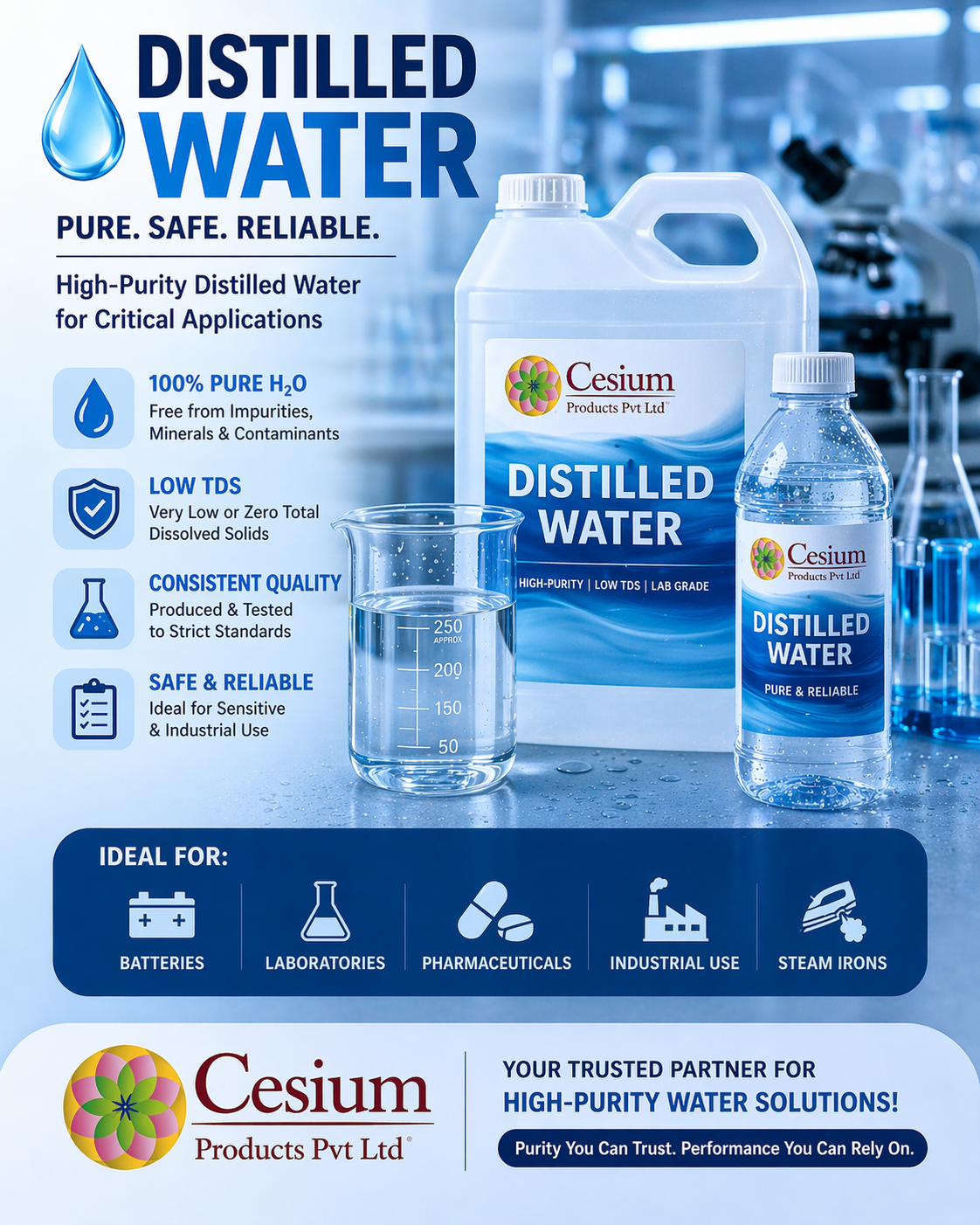
Distilled water is one of the purest forms of water available today. It is produced through a process called distillation, where water is boiled into steam and then condensed back into liquid form, leaving behind minerals, salts, metals, and many impurities.
Because of its exceptional purity, distilled water plays a critical role in industries, healthcare, laboratories, automotive systems, electronics, cosmetics, and even household appliances.
In this detailed blog, we explore the major uses of distilled water and why it is preferred over normal water in sensitive applications.
What Makes Distilled Water Different?
Normal tap water contains:
- Calcium
- Magnesium
- Chlorides
- Sulfates
- Dissolved salts
- Microorganisms
- Heavy metals
Distilled water removes most of these contaminants, making it:
- Low conductivity
- Mineral-free
- Residue-free
- Suitable for precision applications
1. Distilled Water in Medical & Healthcare Applications


Healthcare is one of the biggest users of distilled water because purity directly impacts patient safety.
Common Medical Uses
• Sterilization Equipment
Autoclaves and sterilizers require distilled water to avoid:
- Mineral deposits
- Scaling inside chambers
- Equipment damage
• CPAP & Humidifiers
Patients using CPAP machines are advised to use distilled water because it:
- Prevents white mineral dust
- Reduces bacterial growth
- Protects machine components
• Laboratory Diagnostics
Hospitals and diagnostic centers use distilled water for:
- Reagent preparation
- Sample dilution
- Glassware cleaning
• Pharmaceutical Manufacturing
Distilled water is used during:
- Medicine production
- Syrup manufacturing
- Cleaning of pharmaceutical equipment
2. Laboratory & Research Applications


Laboratories require highly pure water to ensure accurate and repeatable results.
Why Labs Prefer Distilled Water
• Accurate Testing
Minerals in regular water can interfere with:
- Chemical reactions
- Analytical measurements
- Experimental results
• Glassware Cleaning
Distilled water prevents:
- Water spots
- Salt residues
- Cross contamination
• Preparation of Solutions
Scientific solutions and buffers require impurity-free water for precision.
• Instrument Protection
Used in:
- Spectrophotometers
- Chromatography systems
- Analytical instruments
3. Industrial Uses of Distilled Water


Industries use distilled water where contamination or scaling can affect production quality.
Major Industrial Applications
• Boiler Feed Water
Distilled water helps:
- Prevent scaling
- Reduce corrosion
- Improve boiler efficiency
• Chemical Manufacturing
Used for:
- Mixing chemicals
- Product formulation
- Reaction consistency
• Surface Cleaning
Ideal for:
- Precision parts cleaning
- Final rinsing
- Residue-free washing
• Paint & Coating Industry
Helps maintain:
- Product consistency
- Better finish quality
- Reduced contamination
4. Distilled Water in Electronics Industry


Electronics manufacturing requires extremely clean water to avoid electrical and surface defects.
Uses Include
• PCB Cleaning
Distilled water removes:
- Flux residues
- Dust particles
- Ionic contamination
• Semiconductor Industry
Ultra-pure distilled water is used in:
- Wafer cleaning
- Chip manufacturing
- Precision rinsing
• Battery Manufacturing
Used in:
- Electrolyte preparation
- Component cleaning
5. Automotive Applications


Distilled water plays an important role in vehicle maintenance.
Common Uses
• Lead Acid Batteries
Used to:
- Maintain electrolyte levels
- Prevent mineral buildup
- Extend battery life
• Radiators & Coolants
Mixing coolant with distilled water helps:
- Reduce scale formation
- Improve heat transfer
- Prevent corrosion
• Car Washing & Detailing
Used for:
- Spot-free rinsing
- Premium detailing
- Glass cleaning
6. Cosmetic & Personal Care Industry


Purity is critical in cosmetics and personal care manufacturing.
Applications
- Creams and lotions
- Perfumes
- Shampoos
- Skin care products
- Hair products
Distilled water helps improve:
- Product stability
- Shelf life
- Safety standards
7. Household Uses of Distilled Water


Many household appliances perform better with distilled water.
Examples
• Steam Irons
Prevents:
- Scale buildup
- Steam blockage
- White stains on clothes
• Humidifiers
Reduces:
- Mineral dust
- Internal deposits
- Frequent cleaning
• Aquariums & Plants
Sometimes used in:
- Sensitive aquariums
- Controlled nutrient mixing
8. Food & Beverage Industry


Used where water purity affects taste and product quality.
Applications
- Beverage preparation
- Flavor mixing
- Food processing equipment cleaning
- Ingredient dilution
Advantages of Distilled Water
✅ High Purity
Removes minerals and many contaminants.
✅ No Scaling
Protects equipment and pipelines.
✅ Residue-Free Cleaning
Ideal for sensitive surfaces.
✅ Better Product Quality
Improves consistency in manufacturing.
✅ Longer Equipment Life
Reduces maintenance and corrosion.
Distilled Water vs Normal Water
| Feature | Distilled Water | Normal Water |
|---|---|---|
| Minerals | Almost none | Present |
| Residue | No | Yes |
| Scaling | Minimal | Common |
| Purity | High | Variable |
| Industrial Suitability | Excellent | Limited |
Conclusion
Distilled water is far more than just purified water — it is a critical utility across healthcare, laboratories, industries, automotive systems, electronics, cosmetics, and homes.
Its ability to provide:
- High purity
- Zero mineral residue
- Better cleaning
- Equipment protection
- Consistent quality
makes it essential in applications where ordinary water simply cannot perform reliably.
As industries continue moving toward higher precision and stricter quality standards, the demand for distilled water will continue to grow rapidly.
About Cesium Products Pvt Ltd
Cesium Products Pvt Ltd supplies high-quality:
- Distilled Water
- DM Water
- DI Water
- HPLC Water
- Laboratory Grade Water
for industrial, laboratory, pharmaceutical, and commercial applications.
📞 Contact: 9343561104
📧 Email: [email protected]