


DISTILLED WATER AND THE TOTAL DISSOLVED SOLIDS (TDS)
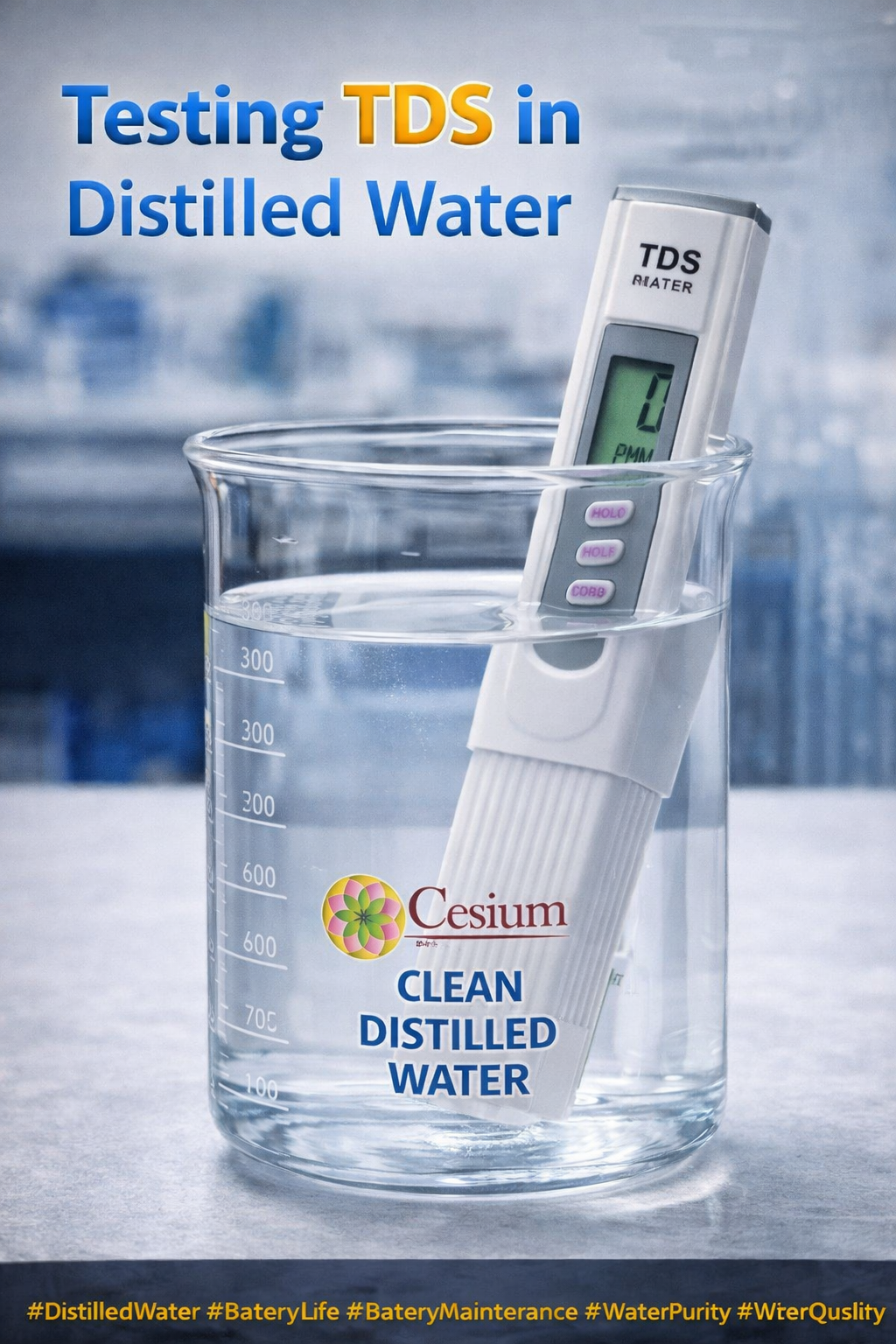
Water is the core of growth and development taking place in our life and it is impossible to study life without this. One kind of cleaned water that has undergone the distillation process is called distilled water. The water is boiled in this technique, and the vapor is then condensed back into liquid.
Pure H2O is left behind after contaminants, impurities, and minerals are eradicated. Even though distilled water is frequently utilized in medical and industrial settings, people searching for a safe, toxin-free source of water value the distilled water and drink it.
Furthermore, at Cesium, we make TDS, and TDS is a sophisticated gadget that tracks your water’s TDS (Total Dissolved Solids) level in real time.
Uses of Distilled Water
The number of uses for distilled water outside of the glass on your kitchen table will surprise you. First of all, because of its purity, it is essential in medical settings where sterilization is crucial. The need to use distilled water is highlighted by the fact that doctors and other medical professionals use distilled water to clean their tools to prevent infections during procedures.
Distilled water is used not only in healthcare but also in the creation of batteries and automobiles. Because mineral deposits can eventually cause corrosion and operational difficulties, lead-acid batteries need this pure kind of water. Similar to this, applying distilled water helps Air conditioning and other cooling systems stay efficient by avoiding the fungus collection and preserving the equipment.
Understanding the Total Dissolved Solids (TDS)
Let us comprehend the concept of TDS.
Water, which is the same to the normal eye, tastes different in various climates and on our tongues. Using an in-office water treatment system can assure consistency not only inside a house but also across offices. An office usually buys bottled water if it doesn’t have an in-office water treatment system. This means that someone has to either go out and pick it up or hire a delivery service personnel and make sure it is being ordered.
Total dissolved solids (TDS) are defined by the World Health Organization (WHO), as the inorganic salts and trace quantities of organic matter that are present in the water.
Today’s mineral water is not as pure as we would like it to be. A glass of water can be dangerous if it is not properly cleansed because it is full of chemicals, pollutants, and impurities. You need to understand TDS in order to understand the distilled water and its essential parts.
Total Dissolved Solids, or TDS, is the total amount of dissolved materials in drinking water. Inorganic salts and a trace amount of organic stuff will contribute to the formation of the TDS. Furthermore, he negatively charged anions (carbonates, nitrates, bicarbonates, chlorides, and sulfates) and positively charged cations (calcium, magnesium, potassium, and sodium) are involved in the creation of the inorganic salts. The amount of total dissolved solids in the water is known as the TDS level.
How is the TDS measured?
A TDS meter, which gauges water conductivity, can be used at home and the office to quantify total dissolved solids. The ability of water to carry an electric charge is measured by its conductivity. Mineral-free distilled water has a TDS of 0 and does not conduct electricity. Water conducts electricity more when it has more minerals.
The conductivity measurement can be understood in milligrams of minerals per liter equivalent, taken at a standard temperature of 25°C. The majority of portable meters deliver findings in terms of either conductivity or TDS.
Furthermore, TDS is measured in a lab by weighing the minerals that remain after the water evaporates. To further remove moisture from the mineral residue, the liquid is evaporated at 104°C, and the residual dry matter is then baked at 180°C.
Furthermore, the TDS number and the milligrams of material left per liter are weighed. 180°C is a reasonable balance between total water removal and minimizing dry material loss, notwithstanding the possibility of object loss.
Vitality of the Total Dissolved Solids (TDS)
Total Dissolved Solids, or TDS, is a crucial portion of the general quality of water. The best part is that without evaluating each component independently, you can fix how clean or polluted the water is by watching TDS. A more thorough examination of certain water parameters, such as minerals, salts, or pollutants, is necessary if the TDS level is either too high or too low.
Advantages of Total Dissolved Solids (TDS)
The advantages of the TDS are given below as follows.
Provide Environmental Safety
Natural environments are also impacted by environmental safety TDS levels. Frequent inspections can promote better environmental management by assisting in the detection of pollution in nearby water bodies.
Maintenance of Appliances
Excessive TDS causes scale, like the fungus buildup in appliances, heaters, motors, and pipelines. Monitoring extends their life and removes any danger to the towns and cities.
Protect the Health
Increased TDS will always indicate the presence of dangerous chemicals such as pesticides or heavy metals. Safe water use is ensured by routine inspections at the office and homes.
Efficient Digestion
By simplifying the breakdown of meals and encouraging regular bowel movements, balanced TDS levels enhance digestion, reducing problems like constipation and nurturing gastric issues.
Formation of Good Skin
Elevated amounts of Total Dissolved Solids (TDS) in water can damage skin by producing dryness, irritation, and blocked pores, which can result in acne and early aging. Maintaining healthier, cleaner, and younger-looking skin requires balancing TDS levels.
Superior Water Quality Assessment
The water quality is clearly indicated by TDS. Excessive levels could indicate too many salts or other impurities that modify clarity, taste, and odor.
Frequently Asked Questions
Why is it vital to monitor the TDS?
Total Dissolved Solids, or TDS, is a vital measure of the general water quality. Furthermore, without evaluating each component independently, you can quickly determine how clean or contaminated the water is by keeping an eye on TDS.
What is the best TDS level for drinking water?
The most appropriate and acceptable TDS level is naturally between 50 and 150.
How to use a TDS device?
It tracks the absorption of dissolved solids without the need for manual testing. You must attach it to your water tank or container. Cesium also makes a TDS device to track your water level in real time and offer quality customer service.
Why TDS level of water is important?
High TDS levels result in a bitter, salty, or even sulfuric taste or odor, depending on the type of dissolved solids. The final product is typically affected when food is cooked, and tea or coffee is prepared with mineral water. The physical sensations you get in your mouth after drinking is known as mouthfeel.
Conclusion
Checking water quality is critical for health and well-being in a world where receiving clean water is impossible. A vital measure of water quality, the Total Dissolved Solids (TDS) level affects everything from immunity to hydration. Hands-on water quality management is important because neglecting TDS monitoring can result in health hazards.