


MICRO STRATEGY: IMPACT OF WATER QUALITY ON HYDROPONIC SYSTEMS
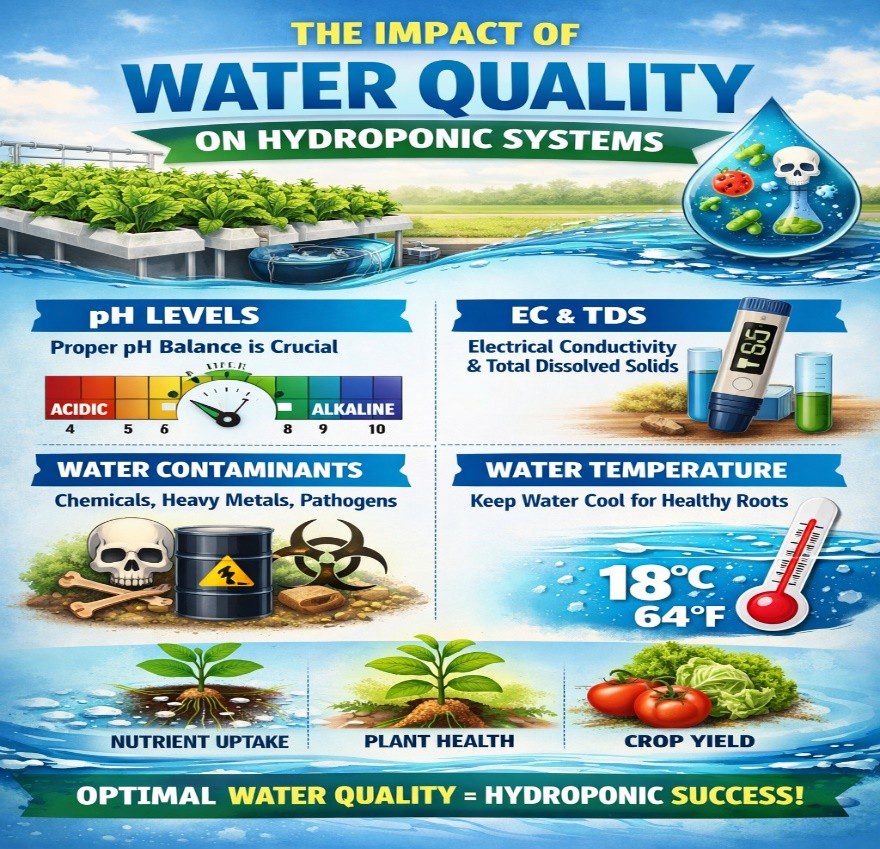
Hydroponics is a soil-less cultivation technique where plants grow in a nutrient-rich water solution. Since water acts as both the nutrient carrier and growth medium, its quality directly influences plant health, productivity, and system efficiency. This report presents a micro-level strategy highlighting how specific water quality parameters affect hydroponic systems and outlines practical control measures.
Importance of Water Quality in Hydroponics
Unlike traditional agriculture, hydroponics offers no buffering capacity from soil. Even minor variations in water quality can cause immediate stress to plants. Poor water quality can result in nutrient imbalance, reduced oxygen availability, root diseases, and crop failure.
Key Water Quality Parameters and their Effects
- pH Level
- Optimal range 5.5-6.5
- Controls nutrient solubility and uptake
- Deviations cause nutrient lockout, leading to deficiencies even when nutrients are present.
Impact: Stunted growth, chlorosis, weak root systems
- Electrical Conductivity (EC)/Total Dissolved Solids (TDS)
- Measures nutrient concentration in water
- High EC causes osmotic stress and root burn
- Low EC leads to nutrient deficiency
Impact: Poor plant vigor, uneven growth, reduced yield
- Water Purity
- Ideal source water TDS:<150 ppm
- Presence of salts, heavy metals, chlorine, or fluorides disrupts nutrient formulation.
Impact: Root toxicity, reduced nutrient absorption, plant stress.
- Dissolved Oxygen
- Essential for root respiration
- Low oxygen levels encourage anaerobic pathogens.
Impact: Root rot, slow nutrient uptake, plant wilting
- Microbial Contamination
- Pathogens such as Pythium and algae thrive in contaminated water
- Biofilm formation clogs irrigation lines.
Impact: Disease spread, system inefficiency, crop loss.
Micro Strategy for Water Quality Management
- Source Water Treatment
- Use Reverse Osmosis (RO) or multi-stage filtration.
- Remove Chlorine using activated carbon filters.
- Continuous Monitoring
- Daily monitoring of pH and EC
- Weekly testing for TDS and microbial load
- Oxygen Management
- Install air stones or oxygen injectors
- Maintain water temperature below 220C to retain oxygen.
- System Hygiene
- Periodic system flushing
- Use UV sterilization or ozone treatment to control pathogens
- Nutrient Solution Optimization
- Prepare nutrient solutions using treated water.
- Adjust nutrient strength based on crop stage.
- Benefits of Implementing the Micro Strategy
- Improved nutrient uptake efficiency
- Consistent and predictable crop yield
- Reduced disease incidence
- Lower operational losses
- Challenges and Mitigation
Challenge: Mitigation strategy
- High treatment cost Scalable filtration systems
- Frequent monitoring Automated sensors
- Pathogen outbreaks Preventive UV treatment
CONCLUSION
Water quality is the foundation of hydroponic farming success. A micro strategy focusing on precise control of pH, purity, oxygen levels, and microbial load ensures healthy plant growth and sustainable hydroponic operations. Consistent monitoring and proactive management convert water from a risk factor into a productivity driver.
Frequently Asked Questions (FAQ’s):
Q1. Why is water quality important in hydroponic systems?
In hydroponics, water acts as the growing medium and nutrient carrier. Poor water quality directly affects nutrient uptake, root health, and plant growth.
Q2. What is the ideal pH level for hydroponic water?
The ideal pH range is 5.5 to 6.5, which allows plants to absorb nutrients efficiently.
Q3. How does poor water quality affect plant growth?
Poor water quality can cause:
- Nutrient deficiencies or toxicities
- Root diseases
- Slow growth and reduced yield
Q4. What is EC and why is it important in hydroponics?
Electrical Conductivity (EC) measures nutrient concentration.
- High EC – nutrient burn
- Low EC – nutrient deficiency
Q5. What type of water is best for hydroponics?
RO (Reverse Osmosis) water or low- TDS filtered water is best, as it allows precise nutrient control.
Q6. How does dissolved oxygen affect hydroponic plants?
Adequate dissolved oxygen supports healthy root respiration. Low oxygen leads to root rot and poor nutrient absorption.
Q7. How often should water quality be monitored?
- pH and EC: daily
- TDS and temperature: weekly
- Microbial load: periodically