


DM Water Secrets: What It’s Used For & Why?
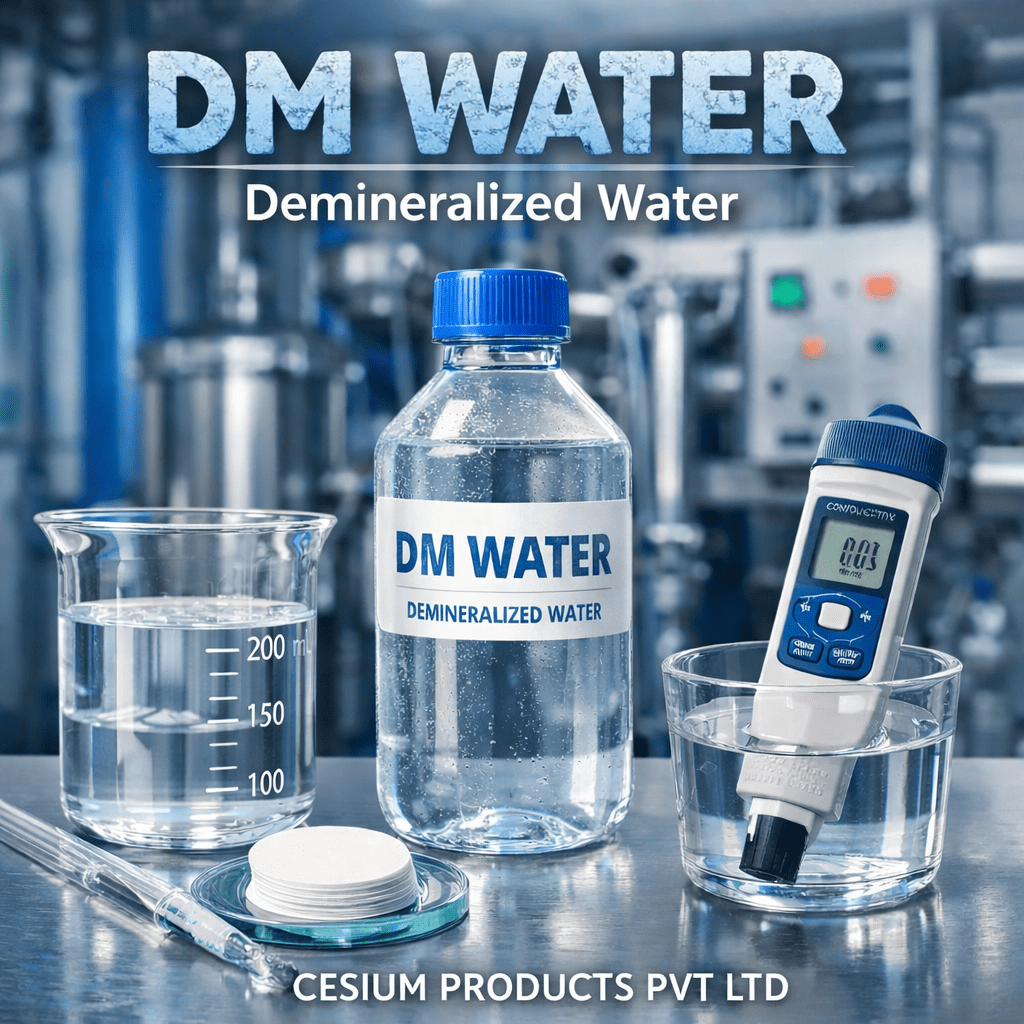
Water quality plays a very important role in industries, laboratories, and healthcare. One such high-purity water is DM Water, also known as Demineralized Water. It is widely used where even small impurities in water are not acceptable.
What is DM Water?
DM Water means Demineralized water. DM Water is water in which all minerals and dissolved salts are removed. DM water does not contain calcium, magnesium, sodium, or other ions. Because of this, DM water is highly pure and widely used in industries.
How is DM Water Made?
DM Water is produced by a process called demineralization. In this process, water passes through ion-exchange resins that remove minerals. The final water obtained is high-quality DM water.
Conductivity of DM Water
The conductivity of DM water is very low because it contains almost no dissolved ions. Typically, DM water conductivity is below 10µS/cm.
High-purity DM Water may have conductivity in the range of 1-5µS/cm.
Low conductivity indicates better purity of DM water.
TDS Limit of DM Water
TDS means Total Dissolved Solids. Since DM water has no dissolved salts, the TDS of DM water is very low.
- Typical DM water TDS: below 10ppm
- High-quality DM water TDS:0-5 ppm
Both TDS and conductivity are important parameters used to check the quality of DM water.
Conductivity Meter for DM Water
A conductivity meter is used to measure the purity of DM water. It measures how well DM water conducts electricity and displays the value in µS/cm (micro Siemens per centimeter).
For standard industrial use, DM water conductivity should be below 10 µS/cm. In laboratories and pharmaceutical applications, DM water may show readings as low as 1-5 µS/cm.
Conductivity meters are commonly used in DM water plants, laboratories, and manufacturing units. Regular monitoring using a conductivity meter ensures consistent quality of DM water and proper functioning of the DM plant.
Role of RO Water in DM Water Production
RO water is often used as feed water for producing DM water. RO water removes most impurities, but small amounts of salts may remain. This RO water is then treated in a DM plant to remove the remaining ions and produce high-purity DM water. Using RO water improves DM plant efficiency and resin life.
Uses of DM Water
Because of its low conductivity and low TDS, DM water is used in:
- Laboratories and research centers
- Pharmaceutical industries
- Hospitals and diagnostic labs
- Boilers and cooling systems
- Batteries and inverters
- Chemical and manufacturing industries
Benefits of DM Water
- Free from dissolved salts and minerals
- Prevents scaling and deposits on equipment
- Improves performance and life of machines
- Suitable for high-precision applications
- Ensures consistent water quality
DM Water vs Normal Water
Normal water contains minerals and has high conductivity, while DM water has very low conductivity. Normal water is suitable for drinking, but DM water is mainly used for industrial and technical applications.
Is DM Water Safe for Drinking?
DM water is not recommended for regular drinking because it does not contain essential minerals required by the human body. It is mainly meant for industrial, laboratory, and technical applications.
Conclusion
DM water is an essential requirement in industries and laboratories where purity matters the most. By removing all dissolved minerals and salts, DM water helps maintain equipment efficiency, product quality, and safety standards. If your process requires high-purity water, DM water is the right choice.
Frequently Asked Questions (FAQs):
Q1 What is DM Water?
DM Water (Demineralized Water) is water from which all dissolved salts and minerals have been removed using an ion-exchange process. It has very low conductivity.
Q2 Is DM water same as distilled water?
No. DM water is produced using ion exchange, while distilled water is produced by boiling and condensation. Both are pure, but the purification methods are different.
Q3 Is DM water corrosive?
Yes, DM water can be mildly corrosive because it tries to absorb minerals from metals and surroundings due to its high purity.
Q4 Is DM water acidic?
DM water is usually neutral when freshly produced, but it can become slightly acidic after absorbing carbon dioxide from air.
Q5 Why is DM water used in power plants?
Power plants use DM water to protect turbines, boilers, and heat exchangers from scaling and corrosion.
Q6 Is DM water safe for skin?
Yes, DM water is safe for external use and is often used in cosmetic and pharmaceutical applications.