


WHAT MAKES OZONE ONE OF THE STRONGEST WATER PURIFIERS?
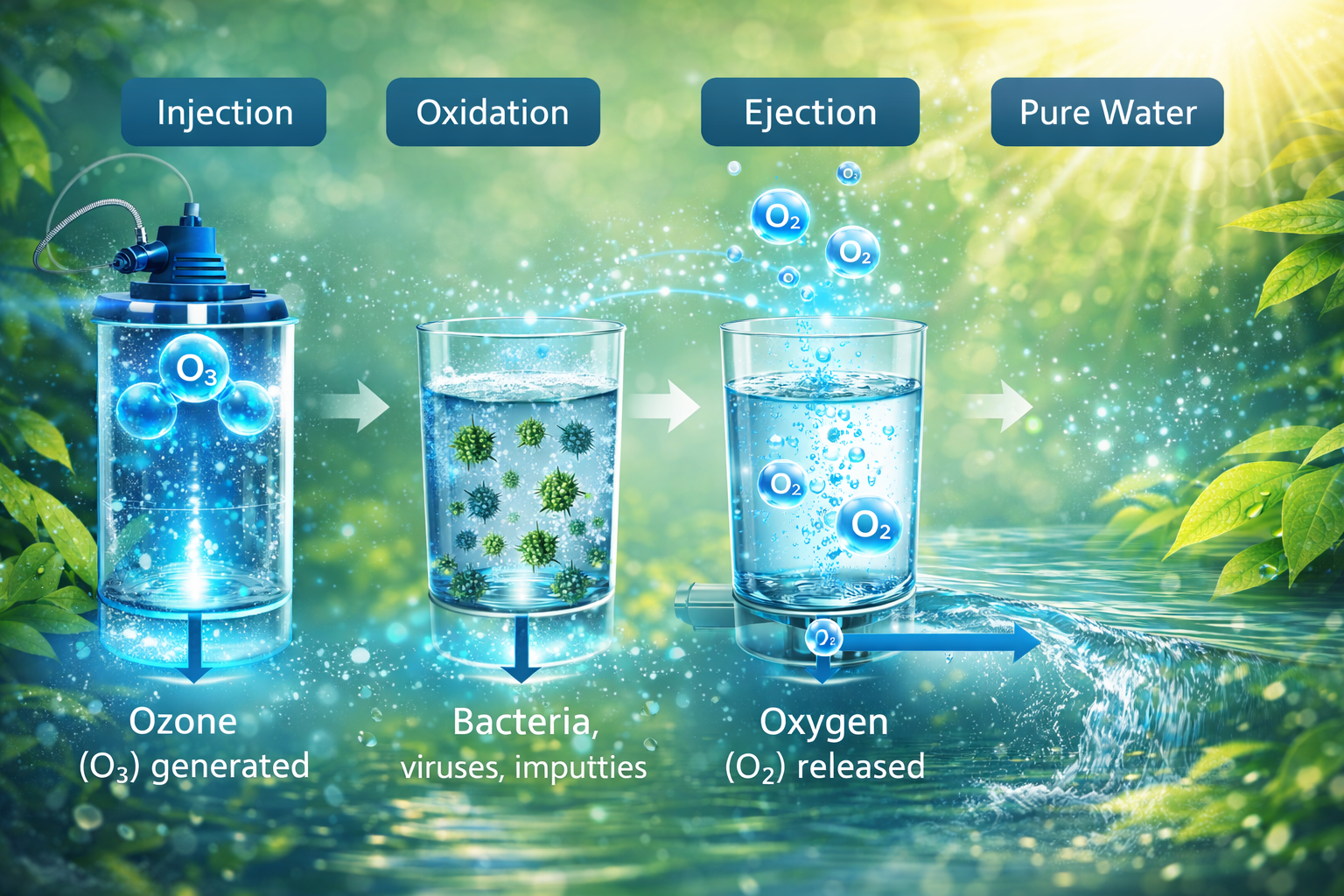
KEY ROLE OF OZONE IN WATER PURIFICATION AND ITS APPLICATION
Clean and safe water is essential for human health, industries, and the environment. With increasing pollution and microbial contamination, advanced water treatment methods are becoming more important. Ozone water purification is one such powerful and eco-friendly technology widely used across the world.
What Is Ozone?
Ozone(O3) is a naturally occurring gas made of three oxygen atoms. It is a strong oxidizing agent, much more powerful than chlorine, which makes it highly effective in destroying harmful microorganisms and pollutants in water.
Ozone is usually generated on-site using electricity and oxygen or air, as it is unstable and cannot be stored for long.
How Ozone Works in Water Purification
When ozone is dissolved in water, it reacts rapidly with contaminants. Its purification action works mainly through oxidation.
- Kills Microorganisms
Ozone destroys: Bacteria, Viruses, Protozoa, Fungi
It damages their cell walls and genetic material, making them inactive and unable to reproduce.
- Breaks Down Organic Pollutants
Ozone oxidizes: Pesticides, Herbicides, Industrial chemicals and Pharmaceutical residues
This reduces toxic compounds into simpler, safer substances.
- Removes Taste, Odor, and Color
Ozone effectively eliminates: Bad taste, Unpleasant odor, Color caused by organic matter or iron
This improves the overall aesthetic quality of water.
- No Harmful Residuals
Unlike chlorine, ozone does not leave harmful chemical residues in water. After treatment, ozone naturally breaks down into oxygen.
Key Advantages of Ozone in Water Purification
- Highly effective disinfectant
- Faster action compared to chlorine
- Eco-friendly and chemical-free
- No formation of harmful by-products like trihalomethanes (THMs)
- Improves water clarity and freshness
Applications of Ozone in Water Purification
- Drinking Water Treatment
Ozone is widely used in municipal and packaged drinking water plants to:
- Disinfect water
- Improve taste and odor
- Remove harmful microbes
Many cities across the world use ozone as a primary or secondary disinfectant.
- Industrial Water Treatment
Industries use ozone-treated water in:
- Pharmaceutical manufacturing
- Food and beverage processing
- Electronics and semiconductor industries
Ozone ensures high water purity without chemical contamination.
- Wastewater Treatment:
In wastewater plants, ozone helps:
- Reduce organic load
- Remove color and odor
- Destroy pathogens before discharge
It also improves the quality of water for reuse.
- Medical and Healthcare Facilities
Hospitals use ozone-purified water for:
- Equipment cleaning
- Dialysis water treatment
- Infection control
Its strong antimicrobial action enhances hygiene standards.
- Swimming Pools and Spas
Ozone is used as an alternative or support to chlorine to:
- Reduce chemical usage
- Eliminate eye and skin irritation
- Improve water clarity
- Aquaculture and Fisheries
In fish farming, ozone:
- Controls bacterial growth
- Improves oxygen levels
- Maintains healthier aquatic environments
- Bottled and Packaged Water Plants
Ozone is commonly used to:
- Sterilize bottles
- Disinfect water before filling
- Extend shelf life without preservatives
- Is Ozone Safe for Water Treatment?
Yes, when used correctly. Ozone treatment systems are designed to ensure:
- Proper dosing
- Complete breakdown before consumption
- Safe operational standards
Regulatory bodies worldwide approve ozone for drinking water treatment.
Frequently Asked Questions (FAQs):
Q1 What is ozone water purification?
Ozone water purification is a treatment process that uses ozone (O3) to disinfect water by killing bacteria, viruses, and other harmful microorganisms through oxidation.
Q2 Why is ozone used in water purification?
Ozone is used because it is a powerful disinfectant, works faster than chlorine, removes odor and taste, and does not leave harmful chemical residues in treated water
Q3 Is Ozone better than chlorine for water treatment?
Yes, in many cases ozone is better than chlorine because it is more effective against microorganisms, produces fewer harmful by-products, and improves water quality without altering taste.
Q4 Does ozone leave any residue in drinking water?
No, ozone does not leave chemical residues. After treatment, ozone naturally breaks down into oxygen, making the water safe for consumption.
Q5 Is ozone-treated water safe to drink?
Yes, ozone-treated water is safe to drink when processed using properly designed systems that follow recommended dosing and safety standards.
Q6 What contaminants can ozone remove from water?
Ozone can remove or reduce:
- Bacteria and viruses
- Organic pollutants
- Pesticides and chemicals
- Color, odor, and taste-causing compounds
Q7 Can ozone remove heavy metals from water?
Ozone does not directly remove heavy metals, but it can oxidize them into forms that are easier to filter or separate using additional treatment methods.
Q8 Is ozone environmentally friendly?
Yes, ozone is considered Eco-friendly because it reduces chemical usage and decomposes into oxygen without polluting the environment.
Q9 Does ozone improve the taste and smell of water?
Yes, ozone effectively removes unpleasant taste and odor caused by organic matter, algae, iron, and Sulfur compounds.
CONCLUSION:
Ozone plays a crucial role in modern water purification due to its powerful disinfecting ability, Eco-friendly nature, and effectiveness against a wide range of contaminants. From drinking water to industrial and medical applications, ozone has proven to be a reliable and advanced solution for water treatment.
As water quality challenges grow, ozone technology continues to be a key component in ensuring safe, clean, and sustainable water for the future.