


AVERAGE ILLNESS IN INDIA DUE TO UNSAFE DRINKING WATER
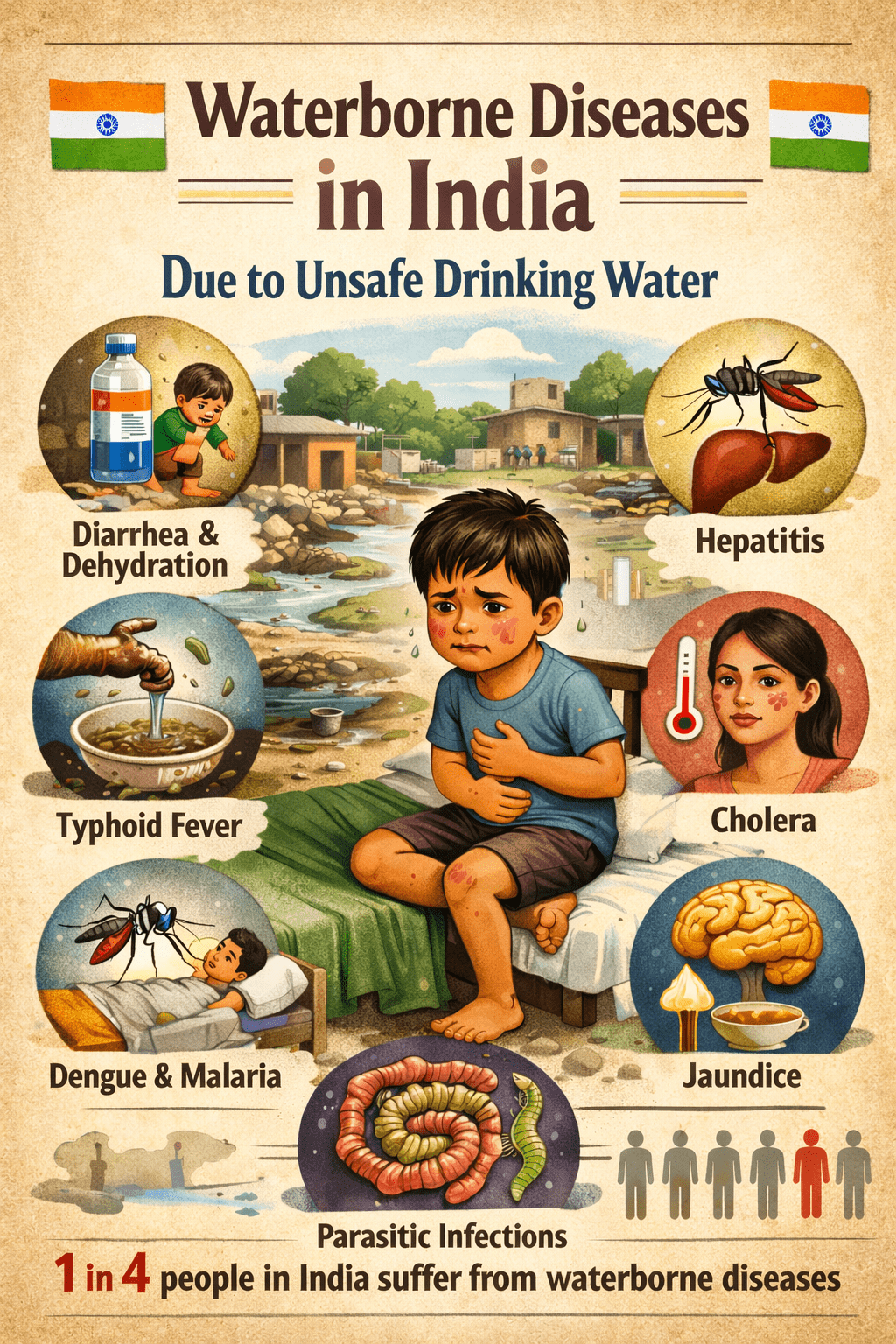
Water contamination is a serious problem in India today. Clean and safe drinking water is a basic need for every person, yet millions of people in India drink contaminated water every day. This unsafe water is a major cause of illness and poor health across the country.
A large amount of waste water in India is released without proper treatment. Nearly 70% of wastewater is not treated, and over 40 billion liters of polluted water flows into rivers, lakes, and oceans every day. This contaminates both surface water and ground water sources that people depend on for drinking.
India ranks 120th out of 122 countries on the water quality index. Around 70% of water sources are affected by pollution, making clean drinking water difficult to access. Because of this, waterborne diseases are common, and children under five years of age are at the highest risk.
Common Illnesses caused by Bad Drinking water
Unsafe drinking water contains harmful bacteria, viruses, parasites, and chemical contaminants. The most common illnesses include:
- Diarrhea and Gastroenteritis – Caused by bacteria and parasites; leads to dehydration and weakness
- Cholera – A severe bacterial infection that can be fatal if untreated
- Typhoid Fever – Spread through contaminated water and food
- Hepatitis A and E – Viral infections affecting the liver
- Dysentery – Causes severe diarrhea with blood or mucus
In additional to biological contamination, chemical pollutants such as fluoride, arsenic, nitrate, and heavy metals can cause long-term health problems, including skeletal disorders, neurological issues, kidney damage, and developmental problems in children.
Causes of drinking water contamination
- Mixing of sewage with water supply lines due to leaking or aging pipelines
- Groundwater contamination from industrial waste, agricultural chemicals and natural minerals.
- Inadequate water treatment and lack of regular monitoring.
- Poor sanitation and hygiene practices, especially in densely populated areas.
Economic Losses caused by Unsafe Drinking Water
Unsafe drinking water also causes significant revenue loss in India. Waterborne illnesses lead to frequent sickness, forcing people to miss work and reducing productivity. Businesses lose working hours, while families spend a large part of their income on medical treatment instead of savings or education. The government also faces heavy financial pressure due to increased healthcare costs and disease control programs. Together, lost workdays, lower productivity, and rising medical expenses result in billions of rupees in economic losses every year, affecting the country’s overall growth and development.
Precautionary Measures to Protect Yourself and Your Family
Taking simple precautions can greatly reduce the risk of waterborne diseases and protect your family’s health. Ensuring safe drinking water is one of the most effective preventive steps.
- Use distilled, demineralized, or purified water for drinking and cooking, especially in areas with poor water quality.
- Install a reliable water purification system such as RO, UV, or UF based on the local water source.
- Boil drinking water when purified water is not available.
- Store drinking water safely in clean, covered containers to avoid contamination.
- Clean water storage tanks and filters regularly to maintain water quality.
- Avoid using untreated water for preparing food, making ice, or washing raw vegetables.
- Encourage good hygiene practices, such as regular handwashing with clean waters
Frequently Asked Questions (FAQs)
Q1 What is unsafe drinking water?
Unsafe drinking water is water that contains harmful bacteria, viruses, parasites, or chemical contaminants such as fluoride, arsenic, or heavy metals. Drinking such water can cause serious health problems.
Q2 Why is water contamination a major issue in India?
Water contamination in India is mainly caused by untreated sewage discharge, industrial pollution, agricultural runoff, and poor water infrastructure. Leakage in pipelines also allows sewage to mix with drinking water.
Q3 Who is most at risk from unsafe drinking water?
Children under five years, elderly people, pregnant women, and individuals with weak immune systems are most vulnerable to illnesses caused by contaminated drinking water.
Q4 What are common waterborne diseases in India?
Common waterborne diseases include diarrhea, cholera, typhoid, dysentery, and hepatitis A and E. These diseases spread mainly through contaminated water and poor sanitation.
Q5 Is distilled or purified water safe for drinking?
Yes. Distilled and properly purified water is safe for drinking when produced and stored hygienically. It is especially helpful in areas where water contamination is high.
CONCLUSION
Unsafe drinking water continues to cause widespread illness in India, affecting millions every year. Ensuring access to clean and safe water is essential for improving public health, reducing healthcare costs, and enhancing overall quality of life. Strong infrastructure, strict monitoring, and public awareness are key to preventing waterborne diseases and building a healthier nation