


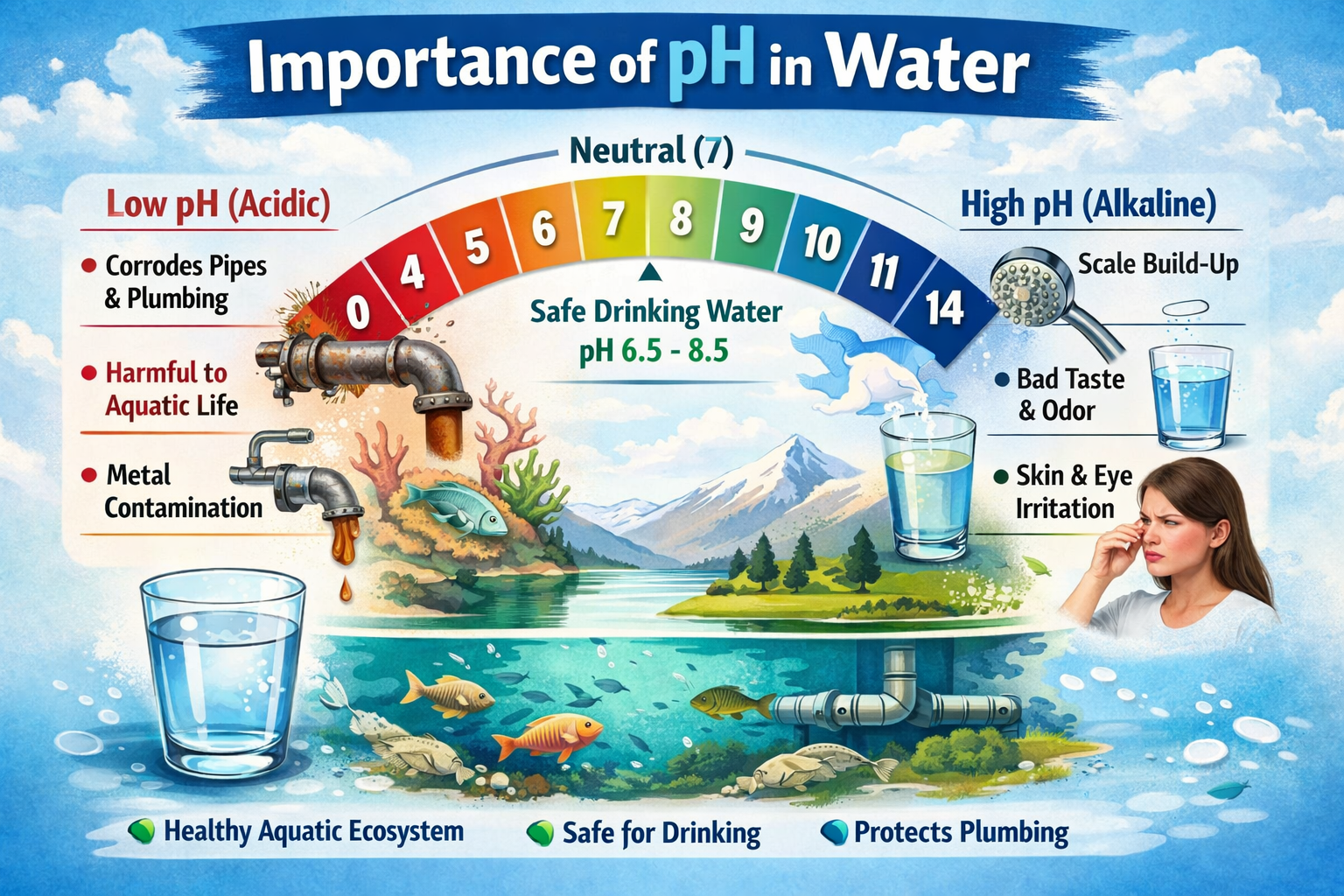
The pH of water can significantly influence various applications across different industries. Water’s pH level – whether acidic, neutral, or alkaline – affects everything from water quality to chemical reactions, and can have varying effects depending on the specific use. Below are a few examples of how water pH impacts different applications.
Drinking water and public health
The pH of drinking water is a critical in ensuring both safety and palatability. Most regulatory bodies, such as the EPA (Environmental Protection Agency) and WHO, recommend a pH range of 6.5 to 8.5 for drinking water.
- Health considerations: Water with pH outside this range can pose health risks, Acidic water (low pH) can be corrosive to pipes, leading to the leaching of metals like lead and copper into the water supply. These metals can cause various health problems, including neurological damage and gastrointestinal issues. Alkaline water (high pH) can cause taste issues and may promote the formation of scale in pipes and appliances.
- Disinfection effectiveness: pH also affects the effectiveness of water disinfection process chlorine, a common disinfectant, is most effective at killing bacteria and viruses in slightly acidic water. High pH levels can reduce chlorine’s effectiveness, potentially leading to inadequate disinfection.
- Taste and Odor: pH can influence the taste and odor of drinking water. Acidic water can have a sour or metallic taste, while alkaline water can taste flat or bitter.
Agriculture and irrigation:
- Soil health: The pH of irrigation water affects soil pH, which in turn impacts nutrient availability to plants. Water that is too acidic or alkaline can cause nutrient deficiencies or toxicities, inhibiting plant growth.
- Crop Growth: Different crops have different pH preferences. For instance, most crops thrive in neutral to slightly acidic water, while others like blueberries prefer more acidic water.
- Fertilizer Effectiveness: The pH of water can affect how well fertilizers dissolve and are absorbed by plants. If the water is too acidic or alkaline, it can cause precipitation of nutrients like phosphorous and calcium, making them less available for plant absorption.
Industrial Applications:
- Cooling Systems: In industrial cooling towers or systems, the pH of water is critical to prevent corrosion of metals. Acidic water can corrode pipes and equipment, while alkaline water can cause scaling and deposition of minerals like calcium.
- Waste water treatment: The pH of waste water is crucial in treatment processes. In many cases, pH adjustments are required to optimize the activity of microbes in biological treatment systems. Too high or low pH can reduce the effectiveness of treatments like activated sludge systems.
- Chemical manufacturing: The pH of water used in chemical reactions can affect reaction rates, yield, and byproducts. For example, many chemical processes require specific pH ranges to ensure proper reactions and prevent unwanted side effects.
Aquaculture:
- Fish and Aquatic life: Fish and other aquatic organisms are highly sensitive to changes in water pH. Most aquatic species thrive in water with a neutral to slightly alkaline pH (7.8), and sudden changes in pH can lead to stress, disease, or even death. Acidic water (below pH 6.5) can be harmful, as it can damage the gills of fish and disrupt vital processes like respiration and metabolism.
- Algal growth: The pH of water affects the growth of algae, which is crucial in aquaculture systems for oxygen production. However, excessive algae growth in certain pH conditions can lead to oxygen depletion, harming aquatic life.
Aquariums:
- Fish Health: For aquariums, maintaining the correct pH is vital for the health of fish. Tropical fish, for example, require a slightly acidic to neutral pH (6.5-7.5). while other species like goldfish prefer a more alkaline range (7.5-8.5).
- Water Quality: In aquariums, the pH can affect the solubility of minerals and toxins in the water. Extreme pH levels can cause stress and weaken fish, making them more vulnerable to disease.
Swimming Pools:
- Water Balance: The pH of pool water needs to be carefully balanced (typically between 7.2 and 7.8). If the pH is too low (acidic). It can irritate swimmers’ eyes, skin and mucous membranes. It also causes the pool equipment to corrode.
- Chlorine effectiveness: The effectiveness of chlorine as a disinfectant depends on the pH of the water. At lower pH levels, chlorine works more efficiently, but if the water is too acidic, it can cause the chlorine to break down faster. On the other hand, a higher pH reduces chlorine’s disinfecting power.
Biotechnology and Laboratory Applications:
- Enzyme Activity: In biotechnological and pharmaceutical processes, the pH of water can impact enzyme activity. Enzymes are often pH – sensitive, and their effectiveness can decrease significantly if the pH strays from the optimal range.
- Cell Cultures: Many cell culture systems require precise pH control in the water or medium to ensure that cells grow and function correctly. Slightly deviations in pH can result in poor cell health and productivity.