


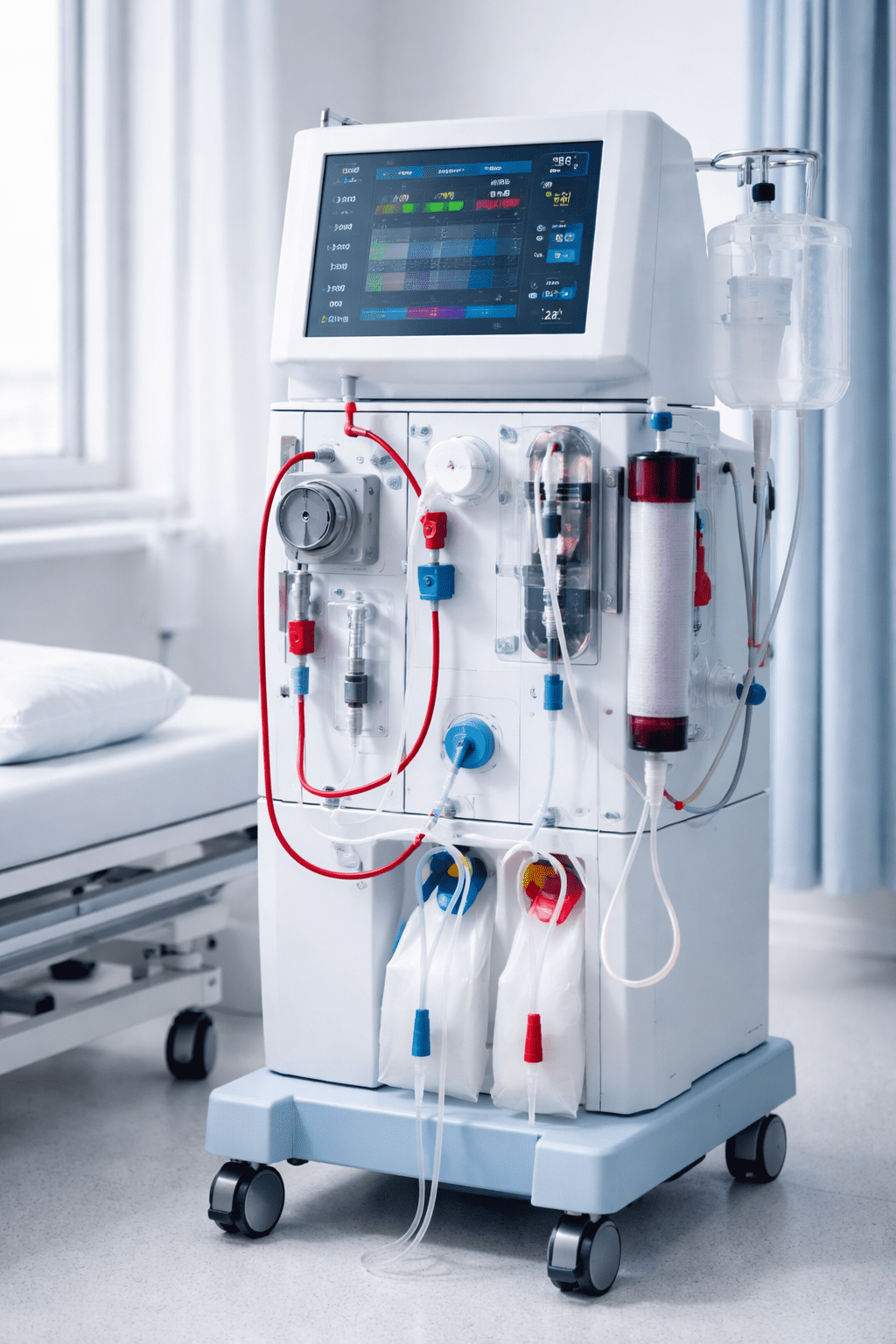
Is it possible to live without water? The liquid that supports the environment, feeds our bodies, and is vital to many medical procedures.
Dialysis is one of the most dangerous medical situations affecting people of all ages around the world. People with failing kidneys can be treated with dialysis. Hemodialysis and peritoneal dialysis are the two forms of dialysis. Both kinds filter waste and excess fluid from your blood, performing the regular functions of your failing kidneys.
For individuals with failing kidneys, dialysis is a vital treatment. Your kidneys don’t filter blood properly when you have renal failure. Toxins and waste products gather in your blood as a result. Acids, muscle waste (creatinine), and nitrogen waste (urea) are examples of common wastes.
When you urinate, they naturally leave your body. By eliminating waste materials and extra fluid from your blood, dialysis performs the functions of your kidneys and makes it fresh for the future.
With our cutting-edge water treatment solutions, the Cesium team is prepared to help you lower your expenses and improve your performance.
Let’s find out more about Dialysis water.
Dialysis Water
A unique water prepared to create the dialysis fluid is known as dialysis water. Patients are exposed to 120–700 litres of dialysis water during each treatment; the cleanliness of the highly filtered medical-grade water used to prepare dialysis fluid is vital. Serious harm can result from even a dash of pollutant entering the bloodstream.
Electrolytes, including sodium, icodextrin, calcium, magnesium, potassium, bicarbonate/lactate, and occasionally glucose and amino acids, make up the dialysis water, which is similar to plasma. Before getting used, dialysis fluids are supplied in a sterile concentrated state that can be diluted with water; the best part is that sterile water is not vital.
Water Usage During Dialysis
A patient is always exposed to 300–700 litres of water over the course of a typical haemodialysis week, providing numerous chances to connect with waterborne pathogens. Patient exposure to water through various paths leads to adverse patient outcomes, including outbreaks linked to water exposure in dialysis.
These pathways include improperly formulating dialysate with water containing high levels of chemical or biological pollutants, contaminating injectable medications with tap water, and reprocessing dialyzers with contaminated water. This is done to make sure the water used for dialysis is clean and safe for patients’ health.
Techniques for Dialysis Water Purification
To guarantee that the water is of the highest quality and lacking of impurities, including trace elements, chemicals, particles, organic matter, bacteria, and bacterial fragments, the dialysis water purification process involves several filtration stages.
The technique of purifying water involves five essential steps:
Primary treatment
This stage includes softening the water, adsorption with activated carbon, preliminary filtering, and blending hot and cold water to a constant temperature. To adjust pH levels, hydrochloric acid will be injected.
The primary treatment further consists of
Feed Pump
Water is fed into the tank using a feed pump, which ensures that the purification system maintains the proper pressure.
Boiler
The water is heated using the boiler. The majority of bacteria are killed by boiling, and compounds with boiling temperatures greater than water are also removed.
Heat exchanger
The boiler’s evaporated water is sent through the heat exchanger, where it loses heat to the working fluid or feed water. Condensation is made possible by the heat exchanger.
Water Softening
In this step, calcium and magnesium ions in hard water are exchanged for sodium ions using a water softener. This procedure assists in extending the Reverse osmosis (RO) membrane’s lifespan.
Activated Carbon Filtration
In this stage, dissolved organic pollutants such as chlorine and chloramines are removed from the water using activated carbon filters. To ensure that these materials are completely removed, two carbon beds are frequently used.
Reverse Osmosis
The main technique for purifying water in dialysis equipment is reverse osmosis (RO). By forcing water across a semipermeable membrane with hydrostatic pressure, RO eradicates 90% of impurities, such as bacteria, endotoxins, and ionic compounds.
Deionization (DI)
Through the exchange of cations for H ions, ionic pollutants are eliminated. DI is typically used as an additional purification step or as a backup if the RO membrane fails. However, DI systems may encourage the growth of germs, requiring the installation of bacterial control filters following purification. For DI systems, conductivity must be endlessly monitored.
Advantages of Dialysis Water
Eliminate the toxic
Dialysis water is necessary for patients with renal failure to eliminate accumulated toxic waste from their bodies and to replace the production of urine. A dialysis water machine is used to filter the patient’s blood during this procedure.
Longevity of equipment
The dialysis water protects dialysis equipment, such as the dialyser and dialysis machine, by reducing the accumulation of TDS and other impurities.
Dialysis water gives a healthy life to the patient. The patient’s blood is externally cleaned during haemodialysis. This procedure involves pumping the patient’s blood through a circuit to a dialysis machine, where it is purified using a specific mixture. This mixture is prepared, and the blood is cleaned using dialysis water. The safety and effectiveness of the treatment depend on the dialysis water.
Remove Infections
Patients who receive dialysis may be more susceptible to illness if they consume water of low quality. Dialysis water helps control body infections.
Patients Safety
There is a greater chance that dangerous bacteria will enter the patient’s body if the dialysis water is polluted. Furthermore, it ensures efficient dialysis by supplying reliable, pure water for the manufacture of dialysate.
Frequently Asked Questions
What advantages does dialysis offer?
Dialysis’s main advantage is that it treats renal failure by removing extra fluid and waste from your blood. Kidney failure is lethal without dialysis or a kidney transplant.
There are certain advantages to both forms of dialysis. You must speak with a medical professional; they may discuss both forms of dialysis with you and suggest the one that best suits you.
What makes water crucial for dialysis?
Exposure to chemicals that the body is powerless to sufficiently remove is avoided by dialysing with pure water.
What happens if you consume excessive amounts of water while receiving dialysis?
Excessive consumption of water is not good for Dialysis. You will experience negative side effects from your treatment if you arrive at dialysis with excessive fluid. You may feel lightheaded or faint due to a reduction in blood pressure. You will experience cramping in your muscles and also might faint or experience headaches and nausea.
What is the quality standard of Dialysis water?
Strict limits for chemicals (such as <0.1 mg/L chlorine and <0.01 mg/L aluminium) and microbes (such as <100 CFU/mL bacteria and <0.25 EU/mL endotoxins in treated water) are vital for the dialysis water quality standards set by healthcare organisations. This ensures patient safety by preventing dangerous toxins that cause illness.
Conclusion
An essential module of haemodialysis and related therapies is water of the proper quality used in the manufacture of dialysis water. Worldwide guidelines have been created to encourage the implementation of suitable water treatment systems for haemodialysis and to protect the regular creation of dialysis water fit for haemodialysis and hemodiafiltration. A set of standards provides quality requirements for both dialysis fluid and the water.
Keywords : Feedwater, Dialysis water, Dialysis treatment, Dialysis Fluids. Dialysis