


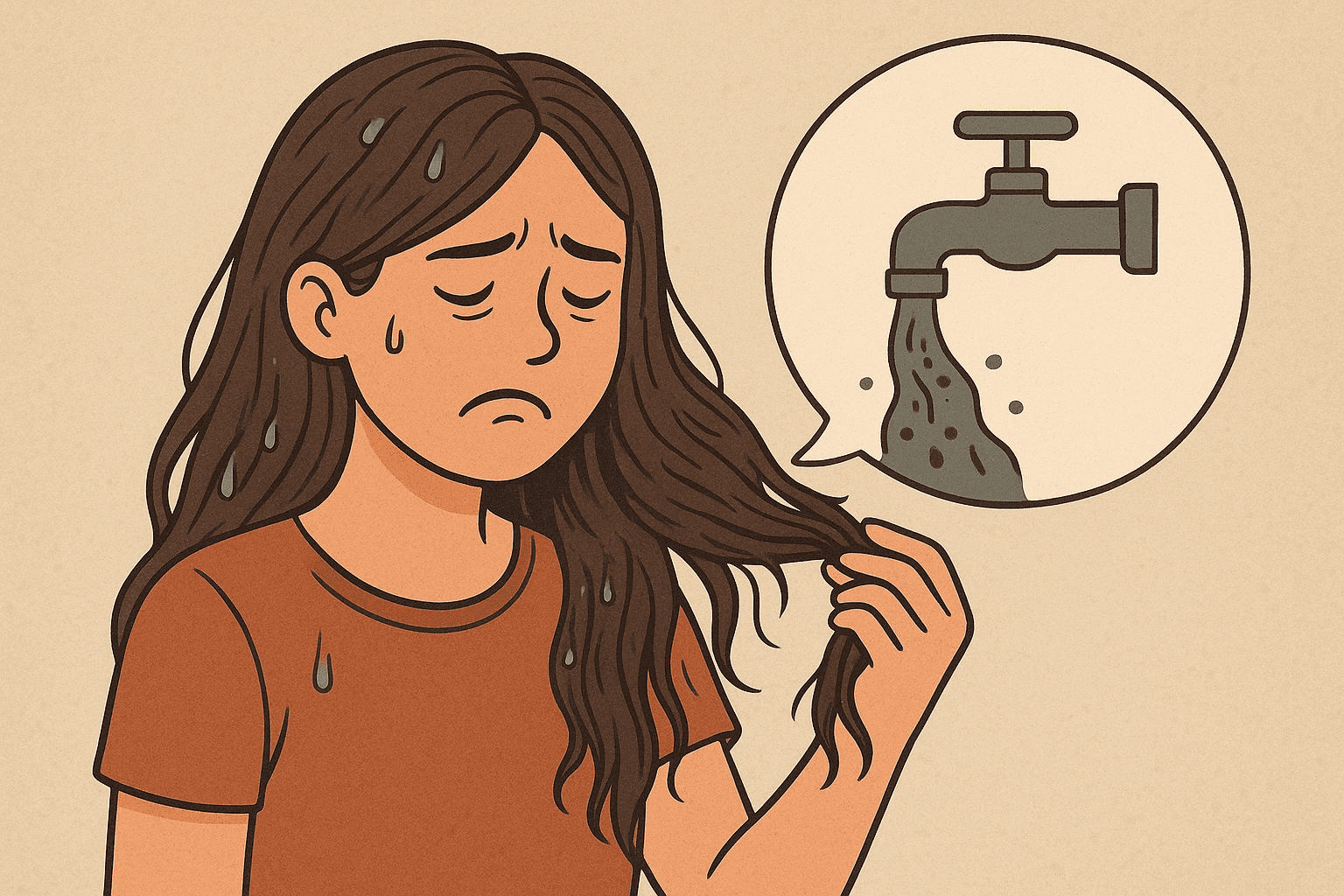
High levels of microbes in bath water can negatively affect hair and scalp health, potentially contributing to hair fall and dandruff through infections, inflammation, and disruption of the scalp’s natural balance.
Effects on Hair Fall
- Scalp Infections: Pathogenic bacteria, fungi, and other microorganisms in untreated water can lead to topical scalp infections like folliculitis, which inflame the hair follicles and disrupt the hair growth cycle. This inflammation can weaken hair roots, leading to increased shedding and hair loss.
- Inflammation: The body’s immune response to microbial invaders causes chronic inflammation, which can damage the hair follicles over time, making it harder for new hair to grow and potentially accelerating hair thinning.
- Nutrient Disruption: Infections and inflammation on the scalp can impede proper nutrient flow to the hair follicles, weakening hair strands and making them prone to breakage and eventual loss.
Effects on Dandruff
- Fungal Overgrowth: Certain types of water-borne bacteria and yeasts can contribute to or worsen existing scalp conditions like dandruff (seborrheic dermatitis) by disrupting the natural microbial balance of the scalp.
- Irritation and Dryness: Microbes, along with associated impurities or disinfectants like chlorine found in some water supplies, can strip the scalp of its natural oils, leading to dryness, irritation, and flakiness that resembles dandruff.
- Product Buildup: If the water quality is poor (e.g., high mineral content, which often correlates with microbial issues), it can prevent shampoos from lathering effectively, leading to inadequate cleansing. This leaves behind a film of soap scum, dirt, and sebum on the scalp, which can clog pores, encourage further bacterial growth, and exacerbate flaking/itching.
If you suspect your bath water quality is causing hair and scalp issues, consider testing your water quality or installing a shower filter/water softening system to remove contaminants.
This is for informational purposes only. For medical advice or diagnosis, consult a professional.