


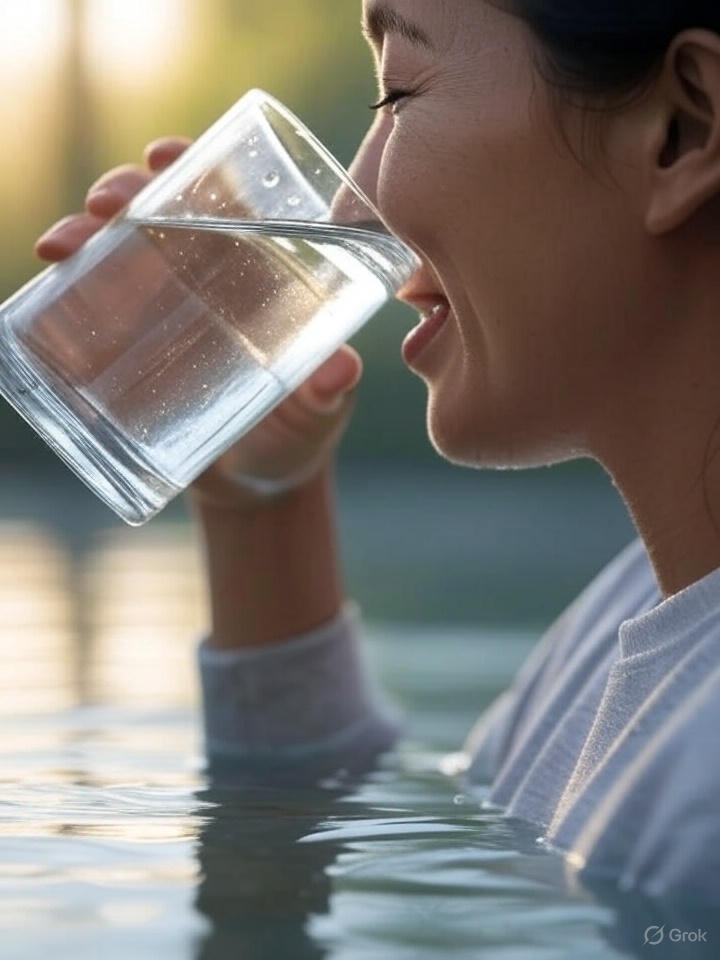
 “Distilled water” is undoubtedly something you’ve heard of before, either in a science class, hotel, or at a store, but have you ever pondered what it is? And is drinking acceptable? The answer to this frequently asked question is more complex than a simple yes/no. Distilled water is defined as water that has undergone a specific purification procedure to eliminate almost all contaminants.
This process makes it incredibly pure, but it also changes its composition in ways that might make you think twice about using it as your primary drinking water. To help you find out whether it is safe to drink every day or whether it is better than purified water, here’s everything you need to know.
What is Distilled Water?
Boiling water into steam, which removes impurities and minerals, then cooling and condensing it back into a liquid, is how distilled water is made. It is appropriate for manufacturing processes where mineral accumulation must be prevented, such as drinking and medical sterilization. Distilled water has a very tasteless, lab-like flavor that many people dislike because it does not have minerals or dissolved gases.
Since distilled water is pure, it is safe to consume. However, it lacks naturally occurring minerals like calcium and magnesium, which give regular water its flavor and nutritional value.
Distilled water is used for drinking in many homes and offices, particularly in places where tap water has high TDS or pollution issues. A water distiller or a straightforward boiling and condensation method can be used to produce distilled water at home. Because of its purity, safety for medical usage, and compatibility with delicate equipment like CPAP machines and baby formula preparation, people prefer to consume distilled water.
Boiling water and then condensing the collected steam back into a liquid is how industries make distilled water. Minerals and contaminants are eliminated from the water by this technique.
Drinking distilled water can help detoxify your body and enhance your health, according to certain sources. Others assert that drinking distilled water might harm your health by removing minerals from your body. In actuality, neither of these assertions is accurate.
How to make Distilled Water?
Distilled water is the result of the distillation process, and one gallon of distilled water can be obtained in 4–6 hours, making it a lengthy operation. To create steam, the feed water will be heated in a heating chamber. After being gathered, the steam condenses into a liquid.
The majority of inorganic compounds and some molecules stay in the heating chamber because they are unable to evaporate with the water. Due to this, the condensed liquid is extremely pure and free of impurities, minerals, salts, and other compounds.
The specific procedures for creating distilled water using distillation are as follows:
The water is heated in the heating chamber until it reaches a rolling boil, characterized by many bubbles and a steady boiling temperature. Evaporation is a result of this situation.
Non-volatile particles stay in the heating chamber as steam evaporates to the stainless-steel condensers.
Cooling fans assist in condensing the steam in the condensers. Consequently, the steam will revert to water droplets, which are subsequently gathered in a clean container. The liquid will then be filtered.
The residual impurities will be released during the filtration process.The water enters the reservoir after being purified. It is now in a pure state. The pollutants may have been removed from distilled water.
Uses of Distilled Water
Distilled water has many advantages that make it valuable for daily domestic tasks. Distillation is regarded by many as one of the purest methods of producing water since it eliminates contaminants, heavy metals, and bacteria. Let’s examine the benefits of consuming distilled water.
Cleanest Water Option
Households and businesses apply numerous water filtering techniques, but distillation is the most efficient technique for producing nearly pure water. According to a magazine, distillation may purify water by eliminating 99.9% of its minerals and dissolved materials.
Versatile
Industrial applications for distilled water are common. Furthermore, it can also be used in homes for steam ironing, watering plants, and fish tanks.
Cleansing/Detox
Distilled water is used in diets for cleaning and detoxification. Experts believe that distilled water is superior to other forms of water in its ability to assist in the body’s detoxification. Furthermore, it is crucial to proceed cautiously when following such diets and make sure you’re getting enough nutrients.
Frees Bacteria
In addition to minerals, viruses, bacteria, and other microbes are eliminated from water through the distillation process. That’s why distilled water is widely used in the food and beverage industry.
Hydration
Drinking distilled water is acceptable as long as you consume the necessary minerals in your diet. People living in areas with poor water quality can safely choose distillation because it promises that the water is clear of impurities.
Safeguards-Appliances
Enhancing the lifespan of home equipment is one of the main applications and uses of distilled water. It reduces the maintenance expenses by preventing mineral buildup in CPAP, Coffee machine, UPS, Steam irons, and Automobile batteries.
Cooking
Distilled water is frequently used in cooking to prevent undesirable flavors brought on by salts or chlorine. Because it is mild for skincare, it can be used as a face rinse material and can be combined with cosmetics.
Complexities of Distilled Water
Exhaustion
This is the characteristic sign of a magnesium deficit, and in the early stages, you can experience stiffness, weakness, or shocks.
Cramps
Studies have linked magnesium deficiency to jolts, pains, and cramping in the muscles, leading to locomotor disabilities among people.
Bad Taste
Demineralized water tastes bland and unattractive, which causes people to use less water, leading to various health issues.
Headache
The deficiency in Magnesium and Calcium will encourage headaches, migraine attacks, leading to complicated health risks.
Birth
Use of distilled water leads to premature birth and low birth rates, and damages the immune system.
No Dissolved Minerals
Water becomes very neutral after the distillation process removes all trace minerals and helpful electrolytes. Furthermore, numerous elements that are naturally present in water, including potassium, magnesium, and calcium, are essential for human health. Drinking distilled water regularly results in mineral deficiency and health issues.
Frequently Asked Questions
How successful is distillation compared to other techniques for purifying water?
Distillation is the most successful method of water treatment. Distillation will eliminate heavy metals, radionuclides, organics, inorganic compounds, bacteria, viruses, and cyst formations.
Can skin health be enhanced by using distilled water?
Water, whether distilled or not, is good for your health as it hydrates and helps eliminate pollutants. Since distilled water is free of pollutants, it is good for the health of your skin. Furthermore, you still require the minerals found in regular drinking water. If you decide to consume distilled water, be careful to balance your nutritional requirements. Distilled water is beneficial to the health of your skin when used in skin care products.
Do we need the minerals found in our sources of drinking water?
The foods we eat are the best source of minerals. Our diets, not the water we drink, provide our bodies with 96% of the minerals to function. A much better supply of healthy minerals than water is multi-mineral supplements, which can be purchased at any pharmacy.
What is the shelf life of distilled water?
If maintained in a sterile, airtight container, distilled water can be retained for an extended period. To avoid infection, it is better to keep it in a cold, dark location.
Is every contaminant in the water completely removed by distillation?
Let’s be honest. It is impossible to eliminate minute amounts of these chemicals, even though the water produced by our systems is more than 99.999% pure. According to experts, you cannot ensure that every single non-H2O molecule in water is eliminated. (H2O is made up of one oxygen atom bound to two hydrogen atoms.) However, we can state that the water produced using this method will be cleaner than packaged drinking water from other sources.
CONCLUSION
Distilled water has the highest degree of purity and is safe to drink and ideal for a variety of applications. However, it is not the ideal option for everyone, particularly for long-term, regular intake, as a lack of important minerals affects the health quotient. A combination of distilled water and other mineral-rich water types offers a balanced approach to hydration for people.